


 newsitems EU Commissioners-designates' Hearings, Debate + Vote by EU Parliament: Will EU Citizens have a say ?
EU Commissioners-designates' Hearings, Debate + Vote by EU Parliament: Will EU Citizens have a say ?


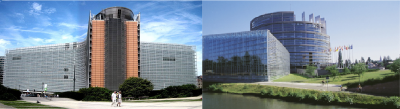
"EuroFora" believes that the Hearings, Debates and Votes organized by EU Parliament on New EU Commissioners-designates throughout all January 2010 should provide an opportunity also for EU Citizens to interact with their elected MEPs and/or to engage in public Debates freely expressing their views on the main issues, while being duly informed, in order to boost Public Scrutiny and reinforce the Democratic character of EU's decision-making proces, while also contributing to make EU Institutions more popular, helping to bridge the infamous "gap" vis a vis the People.
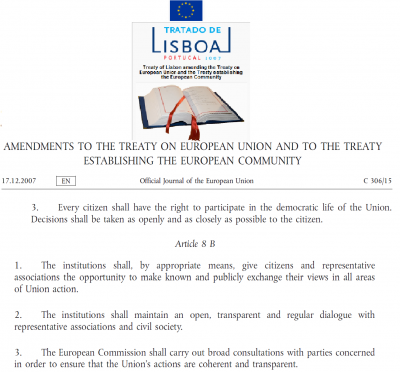
For this purpose, EU Citizens could f.ex. have a fair chance, previously, to contact their MEPs at least for the preparation of the questions they will raise to EU Commissioners-designates, and/or in view of their Evaluation, final Debate and Vote, in order to timely and usefully exchange views. If it's not done now, it should be done in the Future, (starting to apply also the relevant EU Lisbon Treaty rules : fex. Art. 8 B).
For the moment, as things stand, EU Citizens can watch the Hearings on Video at :
http://ec.europa.eu/avservices/ebs/schedule.cfm
http://europa.eu/press_room/index_en.htm
http://europarltv.europa.eu/
http://www.europarl.europa.eu/hearings/default.htm?language=en
http://www.europarl.europa.eu/wps-europarl-internet/frd/vod/research-committee-and-other?byLeftMenu=researchotherevents&isSearchOtherEvents=true&language=en
Previous Hearings, before the entry into force of Lisbon Treaty, (whose Article 8 B asks for EU Citizens to participate in Public Debates on EU activities : See relevant replies to "EuroFora"s questions by EU Commission, EU Parliament and Spanish EU chairmanship at : ) , can be reviewed at : http://www.europarl.europa.eu/hearings/commission/default_en.htm
Thus, EU Citizens can compare and judge if there is any real change, and how important it is, or could and should be.
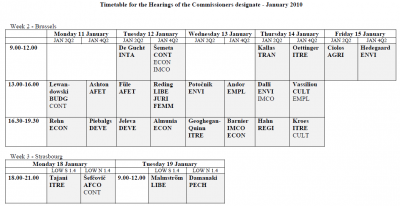
The very "tight" Time - SCHEDULE of the Hearings starts on Monday afternoon with Foreign Affairs (Ashton) and Development (Piebalgs), in parallel with Budget (Lewandowski), Economic and Monetary affairs (Rehn).
- It is followed, since Tuesday Morning, by Trade (De Gucht) and Taxation, Customs and anti-Fraud (Semeta).
Enlargement and Neighbourhoud policy (Füle), as well as International Cooperation, Crisis' responses and Humanitarian affairs (Jeleva), are on the Afternoon, in parallel with Human Rights and Citizenship (Reding), as well as Competition policy (Almunia).
- On Wednesday Afternoon, Environment (Potocnik) and Research, Innovation and Science (Geoghegan - Quinn), come in parallel with Employment and Social affairs (Andor), as well as Internal Market and Services (Barnier).
- On Thursday Morning, Energy (Oettinger) and Transports (Kallas). Followed, in the Afternoon, by Health and Consumer policy (Dalli), Education, Culture, Multilinguism and Youth (Vassiliou), as well as Digital Agenda (Kroes) and Regional policy (Hahn).
- Friday Morning, the Brussels' week concludes with Agriculture (Ciolos) and Climate (Hedegaard).
- Next week in Strasbourg, on the sidelines of the Plenary Session, EU Parliament starts on Monday evening with Industry and Entrepreneurship (Taviani), as well as Istitutional affairs and Administration (Sefcovic).
- It continues on Tuesday Morning with Home affairs (Malmstrom), in parallel with Maritime affairs and Fisheries (Damanaki).
The President of EU Commission (Barroso) was voted by EU Parliament before the entry into force of the new EU "Lisbon" Treaty, as early as since mid-September in Strasbourg, but the official anouncement of the EU Commissioners-designate and their portofolios came only 2,5 Months later, (after the completion of "Lisbon" Treaty's Ratification), at the end of November.
Once EU "Lisbon" Treaty entered into force, December 2009 was used for a formal, written procedure, during which EU Parliament send a Questionaire to each Commissioner-designate, who replied also by writing.
It's only on January 2010 that start direct, oral Questions - Answers and Debates between MEPs and EU Commissioners-designates. They will be evaluated by each EU Parliament's Committee, as well as by the Chairmen of the Political Groups, until the final, General Debate and Vote, which is due before the end of the Month (Jan. 29), so that the new EU Commission might be able to begin working, with EU Council's approval, from February 2010.
In strictly Legal terms, EU Parliament can only vote for, or against, the entire EU Commission's team. But, in practice, it has been established that MEPs might refuse 1 or 2 Commissioners only, who should then be replaced by new Candidates, able to agree on the main Political issues with the Majority in EU Parliament which was voted by EU Citizens as it emerged from June 2009 EU Elections.
It's through this process that EU Citizens hope to make their democratically expressed choices respected.
* Here is a LIST of Commissioners-designate according to their areas of competence :
- Commission President : José Manuel Barroso (EPP), Portugal
- EU foreign policy chief (Vice-President) : Catherine Ashton (PES), United Kingdom
- Industry and Entrepreneurship (Vice-President) : Antonio Tajani (EPP), Italy
- Transport (Vice-President) : Siim Kallas (ELDR), Estonia
- Competition (Vice-President) : Joaquín Almunia (PES), Spain
- Justice, Fundamental Rights and Citizenship (Vice-President) : Viviane Reding (EPP), Luxembourg
- Institutional Affairs and Administration (Vice-President) : Maros Sefcovic (PES), Slovakia
- Digital Agenda (Vice-President) : Neelie Kroes (ELDR), The Netherlands
- Budget : Janusz Lewandowski (EPP), Poland
- Internal Market and Services : Michel Barnier (EPP), France
- Economic and Monetary Affairs : Oli Rehn (ELDR), Finland
- Trade : Karel De Gucht (ELDR), Belgium
- Taxation and Customs Union, Audit and Anti-Fraud : Algirdas Šemeta (EPP), Lithuania
- Energy : Günther Oettinger (EPP), Germany
- Agriculture : Dacian Ciolos (EPP), Romania
- Maritime Affairs and Fisheries : Maria Damanaki (PES), Greece
- Regional policy : Johannes Hahn (EPP), Austria
- Research, Innovation and Science : Maire Geoghegan Quinn (ELDR), Ireland
- Education, Culture, Multilingualism and Youth : Androulla Vassiliou (ELDR), Cyprus
- Employment, Social Affairs and Inclusion : László Andor (PES), Hungary
- Home Affairs : Cecilia Malmström (ELDR), Sweden
- Health and Consumer Policy : John Dalli (EPP), Malta
- Environment : Janez Potocnik (ELDR), Slovenia
- Climate Action : Connie Hedegaard (EPP), Denmark
- Enlargement and Neighbourhood Policy : Stefan Fuele (PES), Czech Republic
- International Cooperation, Humanitarian Aid and Crisis Response : Rumiana Jeleva (EPP), Bulgaria
- Development : Andris Piebalgs (EPP), Latvia
Main Menu
Haupt Press Deontology/Ethics 2009 Innovation Year EU endorses EuroFora's idea Multi-Lingual FORUM Subscribers/Donors Häufig gestellte Fragen Die Elxis Lizenz Erweiterte Suche EuroFora supports Seabird newsitems In Brief European Headquarters' MAPs CoE Journalists Protection Platform
BRIEF NEWS
- 00:00 - 02.06.2021
- 00:00 - 18.10.2020
- 00:00 - 19.06.2020
- 00:00 - 18.05.2020
- 00:00 - 20.04.2020
- 00:00 - 02.02.2020
- 00:00 - 09.12.2019
- 00:00 - 27.11.2019
- 00:00 - 16.11.2019
Popular
- Yes, we could have prevented Ferguson riots says World Democracy Forum's Young American NGO to ERFRA
- Spanish People Elect CenterRIGHT Majority with 1st Party and Total of 178 MPs (6 More than the Left)
- Pflimlin's vision
- The European Athletic "Dream Team", after Barcelona 2010 Sport Championship Results
- Source Conseil d'Europe à ERFRA: Debatre Liberté d'Opposants à Loi livrant Mariage+Enfants à Homos ?
- Head of BioEthics InterGroup, MEP Peter Liese : "Embryonic stem cell research reaching its END" !?
- Spain: Jailed Turkish Terror suspect with Explosive,Drones,Chechen accomplices stirs Merah+ Burgas ?
- UN Head Ban Ki Moon at CoE World Democracy Forum : - "Listen to the People !"
Latest News
- Test Photos (f.ex.+ Invit to EU + Korea Peace meeting)
- EUOmbudsmen Conference 2022: Digital Gaps affect People's Trust threaten EF Project on EU Future ?
- French Election : Black Out on Virus, but Obligation for Fake 'Vaccines" Challenged
- Both French Presidential Candidates point at "Humanism" in crucial times...
- France : Zemmour = Outsider may become Game Changer in Presidential + Parliamentary Elections 2022
Statistics
Besucher: 67385054Archive
Login Form
Syndicate


Other Menu
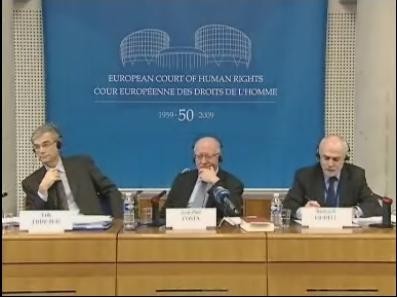
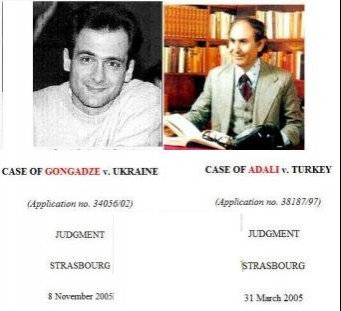
ECHR's President to "EuroFora" on Journalists Gongadze and Adali murders : Principles must apply to all States, without discrimination.
+ ECHR's Statistics on Freedom of Expression (See below).
European Court of Human Rights' President, Jean-Paul Costa, questioned by "EuroFora" on Journalists' murders, as in Gongadze and Adali's cases etc., strongly stressed all CoE Member States' obligation to make efficient Investigations to find and punish those responsible, and underlined that ECHR's case-law's principles must apply to all without any discrimination.
His call was clearly supported by various Top MEPs who denounced a risk of "Double Standards" if some Journalists' murders are investigated, while others don't.
To avoid such risks, CoE's Parliamentary Assembly adopted a Resolution, on the occasion of Ukranian Journalist Gongadze's murder, "stressing", as a matter of general Principle, "the importance it attaches to the safety of Journalists and political activists, especially those linked to opposition groups, in ALL member states of the CoE". All "crimes against journalists and political activists must be investigated ... as a matter of priority, without political interference".
Costa was replying to "EuroFora"s question on the fact that, after CoE's Committee of Ministers, also CoE's Assembly had just adopted a Resolution on Gongadze murder case, based on an ECHR's judgement of 2005, asking a full Investigation from Ukraine, who has found and condemned in 10 years of jail 2 executants, but not yet the instigators.
While nothing similar was yet done for dissident Turkish Cypriot Kutlu Adali's murder, with 5 bullets shot at his head out of his Family's home in the territories of Cyprus occupied by Ankara's army, despite another ECHR's judgement of the same year 2005, and despite Turkey's claim that nobody was found among those responsible for the murder, and that there was nothing more to do..
In order to be credible and efficient, CoE's mechanisms shouldn't find a way to at least ask for full investigations of all Journalists' murders anywhere they might be committed, without exceptions ?
- "On the larger question that you raised, I'd like to say, since we are in a period of stock-taking on ECHR's 50 Years, that the Court's case-law developed certain concepts ....such as the Positive obligations of States, part of which are also the procedural obligations", started to reply ECHR's President.
- "Whenever Journalists, Lawyers, Defenders of Human Rights, or even simple Citizens are murdered, the States are held responsible, not only if its their own security forces' agents who committed these murders, but also if they didn't make sufficiently substantial and efficient Investigations", he stressed.
- "I want to strongly underline that we (ECHR) have found in many cases numerous violations of Articles 2 and 3 against States, ....(about) murders or torture, ...because they didn't make enough Investigations in order to try to find and punish those responsible".
- "We (ECHR) do that vis-a-vis all 47 (CoE) Member States, without any discrimination".
"Naturally, the circumstances in each particular case may be differend, and we can't ommit to apply the rules of proof, or the rules of criminal procedure".
"But we try, by all means, to apply these principles of our case-law, to all States", he concluded.
Costa's call was strongly supported by several Top CoE MEPs, from various Political areas
- "To investigate the murder of one Journalist, and not of another, looks like Double Standards", denounced the President of EuroLeft Group in CoE's Assembly, Dutch MEP Tiny Cox.
- "What is the reason ? Politics or specificity of a case ? Of course, if Cyprus and Turkey are involved, it's always a Political case"..
- "Murders of Journalists should always be fully investigated, because killing Journalists is not only killing persons, but also killing Free Press". "We (CoE's Assembly) should do our outmost to help People who are working on Free Press and they are under threat or murdered".
Because for Free Politics, Free Press is a pre-requisitive : Parliamentarians cannot function without a Free Press. Not investigating, is not protecting ourselves".
So we should investigate all Journalists' murders : We are talking about Gongadze, about the Cypriot man (Adali), about the Journalist murdered in Moscow one week ago, etc", Cox concluded
- "CoE can' look at these cases differently. CoE can't wear Blinckers !".
- "If the one is investigated, so has to be also the other. Why there wasn't full investigation ? Why's that ?", wondered British Socialist MEP, Alan Meale.
- "A good idea" would be to "make a Motion for Resolution", and "join all Journalists' murders. Adali and Gongadze etc", said to "EuroFora" EU Parliament Political affairs Committee's President, Goran Lindbland, ChristianDemocrat MEP from Sweden.
(See also earlier News at "EuroFora" on similar issues).
-------------------------------
ECHR's Statistics on Freedom of Expression :
Almost Half of condemnations by ECHR for violations of Freedom of Expression in 2008, concern Turkey : 20 out of a total of 48 for all CoE's Member States.
Russia, Poland, France and Moldova were condemned only 3 times. Romania, Greece, Portugal, 2 times, and the other CoE Member States only 1 time, or none.
--------------------
During the last Decade : 1998 - 2008, Turkey was condemned for violating Freedom of Expression in ..169 cases, while Austria only in 24.
France and Moldova in 14 and 13, respectively, closely followed by Russia and Poland with 11 and 10, respectively. The rest of CoE Member States had less than ten condemnations.