


 newsitems EU+COE Experts to EF: PanEuropean Developments on Citizens Participation to Public Decision Making ?
EU+COE Experts to EF: PanEuropean Developments on Citizens Participation to Public Decision Making ?


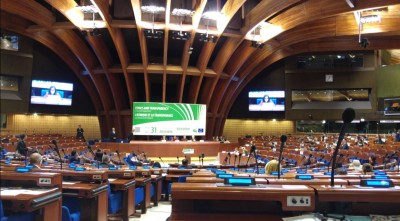
*Strasbourg/CoE/Angelo Marcopolo/- One among the most Important Issues, both in People's everyday Life, and in the Scientific Theory of Public Power and Democracy in Contemporary Societies, that a World-Famous Classical Book of Liberal Philosopher Spencer had tried to resume in a few words by the excessively concise Heading : - "Man versus the State", surprisingly emerged among several Topical affairs' Debates in CoE's Parliamentary Assembly, followed by its Local/Regional Democracy Watchdog : the PanEuropean Congres of Local and Regional Authorities (CLRAE), these last two weeks in Strasbourg, as it results particularly from a series of Converging, interesting Interactions that "Eurofora" had with some Key EU and/or CoE Experts about certain recent Legal Developments :
The New President of CLRAE, Austrian representative Mrs Gudrun Mosler Tornstrom, from Austria, (Comp. other GMT's Replies to "Eurofora"'s Questions, f.ex. at : http://www.eurofora.net/newsflashes/news/newclraepresidentfordigitaleducationagainstradiicalisation.html), while Highlighting the main Priorities of that PanEuropean body during the Next 4 Years of the forthcoming 2017-2020 Period, (First during a Press Briefing with Strasbourg Journalists, including "Eurofora", and Later-on also at CLRAE's Plenary), stressed, inter alia, that they included fresh efforts focusing on a "100% Application of all the 1985 "Charter of Local Self-Government", i.e. including its 2009 "Additional Protocol", which Explicitly Recognizes a Citizens' "Right to Participate in the Affairs of a [Local] Authority".
According to its Article 2, this includes, f.ex., "Procedures for Involving People", (such as : Consultations, Referenda, Petitions, etc), "Access to Official Documents held by [Local] Authorities", and "Mechanisms...for Dealing with, and Responsing to Complaints and Suggestions regarding the Functioning of of [Local] Authorities and [local] Public Services".
- "For the Promotion and Exercise of th[is] Right to Participate", CoE's Charter "encourage{d] the use of Information and Communication Technologies", and this was "Applie[d] to All categories of [local] Authorities", its Article 3 added.
Already, the initial, 1985 "Charter", had made it Clear that the support to the Representative Democracy also at a local level, "exercised by Councils or Assemblies composed of Members freely Elected" by the People, "shall in No way Affect recourse to Assemblies of Citizens, Referendums, or Any other Form of Direct Citizen Participation, where it is permitted", (Art. 3, §1), but rather go together with it, almost in parallel.
By an astonishing coincidence, all this Fits quite well, an "Eurofora" co-Founder's extensive Legal Analysis of relevant Developments concerning in particular the mainly French and Greek, but also Italian, German, UK, etc. Public Administrative Law, already as early as since a 1979-1980 substantial Research Work of more than 1.000 pages, which had been selected by Strasbourg's Faculty of Law for a Prize normaly awarded to PhD. Thesis, after an official proposal by Professor Paul Amselek, (later-on Professor in Philosophy of Law at Paris II University), as well as in a subsequent, extensive Research made in view of a State Doctoral Thesis ("Thèse de Doctorat d'Etat"), particularly as far as it regards the developments consecrated to "the Monitoring of the Decision-Making Process" of those Entities, (i.e. Moral Persons of Public or Private Law, from the State to Public Enterprises and/or certain Private entities exceptionaly Habilitated to take some Decision which must be based on General Interest).
The move went in a Similar Direction, mutatis-mutandis, as that of the (quite Different in nature, but, in fact, very Close in main Substance and in their Inspiration) various Projects that we presented, later-on :
- First in a 1997 Collective bid, signed by main Strasbourg's Journalists specialized in EU/CoE+ News, Universitarians focused on International Relations, etc., nick-named "Europe in the Word" (EIW), that EU Commission officialy accepted to examine in the framework of "ESPRIT" Program for Innovative Social Utilisations of Modern Information and Communication Technologies.
+ As well as in a Public Presentation that we made, later-on, at an EU Parliament's Press Conference on 2006 in Strasbourg, with the EU Commissioner in charge of Communication policy and EU Parliament's vice-President in charge of Press and Communication relations, (registered in Official EU Videos).
++ In addition to the "Eurofora" Project itself, Published shortly afterwards, since 2007, (i.e. at the 10th Anniversary of the Initial "EIW" Project : Comp. Supra), mainly for EU Citizens' public Debates with MEPs and/or other EU Law-makers, Before Final Decisions are taken by EU Institutions (such as the European Parliament, Commission, etc) which affect People's lives and/or Society at large.
Meanwhile, the PanEuropean Organisation for Human Rights, Democracy and Rule of Law of the Strasbourg-based CoE, which Extends Now to 47 Member States, had prepared and Published, from the Late 1990ies, an interesting, Basic "Handbook on Administrative Law" main principles, particularly for use in Central-Eastern European Countries, shortly After the European ReUnification had been Completed, as far as the CoE in itself was concerned, i.e. since even Russia had joined that PanEuropean Organisatio of Strasbourg, as Early as already since 1996, which contained at least some Key Parts of the above-mentioned Principles.
After various, more Recent interactions with Strasbourg's Faculty of Law, a landmark 2-Day-long Conference was, later-on, organized here about Relevant Issues, with many Key-note Speakers from Paris Universities, EU Council's Legal affairs Director, Universitarians from Strasbourg, Rennes, etc, Senior Officials from the French State, and even Digital and Communication Technologies Experts, etc., on 2010, focusing mainly on various EU, CoE, ECHR and other National, European and PanEuropean Legal and practical developments about Citizens' Dialogue with Public Administrations due to take Decisions affecting their Rights, (in the Discussions of which, we participated actively).
Meanwhile, the Entry into Force of EU's "Lisbon Treaty" on 2010, brought to the Limelight the "Charter of Fundamental Rights" of the European Union, (that an EU Heads of State/Government Summit in Berlin, back on 2007, had already supported Politicaly : Comp. "Eurofora" Co-Founders' NewsReport from that event, published then at "TCWeekly"+), which Recognizes an EU Citizen's "Right to Good Administration", consecrating "the Right to have his or her affairs handled Impartially, Fairly and within a reasonable Time by the institutions, bodies, offices and agencies of the Union", which includes a "right ...to be Heard, Before any individual Measure which would Affect him or her adversely is taken", "to have Access to his or her File", and "the Obligation of the Administration to give Reasons for its Decisions", (Art. 41 §1 and 2).
On this occasion, the twice-Elected "EU Ombudsman", Professor Nikiforos Diamandouros, who was then in charge, speaking to "Eurofora" right from the Start of that landmark Year 2010, had already Stressed his Intention to Focus on Developing EU's New Legal Principle about EU Citizens' Right to a "Good Administration", much further, believing that it had Opened New Possibilities for EU Citizens' rights, (See, f.ex. : http://www.eurofora.net/newsflashes/news/euombudsman.html ).
But EU's "Court of Justice", Headquartered at nearby Luxembourg, had already evoked a Protection against Arbitrariness, as Early as since some 1989 Judgements, followed by more, later-on, f.ex. on 2014, when also the Strasbourg-based, PanEuropean CoE's ECHR issued also a Series of similar Judgements, (Comp. Infra, about CoE's "Venice Commission"'s latest Analysis, just published earlier this year).
Followed an interesting "World Forum for Democracy", organized by the PanEuropean CoE in Strasbourg during a Week at the End of November 2013, which focused, for the 1st Time, on "Connecting Institutions and Citizens in the Digital Age", with a plethora of Political Ideas and mainly various Technical Tools recently developed for that purpose, (Comp., f.ex., among others, also : http://www.eurofora.net/newsflashes/news/eupiratepartyseipenbuschworlddemocracyforum.html ).
Relevant developments were, subsequently, examined also by EU Parliament's Secretary General, Klaus Welle, who briefly but topicaly discussed such issues with "Eurofora" after an exceptional Public Speech in Strasbourg, Less than 1 Year later, on February 2014, i.e. practicaly at the Eve of the latest Electoral Campaign for May 2014 European Elections, (See, f.ex., also : http://www.eurofora.net/newsflashes/news/euparliamentsecretarygeneralonmayelection.html ).
And Now, on October 2016, the PanEuropean CLRAE's Autumn Plenary Session has just debated and Voted this Friday Noon, on a Report drafted by Dutch ChristianDemocrat/EPP representative, Jos Wienen, about CoE's prestigious PanEuropean/International "Democracy through Law and Human Rights" Monitoring body, composed by Top Legal Experts, (mainly Presidents of Constitutional Courts in Member States, highly specialized University Professors, etc), known as "Venice Commission" (after the Historic Italian City where it usualy holds most of its Plenary Sessions), focusing on a "Rule of Law Checklist" destinated to "Evaluate the state of the Rule of Law" in each Country, that it has Adopted officialy since March 2016, which includes (for the 1st Time in such a Crystal-clear, and Explicit way) certain Important Provisions Relevant to the above-mentioned Issues :
- F.ex., among a Series of Legal "Benchmarks" for the "Prevention of Abuse [MisUse] of Power", CoE's "Venice Commission" examines mainly if there are "Legal Safeguards against Arbitrariness and Abuse of Power ("detournement de pouvoir" in French) by Public Authorities, and, particularly, "clear legal Restrictions to Discretionary Power", "Mechanisms to Prevent, Correct and Sanction Abuse of Discretionary Powers" submited to "a Judicial Review", an Obligation for Public Authorities ... to Provide Adequate Reasons for their Decisions, in particular when they Affect the Rights of Individuals", (etc).
Because "an Exercice of Power that Leads to substantively UnFair, UnReasonable, IrRational or Oppressive Decisions", would "Violate the Rule of Law", according to CoE's PanEuropean "Venice Commission"'s benchmarks. As well as any "Unfettered Power", deprived of Legal Indications for "the Scope of any such Discretion", in order "to Protect against Arbitrariness". Moreover, a "Judicial or other Independent Review" "should Control" any eventual "Abuse of Discretionary Power", while all "Administrative Decisions" must have an "Obligation to Give Reasons", according to "Venice Commission"'s "Rule of Law Checklist", (II, C, 64-68).
This goes also for "Private Actors in charge of Public Tasks", since "the Law" must "Guarantee that Non-State Entities, which, fully or in part, have taken on traditionally Public Tasks, and whose actions and decisions have a Similar Impact on ordinary People as those of Public Authorities, are Subject to the Requirements of the Rule of Law, and Accountable in a manner Comparable to those of Public Authorities".
Particularly in "a number of Areas where Hybrid (State-private) Actors, or private entities, exercice Powers that, Traditionally, have been the domain of State Authorities, ("including", f.ex., "in the Fields of Prison Management and Health Care", etc). Because "the Rule of Law must Apply to such situations as well", (Ibid, II Benchmarks, A Legality, 8). Or, otherwise, <<also in Moral Persons of Private Law, ... exceptionaly Habilitated to take some Decision which must be based on Criteria of General Interest>, (as we had already noted at our 1979-1980 initial Research Paper : Comp. Supra).
=> So that, Nowadays, it has become more and more Crystal-clear, that all EU's 28 Member States, and, in fact, even all PanEuropean CoE's 47 Member States, have, in substance, to Respect at least a Minimum of Rules concerning Citizens' Rights in the Decision-Making process even of Discretionary Power competences of any Public Authorities, and/or for Public Tasks, (as explicited Supra).
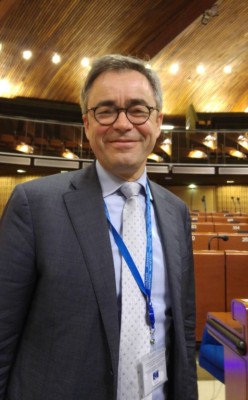
>>> - "All This is, in my opinion, much More Important for the Development of Democracy nowadays, than many other steps, including even popular Referenda, etc.", Replied to a relevant "Eurofora" Question, CLRAE's Rapporteur on those 47 Member States stong "Venice Commition" Rule of Law Benchmarks, Dutch representative Jos Wienen, (who was competent to deal both with Small or Big Municipalities, including "MetroPolitan" entities, as well as Regions and/or Federated "Länder", as f.ex. those existing at nearby Germany, etc. : Comp. Supra).
+ In Addition, such Converging Developments, mutatis-mutandis WideSpread, in substance, throughout some 50 Countries or so, during More than +35 Years now, (1979/1980-2016 : Comp. Supra), clearly Confirm also anOther Basic Hypothesis in "Eurofora" Co-Founder's above-mentioned University Research :
Indeed, if Law can be, Both a Technology, and a Real, fully-fledged Science, (mainly in the sense of a Specific Dimension in the History of Human Society, f.ex. as a Classic Franco-German "Historic" School of thought about Legal phenomena traditionaly claimed), then, at least the Elementary Rules found to exist in some Countries during a Stage or Era of Development of a certain kind of Society, should, normaly, be Similar to the Rules existing also in almost All Other Countries during that Same Social Stage, as "Eurofora" had, by a Timely Coincidence, just Discussed, last week in Strasbourg, during CoE Assembly's (PACE) Plenary Session for Autumn 2016, with the President of the Brussels-Headquartered "European Association of Administrative Judges", Dr. Edith Zeller, an Experienced Top Judge herself at Wien, Austria.
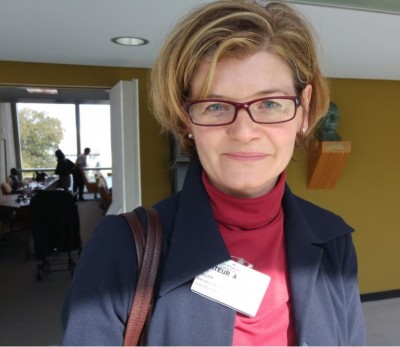
President Zeller, who had been Invited, Together with 2 Other Top European Jurists Associations' Heads, to be a Key-note Speaker at an Important and Topical, Human-Rights related collective Side-Event organized by Experienced, former PACE President, Top Liberal MEP and former Minister, Anne Brasseur from Luxembourg, (See : http://www.eurofora.net/newsflashes/news/europeanjudgesgroupsslamoppressioninturkey.html ), was Strategicaly well-placed, with the Scope of her main Area of Activities covering that of "Administrative Judges" throughout all Europe, i.e., precisely, those who are entrusted with the Task to Monitor Public Authorities' Decisions mainly from the point of view of their Conformity, or not, with the Rules of a State of Law, ("Controle de Légalité des actes administratifs"), in order to Evaluate such an "Eurofora"s Hypothesis, as far as, at least an Elementary Set of Legal Rules on Citizens' Rights in the Decision-Making process of Public Authorities, (from National States down to Local/Regional Authorities, as well as EU and/or Other European Institutions, etc), are concerned.
- However, Initialy, her Spontaneous Reaction was to Start speaking about the, apparently, "numerous Differencies" which seem, at First Sight, to always exist Between various European Countries, in the Field of "Administrative Law", i.e. in the Legal Status of Courts Monitoring Public Authorities' activities vis a vis Citizens' Rights, as she characteristicaly told us at the Beginning.
But, shortly After Exchanging Views with "Eurofora" mainly on the Fundamental Issue of Law as a Science (Comp. Supra), and Following also our Observation of the Astonishing, at First Sight, Fact that, f.ex., even the Top Judge, placed at the Head of the Highest Administrative Court, ("Conseil d'Etat" : i.e. that which Monitors the Administrative branch of Courts, which Judge Cases mainly Between Citizens and Puiblic Authorities, and Not of the Different, Judiciary branch of Courts, which judge mainly Cases Between Private Persons), of an EU Member Country which notoriously Followed mainly a Franco-German (and a little-bit Italian, etc), i.e. Continental System of Law (Dogmaticaly Divided , such as also in Greece, Italy, etc., had, Surprisingly, been Educated in ...British Universities, studying the Anglo-saxon "Common Law" system, Dr. Edith Zeller finally Agreed with us, at least on the Substance of the matter.
- Indeed, the Experienced President of the European Association of Administrative Judges endorsed, in fine, "Eurofora"s main Hypothesis that, if Legal phenomena correspond to real objects of a Science, then, Both in General, and in the particular case of Rules on Citizens' relations vis a vis Public Authorities, some kind of Elementary Similar Legal Principles, applicable in All Countries where a similar "Structure" of Society must exist, at least "Deep Inside", and Despite any Superficial, f.ex. Verbal or other, Misleading Appearance of so-called "Differencies" or even seemingly "radical Incompatibilities" between Various States' Legal Norms, as they Used to be Systematized in the Past, according mainly to Traditionaly Diverging National points of view.
+ Moreover, she Added that "a Wide Recent trend towards a kind of <<Europeanisation>> of Law, (through the EU and the CoE, as well as via a Massive Augmentation of Trans-Border exchanges and enhanced Cooperation), has Both Helped to Unveil and Better Discover, as well as to Further Accentuate, in real "Hard" Facts, such Legal Convergences between various European Countries", as Dr. Zeller stressed to "Eurofora" later-on, particularly in matters as those mentioned above.The Latest legal Developments about the EU's and mainly CoE's relevant Activities in Recent Years, obviously seem to Corroborate quite well this President Edith Zeller's Conclusion on "Eurofora"s main observations, (Comp. Supra).
-------------------------------------
But, where might it Stop, and until where Can it Go, in the foreseable Future, such a more and more Widely Spreading Movement on key Citizens - State relations ?
CoE's "Venice Commission", has notoriously Developed recently even some International, if not Global Ambitions, Extending its Membership and/or its Expertise, after the 47 PanEuropean CoE's Member States, even to several Third Countries, from Various Other Continents in the World, particularly in Africa (Morocco, etc), and Asia (Kazakhstan, etc), but even towards Latin-American Mexico, Bolivia, Peru, Chile, or the Costa-Rica HeadQuarters of the Inter-American Court of Human Rights, etc.
But, while the Latin America Sub-Committee of CoE's "Venice Commission" is currently preparing to meet, Next Week at Lima, on the occasion of a 2 Days - Conference on "Constitutional Reform and Democratic Stability", co-organized together with Peru's Constitutional Court there, on October 24-25, surprisingly, it was, Today (Friday, October 21), in Strasbourg, ...China's representatives who intervened at the Conclusion of CLRAE's Plenary Debates, here, on CoE's Constitutional Law Watchdog's "Rule of Law Checklist", (Comp. Supra) :
- In particular, Qing Boming, Secretary General of the National Council, in Chinese People's Association for Friendship with Foreign Countries, and China's International Friendship Cities Association, HQ at Beijing, expressed, on this occasion, their Interest in the PanEuropean CoE's Local and Regional Democracy Watchdog's activities, and vowed to be "Inspired" by the main Principles which Guide them in the foreseable Future.
That representative from China, which is an "Observer" at the CLRAE "since 2010", as he reminded later-on, Speaking to "Eurofora", showed a keen Interest also in the Description and mainly the Political background of the much Wider "Observer" Status of some Other Non-European Countries throughout almost All activities of the Strasbourg Organisation, (including inside its Highest Political body of the Committee of Ministers, its Parliamentary Assembly (PACE), etc., which has been, notoriously, created from as Early as, already since 1996, i.e. precisely 20 Years Now (1996-2016), when Russia made its Historic Entry as a Full Member of the 47 Countries Strong PanEuropean Organisation, triggering also USA's own wish to participate with a Special Status of Permanent "Observer" at the CoE, to be Joined shortly there also by Canada, Mexico, Japan, etc.
Even if he practicaly concluded by Focusing rather on his Readiness to eventualy Help create Closer Links between China's Cities and/or Regions with Regions of France, currently Chaired by Philippe Richert, President of Strasbourg's New "Great East", considerably Enlarged Region, which Now (since 12/2015) is one among the Few, or maybe even the Only one in Europe, to Link Together 5 core EU Countries via Trans-Border Links, as the Experienced head of the German-Speaking Region of Belgium, CLRAE Committee President Karl-Heinz Lambertz, Author of a landmark Book on Trans-Border Relations throughout All the European Continent, confirmed to "Eurofora" earlier this week, (i.e. France, 2 German Länders, Switzerland, Luxembourg and Belgium : Comp. some among the various recent Statements of President Richert to "Eurofora", including at the Recent RoF Congress at Reims, 9/2016, f.ex., at : http://www.eurofora.net/newsflashes/news/frenchregionspresidentricherttoeurofora.html +...),
So that, Today, China, (which has established, nevertheless, a General Consul's office here), is the Only One among the 5 United Nations' Security Council 5 Permanent Members, at New York, which is Not Yet officialy Represented as a regular and fully-fledged "Observer" in Strasbourg, throughout all the wide spectrum of CoE's various activities and projects, Contrary to all Other 4 NY SC PM, (USA, Russia, France, UK), and while even Canada, Mexico and Japan, as well as Vatican's Holly See, etc., hold currently such a Special, CoE Observer Status here.
However, from the 1st Day of his Election by the Chinese CP Congress in Beijing, the current President of China, Xi Jinping, had surprisingly Chosen to Focus, in his 1st Public Address to Journalists, (Directly Followed then by "Eurofora" in Real Time, "Live", through special Internet Connections, despite the usual Big Difference in Timeframe : f.ex. it was made practicaly OverNight, through Early Morning, here in Europe), mainly on certain Key Points suprisingly Evoking, in great part, a possible Evolution towards at least some among the most Important aspects of what Western Countries use to name as "Rule of Law", (or "Etat de Droit in the original in French, "Rechtstaat" in Deutsch, etc) in so-called Modern Democratic Societies, (See a relevant "Eurofora"s NewsReport, published Immediately after that Exceptional event, at : http://www.eurofora.net/newsflashes/news/chinajinpingandcoe.html ). And, until now, the subsequent Developments during President Xi's mandate, seem to accredit, for a large and significant part, that initial overall impression. (F.ex., particularly in certain Key domains, such as the Fight against Corruption, Citizens' Rights against eventual Arbitrariness by Bureaucracy, Government's readiness to Inform and/or Consult Citizens on at least some Important Decisions due to affect their Lives, some more possibilities for them to eventualy alert and/or hold a kind of Dialogue with the competent Public Authorities, etc, in the Speficic National and Political conditions and characteristics which Mark the Culture and History of Each Country).
It's also true that, also in the somewhat Different case of all Former "Eastern European" Countries, starting by Hungary and concluding by Russia itself, which completed their full Accession into the CoE, (with the Only Exception of Bielorussia, up to former USSR Member Kazakstan, etc), initialy, their Long and often Zig-Zaguing Route towards Becoming a Full CoE Member Country, had, at First, Started Evolving on its own, Original and Upredictable, then, Pathway, through CoE's ..."Cultural" Convention, which didn't anounce, neither pre-judge at all about their eventual Future Integration inside Strasbourg's Organisation...
So that, mutatis-mutandis, something, at least Partly, Similar might Not be Excluded, in Theory, also in the current case of China, in a more or less unpredictable Future, naturaly adequately adapted at the original, Historic, Political and Cultural Identity of such a Big Country with one among the Few Ancient Civilisations in the World. (Almost as also the Greek, and, perhaps partly the Jewish Civilisations have also tried to do, despite, however, of some brutal "Intervals", during several Centuries of Foreign Military Invasions and Occupations, in these 2 Different cases - thanks, particularly, also to the so-called "Secret Schools" in the case of Greek People, who inherited and kept alive Ancient Greece's and Byzantine Empire's over-Millenary legacies, even during 400 Years of Foreign Ottoman-Turk Oppression - while, on the Contrary, the also Important Ancient Civilisations of Egypt, Rome, Arab world and Persia, as well as of the Incas and Mayas, etc., had been notoriously Interrupted, without any real Continuity, nor Direct Link to the realities of Today).
But, in that case, given also the quite Original Socio-Political Path chosen by the Chinese People, through their own Long History until Modern Times, then, wouldn't it be rather Difficult, if not Impossible to Explain that supposed Link between "Legal supra-Structures" and Socio-Economic infra-structures of each Society, that we evoked previously, in the context of an attempt to shape a Scientific Theory of Law (Comp. Supra) ?
The already Existing, even if somehow Different and partly Contradictory, Example of Russia, (a fully-fledged CoE Member already since 1996, while also apparently keeping a lagely Original Socio-Economic InfraStructure, at least in Great Part), might, perhaps, indicate that an Adequate Analysis, added to some more real Adjustments on grassroots level, etc., could, eventualy, Contribute into Finding a Way to Imagine a certain Coherence in this sense, Despite the quite Original Version of Each Case, which are Not totaly Identical.
After all, even the Contemporary "Western" Societies, f.ex. in Europe and/or the USA and Canada, Australia and New Zealand, etc., with their Widely "Technocratic" recent Developments, do they really keep still a 100% Totaly Identical Continuity with the Initialy "Bourgeois" or purely "Capitalist" Socio-Economic infra-Structures of an already quite remote Past ?
Sometimes, (as the New EU Commission President, Jean-Claude Juncker, an Experienced Long-Time former Prime Minister of Luxembourg, and f. Chairman of €uroGroup, used to find, when, as a Young Student at Strasbourg's Faculty of Law, almost at a Similar Time as that of "Eurofora"s co-Founder, he was More Curious to attend CoE Assembly's European Debates, than assisting at his Class' Seminars, according to what he acknowledged with Humour when he recently, at last, got a Doctorate Degree by the University of Strasbourg "Honoris causa", at a quite "evolved" Age), certain PanEuropean CoE's exchanges, really risk to lead much Further Away than initialy expected...
***
("DraftNews", as initialy Send to "Eurofora" Subscribers/Donors, earlier. A more accurate, full Final Version, might be Published asap).
***
Main Menu
Home Press Deontology/Ethics 2009 Innovation Year EU endorses EuroFora's idea Multi-Lingual FORUM Subscribers/Donors FAQs Advanced search EuroFora supports Seabird newsitems In Brief European Headquarters' MAPs CoE Journalists Protection Platform
BRIEF NEWS
- 00:00 - 02.06.2021
- 00:00 - 18.10.2020
- 00:00 - 19.06.2020
- 00:00 - 18.05.2020
- 00:00 - 20.04.2020
- 00:00 - 02.02.2020
- 00:00 - 09.12.2019
- 00:00 - 27.11.2019
- 00:00 - 16.11.2019
Popular
- Yes, we could have prevented Ferguson riots says World Democracy Forum's Young American NGO to ERFRA
- Spanish People Elect CenterRIGHT Majority with 1st Party and Total of 178 MPs (6 More than the Left)
- Pflimlin's vision
- The European Athletic "Dream Team", after Barcelona 2010 Sport Championship Results
- Source Conseil d'Europe à ERFRA: Debatre Liberté d'Opposants à Loi livrant Mariage+Enfants à Homos ?
- Head of BioEthics InterGroup, MEP Peter Liese : "Embryonic stem cell research reaching its END" !?
- Spain: Jailed Turkish Terror suspect with Explosive,Drones,Chechen accomplices stirs Merah+ Burgas ?
- UN Head Ban Ki Moon at CoE World Democracy Forum : - "Listen to the People !"
Latest News
- Test Photos (f.ex.+ Invit to EU + Korea Peace meeting)
- EUOmbudsmen Conference 2022: Digital Gaps affect People's Trust threaten EF Project on EU Future ?
- French Election : Black Out on Virus, but Obligation for Fake 'Vaccines" Challenged
- Both French Presidential Candidates point at "Humanism" in crucial times...
- France : Zemmour = Outsider may become Game Changer in Presidential + Parliamentary Elections 2022
Statistics
Visitors: 64441466Archive
Login Form
Syndicate


Other Menu
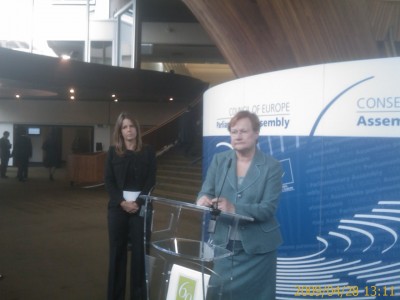
People in Europe and the World expect from CoE to make a succes of its "Monitoring" for Human Rights and Democracy, despite difficulties, said Finland's President Tarja Halonen to "EuroFora" at a crucial moment for the mecanism built 15 years ago by the paneuropean organization which celebrates its 60th Anniversary in 2009.
Halonen, known as "Mother" of CoE's "Monitoring" mecanism, a long-time MEP and former Foreign Minister before becoming Finland's President, holds a long experience in the mattter, after also serving twice as CoE and EU Chairwoman in the past. That's why she is well placed to judge how CoE's "monitoring" should deal today with some crucial issues of importance both to CoE and to the EU.
The move came just a Month before a crucial, last visit to Turkey, scheduled for June, by the President of CoE''s "Monitoring" Committee, Ukranian MEP Serge Holovaty, to finalize his Report on Ankara, the CoE Member State with the longest Monitoring procedure. From its results depends its overall credibility.
This is a Test-case, because, in fact, it's in order to avoid Sanctions threatened against Turkey by a CoE's Assembly's April 1995 Resolution for grave Human Rights violations, Democracy gaps, the continuing Military Occupation in Cyprus, the unresolved Kurdish problem, Aegean differend with Greece, etc., that MEPs decided to create, for the 1st time on April 1996, a "Monitoring" proces, allegedly destinated to check, without excluding Countries who did not fulfill all CoE's standards.
In the Past, the obliged withdrawal of Greece's Military regime and of its "Civil" cover-up out of the CoE had helped bring back Democracy in 1974. But, on the contrary, since April 1996, the idea was to "monitor" Human Rights' respect while keeping most concerned Countries inside the CoE. After Turkey's oldest example, this was extended also to several former "Eastern" European Countries, even if CoE's Assembly has imposed to some of them (fex. Ukraine, Russia, etc., after Belarus, Serbia, etc) various "Sanctions", that Ankara always avoided. Curiously more succesful even than .. USA itself, (a CoE "Observer" since 1995), which has been at least threatened with sanctions some years ago..
EU-effects of CoE's Monitoring process became obvious between 2001-2008, since the "closure" of this procedure, when CoE felt that a Country had met most of its Human Rights, Democracy and Rule of Law obligations, (i.e. the "Copenhagen Criteria" for the EU), helped trigger Negotiations with the EU for "Accession" or other closer relations : This occured already before the 2004 and 2007 EU Enlargements to former "Eastern" European Countries, as well as for the commencement of "accession" negotiations with Croatia, and of "open-ended" negotiations with Turkey in 2005.
But a stricking new development are Holovaty's recent findings that on core Human Rights issues as Torture and Freedom of Expression, Turkey, even "5 Years after" CoE closed its "Monitoring", back in 2004, inciting EU to start accession Negotiations in 2005, still presents grave problems.
His findings are of crucial importance after a 2008 CoE Resolution called, "if need be", to "seriously consider the possibility of Re-Opening the Monitoring procedure for Turkey" : A move which might affect Ankara's controversial EU bid, since EU Accession Negotiations are based on the Hypothesis that the Candidate fullfils the "Copenhagen Criteria" (See above)..
-------------------------
Holovaty expressed his will to check "Matters still Outstanding" and those that he "didn't have an opportunity to discuss" at an earlier visit this year, "in order to discuss the more complex issues in greater depth", at his forthcoming New Visit to Ankara, before the December 2009 EU Summit. This is all based on the 2004 CoE Resolution which stresses that, CoE "will continue.. post-monitoring Dialogue with the Turkish authorities,...in addition to a 12-points list,..and on any Other Matter that might arise in connection with Turkey’s Obligations as a CoE member state".
CoE's Resolution also asks from Turkey "to secure the proper Implementation of Judgements, particularly in the Cyprus v. Turkey InterState case", of 2001, which concerns also the plight of many Hundreds of MISSING People. It adds Turkey's obligations to "execute" ECHR's Judgements in the Loizidou case,..and in particular adopt General Measures to avoid repetition or continuation of Violations found by the Court" to the detriment of Refugees.
Nevertheless, Holovaty said to "EuroFora" that "MISSING" persons,"might be included" and cannot be excluded, but he has yet to examine the situation "to find out which issues will be raised" to the Turkish Government.
Therefore, "EuroFora" asked Halonen, as the Historic "Mother" of CoE's Monitoring mecanism, if she thought that, "whenever there are grave Human Rights Violations, as fex. "MISSING" persons, attested even by ECHR's judgements, they should be always checked by a Monitoring process. Or could they be forgotten ?"
- "We (CoE) must be, at the same time, Fair, Realistic, but not in the mind that "now we have Forgotten", etc., replied to "EuroFora"'s question Halonen, speaking as a matter of general principle.
- "When we think of those People that are suffering from the lack of Democracy, of Human Rights, and of the Rule of Law", "we should find a base on how to deal with the (Monitoring) system more rapidly"', she stressed.
- "Sometimes it's very difficult to combine Transparency and Effectivenes together, particularly in this specific case", she went on to say. But, "I have not found a (CoE Member) Country who could be insensitive in this sens", Halonen answered concerning grave Human Rights violations attested by the ECHR.
- "I have no ready-made answer. I have the expectations that you, in the CoE, will, step by step, find the different types of the monitoring systems."
Also "because this is a part of the UN's Post-Conflict system, (fex. when it comes to Cyprus' MISSING persons), and it's a more Global system". So that, "If we make a succes in Europe, the others will follow", throughout the World. "But they expect that we (Europe) are this opportunity, this Opportunity to make a Succes", Halonen concluded.
In addition, she advised to extend CoE's Monitoring to all its 47 Member States, "because, as long as we hear that, all these monitoring systems are "OK for the neighbor, but not for me", "it's very difficult" to understand. Something which could make easier to Compare...
Finnish MEP Jaako Laakso, former CoE Rapporteur on the Occupied Territories of Cyprus and one of the 5 Signatories of the Historic CoE's call to create the "MONITORING" mecanism since 1996, was more specific : - "We (CoE Assembly) have to find a way for the issue of Cyprus' MISSING People to be better followed", he stressed, anouncing his intention to "speak to Mr. Holovaty" about that. "There might be also other ways", added Laakso.
- The 2008 "Year had been a very Bad one for Turkey with regard to Human Rights in general, and Freedom of Expression in particular", denounced, meanwhile, Holovaty's preliminary Post-Monitoringh Draft Report by Holovaty, published by the CoE on April 2009.
"Amnesty International believes that freedom of expression is not guaranteed given the various articles of the Criminal Code that restrict it. .. "For example, 1,300 Websites are said to have been closed down by the (Turkish) authorities in 2008" ! While "the new Turkish Criminal Code was used to bring a total of 1,072 proceedings between June 2005 and April 2008, and led to the conviction of 192 people", for expressing views. "Representatives of the Özgür Gündem newspaper, which specialises in Kurdish affairs, ..complained about Numerous Attacks on their Freedom of Expression ...as was everyone who advocated a settlement to the question by means other than the intervention of the army" "According to their figures, 19 Newspapers had been suspended 43 times between 4 August 2006 and 4 November 2008" !...
Moreover, on 2008, CoE's "Ministers adopted its 4rth Resolution on the execution of the judgments of the ECHR, ...and outstanding issues regarding 175 Judgements and decisions relating to Turkey delivered between 1996 and 2008... concerning Deaths resulting from the excessive use of force by members of the Security forces, the failure to protect the right to life, the DIisappearance and/or death of individuals, Ill-Treatment and the Destruction of property". CoE's " Ministers urged the Turkish authorities ...to ensure that members of Security forces of all ranks can be prosecuted without administrative
authorisation" for "serious crimes". Holovaty reminded.
"Nonetheless", Holovaty heard anew of "Several cases of Violence committed last year (2008) by the (Turkish) security forces". Amnesty International speaks of Many Cases of ill-treatment and Torture in the prisons and by the police". "Including, fex."'the death of Engin Ceber, a young man of 29 who died on October 2008 as a result of the TORTURE allegedly inflicted on him by police officers, prison staff and members of the gendarmerie. He was part of a group of people arrested on September 2008 during a demonstration and Press Conference in Istanbul'. Proceedings against suspects are "on-going" in this case.
- " I therefore noted an Obvious Contradiction between the Government’s stated “zero tolerance” policy.... of Torture and other forms of ill-treatment, and the different testimonies given", denounced CoE's Rapporteur. Turkish "authorities must make considerable efforts to guarantee that proper investigations are carried out into allegations of abuses by members of the security forces and that perpetrators are effectively punished" "In this respect, I have requested detailed Statistics on the number of Investigations, acquittals and convictions in cases involving allegations of abuse in order to show the positive impact of the measures taken to date", Holovaty said, repeating a permanently unsatisfied CoE's demand to Turkey since a Decade...
- "The Political Crisis that shook the country in the spring of 2008 highlighted the Weaknesses of the (Turkish) Constitution", which comes from the Military regime of 1982, "and the Urgent Need of Reforms", stressed from the outset CoE's Rapporteur in 2009. In particular, "the ...Democratic functioning of state institutions, including the independence of the judicial system, are crucial", he observes.
But, "the Electoral system and the ways in which it is circumvented do not appear to give those elected complete Legitimacy, and tend to pervert the course of direct universal suffrage", denounces Holovaty, observing that, even 5 Years later, Turkey did not yet change the 10% nationwide Threshold for a party to take any seat, which is "far higher" than the "3%" maximum in Europe and already condemned as contrary to European Standards by the CoE.
+ Moreover, EU Parliament's 2009 Report on Turkey, drafted by Dutch MEP Ria Oomen-Ruijten and adopted in Strasbourg on March, expresses "Concern over the Failure of the (Turkish) Judiciary to prosecute cases of Torture and Ill-treatment, the Number of which is Growing". EU also "is concerned about continuing Hostility and Violence against Minorities" in Turkey. It also "calls on the Turkish Government to launch, as a matter of Priority, a Political Initiatve favouring a lasting Settlement of the Kurdish issue, (while "condemning violence.. and terrorist groups"). EU "regrets that No progress has been made on establishing full, systematic Civilian suprevisory functions over the (Turkish) Military".
The final results of Holovaty's 2nd and last visit to Turkley will be known later this year, and, at any case, before EU's December 2009 Summit.