


 newsitems EU Research Area Director Trias to EuroFora on Science for Growth and Bio-Ethics at CoE+UNESCO
EU Research Area Director Trias to EuroFora on Science for Growth and Bio-Ethics at CoE+UNESCO


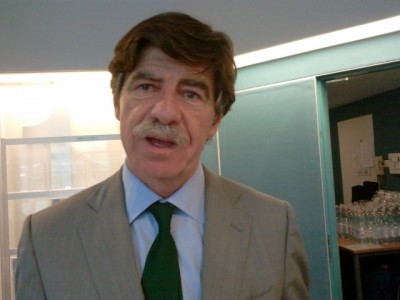
*Strasbourg/Council of Europe/Angelo Marcopolo/- Scientific Research can help boost much awaited Economic Growth in Europe, as well as the respect of Ethical Values, whenever needed, (as f.ex. in BioEthics, etc), which are important and useful factors in this regard too, particularly in domains where Citizens' Trust is a must, said in substance to "EuroFora" EU's Director for the European Research Area, Octavi Quintana-Trias, responsible for the emergence of an Integrated, TransBorder, really European Society with networked links and activities on Scientific Research.
Trias opened an important CoE's PanEuropean and even International Conference on a topical issue of BioEthics, with the participation also of UNESCO's Global body, where Economy, Law and Ethics, as well as recent developments on High-Tech. issues and Social/Moral choices of crucial importance not only for Europe but also for Humankind's Future, were closely interlinked, (See Infra : UNESCO's new Chief on BioEthics, Dafna Feinholz's, as well as CoE's Legal and Human Rights' Director Philippe Boillat's statements to "EuroFora") :
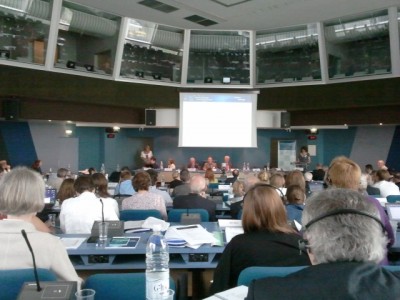
- "We (EU) want to address (Economic) Growth and (Natural) Environment through (Scientific) Research, and we want to do this by dealing with certain Great Challenges : These are Climate Change, Energy, Ageing, Inclusive Societies", and other such topical, big issues, ambitiously stressed from the outset, speaking to "EuroFora", EU's Director of the European Research Area.
- Meanwhile, already, "in the next few Weeks, we (EU Commission) are launching the Calls (for Projects to be Funded by the EU) for this Year (2012)", anounced Trias in reply to "EuroFora"s question on whether EU Commission was preparing some interesting, concrete Moves in the run up to the a Crucial forthcoming EU Summit in Brussels, at the end of June, which is notoriously due to focus mainly on Heads of State/Governments' discussions and decisions about how to boost sustainable Economic Growth.
- "This is an Important Call, because it's a call of 90 Billions €, that will be launched in the Begining of July", (i.e. during the forthcoming Cyprus' EU rotating Presidency : July - December 2012), concerning, practically, "all sorts of (Scientific) Research", as he revealed to "EuroFora".
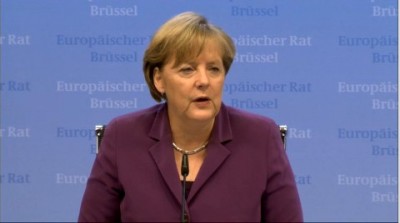
Scientific and Technological Innovations' importance in order to boost EU Countries' Competitiveness in Global Markets has been recently recognized as a Number 1 Economic Priority by EU Heads of State/Government, already since 2010-2012, with German Chancelor Merkel even stressing, in reply to Journalists' Questions in Brussels at the end of 2011, that EU should try to help in this regard even Debt-stricken EU Member States as, f.ex. Greece :
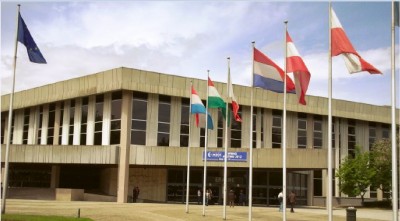
This, probably, rare area for a possible, at least partial agreement with New French President Hollande at the forthcoming EU Brussels' Summit, apparently triggered f.ex. a particularly active presence of several interesting Young Greek Researchers' projects, presented in the wider framework of a Mega-Conference composed of more than 21 parallel Symposia, organized by Strasbourg-based European Materials' Research Society (EMPRS) at the Pflimlin Congres Center last May 2012, under the guidance of Thessaloniki University's Professor Logothetidis,
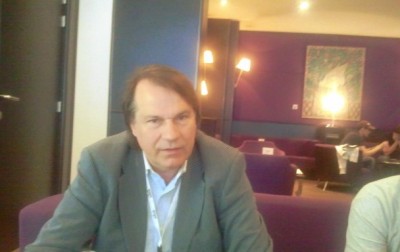
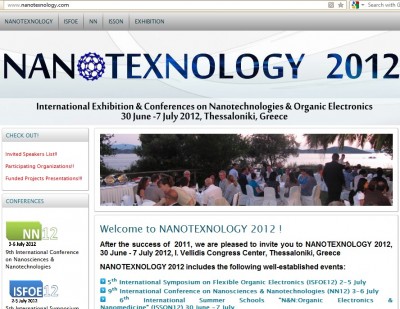
who also anounced, on this occasion, an ambitious bouquet of European Exchanges Network, Exhibitions, Summer Schools, Meetings and specialized Conferences on cutting-edge research on NanoSciences and NanoTechnologies on July, (resumed as "NanoTeXnology 2012"), with the participation of outstanding Scientists from the EU, Russia, Japan, USA etc, near a beautiful Rural, Seaside area, close to the famous "Athos" Mountains, Birthplace of the most famous Philosopher and PluriDisciplinary Scientist in Global History : Aristote, who inspired Alexander the Great's Dream to try to unite the World's biggest Civilisations known since the Ancient era...
-----------------------------
+ Speaking, precisely, in favour of "PluriDisciplinary" approaches in Scientific research, Trias also replied positively to another "EuroFora's question on how he evaluates recent trends to associate, f.ex. in Natural Sciences, not only Chemistry and Medicine with Biology, etc;, but also Physics, etc,
- "Most breakhroughs that have been done f.ex. in Life Sciences, is when someone has looked at a Problem with a Differend Pont of View" (from what was established until then) : It may be Physics, it may be Chemistry, Mathematics, Informatics or Social Sciences", observed, in favour of "PluriDisciplinarity", the experienced EU Director for the European Research Area, who has personally worked mainly on Health Care "Quality" issues, but also on Atomic Energy (as EURATOM's Director), International Cooperation, etc...
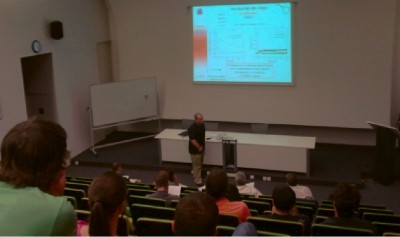
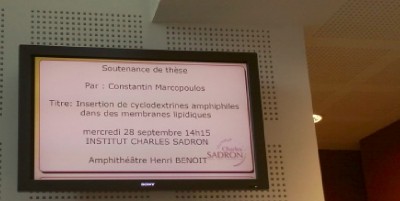
This settles our relative surprise, f.ex. when a Young Doctorate Researcher at Strasbourg's University, and "EuroFora's" new Scientific Advisor, Dr. Constantin Marcopoulos, recently insisted to present the work done for his PHD Thesis, that he succesfuly defended, at the age of 25, to a critical jury of Professors from France's Aix-Marseille University, Portugal, Germany and Switzerland's Geneva University, etc, at Charles Sadron Institute, on an apparenty complex technological issue, involving NanoTechnologies, Human Membranes, so-called "Topological" Materials, as well as Chemical substances, etc., rather difficult to explain in simple language for laymen, as being a concrete exercice, on a particular issue of Fundamental research, (of possible use for matters related f.ex. to Food Safety, Cosmetics, eventually Drug Delivery, etc), of "Physics applied to Biology", as he briefly resumed, (while also keeping a careful eye, at least in private conversation, on eventual Social/Ethical issues)..
Such kind of "PluriDisciplinary" experiences, are certainly "Useful" even inside EU Commission's own services, paticularly to those related to EU Commissioner Máire Geoghegan-Quinn's responsibility on Research, Innovation and Science (Comp. Quinn's replies to "EuroFora"s Questions on the occasion of a pioneer Conference on Universiy Excellence networks throughout all the EU, sponsored by former President of France, Academician Valery Giscard d'Estaing, earlier at EU Parliament : See relevant NewsReports) : "F.ex., just in my own services I use almost one Hundrend such PHD holders in various Sciences", told us EU's Director for the European Research Area. This includes also Social and Human Sciences, such as Law and Economy, but also Politics, Sociology and Ethics, etc, which are often interrelated with Natural Sciences' research, as, f.ex., in the topical case of BioEthics :
Trias was, indeed, exceptionaly in Strasbourg for an important, PanEuropean/International CoE Conference on delicate BioEthical issues concerning what CoE's basic BioEthics Treaty of Oviedo, adopted on 1997, cites as "any Human Body's Part" "Removed" and "Used for a Purpose Other than that for which it was removed", asking States to ensure "conformity with appropriate Information and Consent procedures" from the concerned Persons. This was, later-on, re-named, in a simple CoE's Recommendation adopted on 2006, as "Biological Material of Human origin". But it's recently refered to as simple "Biological Samples and Patient related Data", (f.ex. in the Strasbourg-based European Science Foundation's 2011 "Position Paper"), and now, f.ex. in the present 2012 CoE Conference, as "Biological Material" "collected", "stored and Used for Research", or, even, as in an EU's Experts Group's 2012 Report, mere "Samples and Data".
This is due to be the main activity of what was recently called "Bio-Banks" (from 2006, but mainly on 2011 and particularly during 2012), that are, in fact, emerging from "University Hospital Labos", which constitute still "a Wide Majority" of such Actors, who are more and more frequently incited to establish National, European and even "Global Networks" with "Infrastractures" for a growing "International Cooperation", where "exchanges" and collaboration are due to play an important role, particularly after recent Developments in Research on the "Human Genome and on Bio-Informatics", (as explained British Expert Jane Kaye, Rapporteur of EU's "Experts Group on Ethical Issues of Research based on BioBanks"). including on a Quest of "an enormous Range of Biological Samples and Patient-relevan Data, (which) must be Collected, Catalogued, and Stored in BioBanks", at the same time that "Large Numbers of Individuals -sometimes up to Hundreds of Thousands - with Shared Characteristics, (known as "Cohorts") must be Regularly Monitored", according to the above mentioned 2011 ESF Paper, distributed now (6/2012) at the CoE.
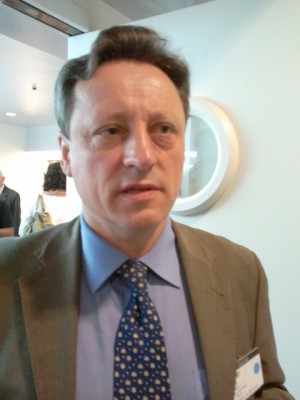
"Human Embryos" are explicitely excluded by the relevant 2006 CoE's Recommendation, (as it was clearly stressed to "EuroFora" by CoE's BioEthics Committee President, Prof. Eugenijus Gefenas, from Lithuania, a forthcoming EU rotating Presidency soon, after Cyprus and Ireland, before Greece and Italy on 2014),
But such "BioBanks" might apparently include DNA samples, Tissues, Bones, Blood, Organs, Umbilical Cords, etc, as well as Private Medical Data from Patients, f.ex. taken from them during Health Care.
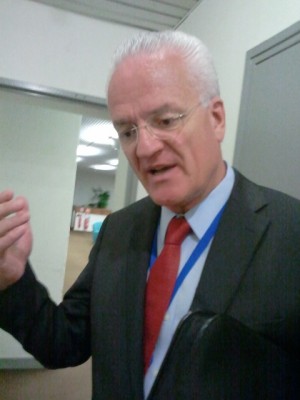
-"The main point is that we (CoE) encourage Medical Research and BioMedicine, but all these Researches must Respect the Fundamental Values that CoE protects, such as Human Dignity, Non-Discrimination, Equality, (private) Data protection, etc. : All these Fundamental (Human Rights') Principles must be found in the Ethics which guide Research", stressed from the outset the experienced CoE's General Director on Rule of Law and Human Rights issues, Philippe Boillat, from Sxitzerland, speaking to "EuroFora".
As it results from the presentations made during CoE's 2 Days-long PanEuropean and even International Conference, which brought together both EU and Russia, as well as USA and Latin America, etc., some believe that the 2006 Recommendation adopted by CoE's Committee of Ministers on so-called "Biological Materials of Human Origin", (already explicitly made in order to facilitate "Research" respecting at least som elementary Ethical principles), seems not well adapted to special problems raised in practice by the so-called "Bio-Banks", which evolve into Networks of such Samples and Data, stored in order to be used for Research purposes, and currently leaning towards establishing not only European, but even "Global Networks", for "Trans-Border, International Cooperation", including with the USA, etc., thereby raising also more Delicate issues, mutatis-mutandis as it was also noted at another CoE's Conference on the Internet and CyberCrime, where, f.ex., Russians and other participants underlined the National Sovereignity and/or Security issues that some CoE's controversial texts raise, (Comp. earlier, specific "EuroFora"s NewsReports on CyberCrime/Internet, etc).
+ Moreover, elementary BioEthical Principles, as, f.ex., that of Individual Patients' "informed Consent" for any Tests on parts or samples from his/her body, be it, f.ex., simple Cells (containing DNA, etc), is "Difficult" to see how it could be applied by such a "Bio-Bank", where "not even the purposes, the aims of the Research" which might, eventually, use such "Samples", "is not yet known, beforehand", critically observed to "EuroFora" the President of CoE's BioEthical Committee, Professor Eugenius Gefenas. Therefore, EU Experts and CoE's International Conference organizers proposed from the outset to Change the Rules of "Informed Consent" and "Privacy", from an authorisation-like decision, rather in a kind of "On-Going Process" of Patients' involvement in an "Ethical" and, as "Transparent" as possible Governance of the so-called "BioBanks", and/or by adopting a new practice of so-called "Anonymization" of Patients' personal Medical Data, etc.
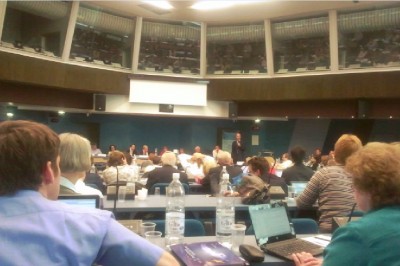
At the same time, however, many Participants, both from the Governemental, Scientific and Business, as well as NGO's sides, etc., stressed the current need to deserve and win "People's Trust", mainly through well-crafted Ethical Rules, adequately respectinng, f.ex. Citizens' Right for an "Informed Consent", as well as "Privacy", etc. Statistical Surveys and Polls clearly show, indeed, that a Large Majority of EU Citizens hasn't even heard about the possible existence and/or the purpose of so-called "BioBanks", (most of which, still are at a simple University Hospital Labos' stage : Comp. supra), while too many People express various Concerns and Doubts, the greatest number Refusing even to accept to provide themselves such "Samples" and/or "Data" for unspecified yet "Research" purposes, (according to Polls distributed at CoE's Conference). Moreover, it's well known that even the British (and Global) Public Opinion was really Shocked when it was suddenly discovered, some years ago, that a big Hospital in the UK secretly stored a huge, macabre "Collection" of many Hundreds of Embryos, aborted Foetuses, and even Dead Babies, without ever informing nor asking the Consent of their Families. A similad Scandal broke out, also in the UK, when it was found that another Hospital collected and stored a Huge Quantity of Blood, secretly and without any proportion with its Patients' Health needs, etc. - "Even in my Country, as well as in some others, some Hospitals often follow dubious practices which don't respect CoE's BioEhical Principles", said to "EuroFora" the experienced Prof. Josef Glasa, of the Slovak Medical University's Institutes of Pharmacology and Medical Ethics, a long-time Member of CoE's BioEthics Committee, who, however, thinks that an adequate Regulation of so-called "BioBanks" might, eventually, help to settle several currently outstanding issues.
- "What I hope to have from this (EU-CoE, PanEuropean) Conference is an Agreemennt, on, 1st, on what <<Bio-Banks>> are, and, 2, which are the Rules that we need to take on ourselves (EU), in order to address issues on Bio-Medicine" in this emerging area, EU's Director for the European Researh Area, Octavio Quintana-Trias stressed, in this regard, to "EuroFora".
- For that purpose, "I think that it's Important to Build on the Synergies that we (EU) have between the CoE and ourselves : The CoE has an Expertise on Human Rights, that is very Good and Essential". But "we (EU) don't have (Legal) Competences on Ethics, since it's left on Member States' National level". That's why, "I think that this" EU - CoE "Synergy is very Good", explained the experienced Trias, who has served in the Past also as CoE's BioEthics Commitee's President.
- In fact, EU's "Group of Experts (already) has prepared some Guidelines on how to address the issues, and we'd like that these are shared, as much as possible, from all (EU) Member States", he revealed.
However, during a last-minute "Open" Debate between participants at CoE's PanEuropean/International Conference, some found that, in fact, the BioEthical a.o. issues raised by the so-called "BioBanks" are "so Delicate and Complex", that it might be Hasardous to expect a large enough and fast agreement, even less an unanimous decision at the 47 Member Countries-wide CoE, while others even pointed out that, several times, in real practice, even "Human Embryos and Bodies of Dead People" might be involved, so that "the Real Problems are much more Great" than initially presented, as they said, (etc).
- Therefore, it's for the CoE to decide if it would be better to prepare only some simple, Non-Binding, but handy in practice, "Guidelines", f.ex. a kind of "Code of Conduct", etc., or a fully-fledged, Legally Binding, "Additional Protocol" to the main CoE's Convention on BioEthics (known as "Oviedo" Treaty by the name of the Town wher it had been officially opened to signature for COE's Member States back on 1997), and/or to the earlier, 2006 CoE's relevant Recommendation (see above), said in conclusion to "EuroFora", CoE's experienced, long-time Director on BioEthics, Carlos de Sola.
- According to the choice due to be made in this regard, the overall process might take 1 or 2, even 3 years, if not more, until the required agreements ar reached, but I wouldn't exclude f.ex. a decision to try to do both : I.e. establish a kind of list of "Guidelines", and, in parallel, prepare an eventual New, legally binding, Protocol to review the 2006 Recommendation and/or the Oviedo Convention in this specific field, told "EuroFora" also Francoise Wolff, the active Head of CoE's BioEthical Committe's secretariat.
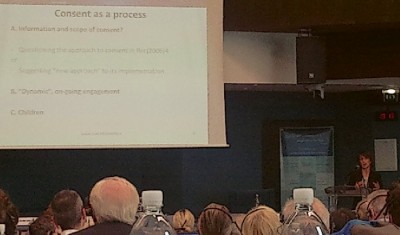
As for the obvious Question, (Comp. supra), about whether CoE might simply endorse the Draft Rules proposed by EU's Group of Experts (See above), or Modify them, more or less, or, eventually take very Differend Decisions, at least on some Key points concerning BioEthic principles, Wolff acknowledged the fact that EU Countries have a large Majority inside COE (27 out of 47 Member States), but acknowledged also that, in fact, COE is a diffrend, PanEuropean Organization, with 10 more Member Countries, and specialized on Human Rights, Democracy and Rule of Law, (at least since the crystal-clear Mandate given from the 2005 CoE Summit of Heads of State/Government in Warsaw, Poland : Comp. "EuroFora" Co-Founder's NewsReports from that, Stategic Warsaw Summit, published mainly at TCWeekly+), while, at the same time, concerning specifically BioEthical issues, usually, in most Countries, there are "More Ministries" involved in such cross-sector, Inter-Ministerial matters of Manifold importance.
+ Meanwhile, regarding particularly the currently growing International and Global Dimension of such issues (Comp. Supra), CoE's work was personally followed in Strasbourg also by Paris-based UNESCO's own new Chief of BioEthics' section, Dafna Feinholz from Mexico, (one of the Overseas Countries with Special Status to the CoE, as well as USA, Canada, Japan, Israel, Palestinian Council, Morocco, etc. since 1995-1996's Historic Decision for Russia's full Accession as CoE Member, furhter extended recently towards South Mediterranean after recent developments), which is particularly active inside the CoE in Strasbourg, including with a brand new Permanent Observer, Ambassador Lydia Madero).
- UNESCO has adopted already since the 1990ies a 1st Universal Declaration on Genetics and Human Rights, (the "Oldest" one), followed by "a 2nd one on Data Protection, Internet and Communications", before the 3rd, and "Broadest, dealing wiht BioEthics in general , and Human Rights, adopted ...on 2005", which laid down a set of General "Principles", Feinholz reminded to "EuroFora".
+ So that, "since 2005, the International BioEthics Commission" has started to systematically prepare "a Series of Reports, elaborating on the basis of those Principles", on "how to implement" them in various specific fields, destinated "for Decision Makers, to the Scientific Community", while also helping concerned People to understand these issues : - "The 1st such Report is on "Informed Consent", the 2nd is on "Social Responsiblity and Health", and the 3rd, which will be Published soon (on 2012), is on Protection of Human Integrity and Personality", UNESCO's BioEthics' Chief told "EuroFora".
=> - "In this Context, UNESCO is starting just Now, hoping that it will be Ready, probably, for 2013, a New Report on the Principle of Non-Discrimination and Non-Stigmatisation", which is "taken as un Ombrela", because the International BioEthics Committee "decided to analyse Differend Domains, grouped in 6 Topics, such as the (so-called) BioBanks, Neuro-Sciences, Nano-Technologies, Access to Drugs, HIV, Organs and Tissues' Transplantation", etc, anounced to "EuroFora" Feinholz, who has usefuly associated in her own University:Research background BioEthics and clinical Psychology.
However, in addition to the interest that all "Regional" Organizations, in Europe, America, Africa or Asia, etc. represent, all over the World, for their developing work, Ideas and "Networks" on BioEhics, an obviously "Global issue", nevertheless, at least in terms of Legally Binding Ethical Principles and Rules, it's true that CoE's "Oviedo" Convention on BioMedicine and Human rights is a really "unique" example, at least until now, acknowledged the New Chief on Bioethics at UNESCO's 193 Member Countries-strong International body.
But, on one of the most "Hot" classical BioEhics issues, that of "Human Embryos", even if "there is already a Report with analysis in terms of Ethical aspects", and "theer was an idea to move forward in terms of Normative action, but there was No Agreement among the Member States", "so that, at this point, it doesn't seem likely to go on in Normative action", UNESCO's BioEthics' Chief told "EuroFora", pointing at an obviously crucial matter, also inside CoE, where an Historically important, pioneer, specific PanEuropean Experts' Group on Human Embryo had worked in Strasbourg for many years in the Past, before the experienced Portuguese old Professor who chaired it, found an apparently Total Opposition between 3 Groups of CoE's Member States : - "Those who wanted a Strong Protection (as f.ex. Germany, etc), those who prefered a Weak one, (as, f.ex. the UK in the Past), and those Countries which stayed "in he middle", witghout really choosing one or another from those 2 different, opposed Drections : - "After I found that this Opposition could not be bypassed, at least for the moment, we were astonished to see that the COE even decided to Stop any New work on Human Embryo research's BioEthical Principles, by dissolving the competent Working Group !", the old, experienced Scientist had bitterly denounced to "EuroFora"s co-Founder, already many years ago, and this, obviously crucial, problem, seems to remain still unresolved until now.
----------------------------
(See "EuroFora"s specific NewsReport, to be sent initially as DraftNews to Subscribers/Donors, with a more accurate and full, Final version due to be published asap),
------------------------------
***
("DraftNews", as already sent earlier to "EuroFora"s Subscribers/Donors. Watch out for a more accurate and full, Final Version, asap).
***
Main Menu
Home Press Deontology/Ethics 2009 Innovation Year EU endorses EuroFora's idea Multi-Lingual FORUM Subscribers/Donors FAQs Advanced search EuroFora supports Seabird newsitems In Brief European Headquarters' MAPs CoE Journalists Protection Platform
BRIEF NEWS
- 00:00 - 02.06.2021
- 00:00 - 18.10.2020
- 00:00 - 19.06.2020
- 00:00 - 18.05.2020
- 00:00 - 20.04.2020
- 00:00 - 02.02.2020
- 00:00 - 09.12.2019
- 00:00 - 27.11.2019
- 00:00 - 16.11.2019
Popular
- Yes, we could have prevented Ferguson riots says World Democracy Forum's Young American NGO to ERFRA
- Spanish People Elect CenterRIGHT Majority with 1st Party and Total of 178 MPs (6 More than the Left)
- Pflimlin's vision
- The European Athletic "Dream Team", after Barcelona 2010 Sport Championship Results
- Source Conseil d'Europe à ERFRA: Debatre Liberté d'Opposants à Loi livrant Mariage+Enfants à Homos ?
- Head of BioEthics InterGroup, MEP Peter Liese : "Embryonic stem cell research reaching its END" !?
- Spain: Jailed Turkish Terror suspect with Explosive,Drones,Chechen accomplices stirs Merah+ Burgas ?
- UN Head Ban Ki Moon at CoE World Democracy Forum : - "Listen to the People !"
Latest News
- Test Photos (f.ex.+ Invit to EU + Korea Peace meeting)
- EUOmbudsmen Conference 2022: Digital Gaps affect People's Trust threaten EF Project on EU Future ?
- French Election : Black Out on Virus, but Obligation for Fake 'Vaccines" Challenged
- Both French Presidential Candidates point at "Humanism" in crucial times...
- France : Zemmour = Outsider may become Game Changer in Presidential + Parliamentary Elections 2022
Statistics
Visitors: 64034557Archive
Login Form
Syndicate


Other Menu
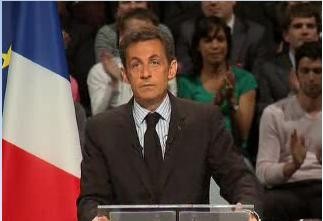
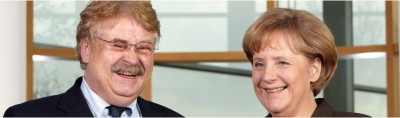
EU Rapporteur on Enlargment Strategy, maistream German MEP Elmar Brok, speaking to "EuroFora", welcomed the proposal made earlier this week by French President Nicolas Sarkozy for the EU to"start Now Talks with Turkey to create a common Economic and Security area", instead of full Accession, at a period when Ankara looks more and more unfit and/or unwilling to respect EU conditions.
- "For Europe to have strong Political will, it must stop dilutiing itself in an endless Enlargement. It must have borders...Diversities enrich, on the condition that they don't undermine European Cohesion, and don't weaken EU Unity", Sarkozy stressed.
- "Countries like Turkey share a part of common destiny with Europe, with which they have a vocation to build a Privileged Relation, to be closely associated, but not to become Member of the EU" : "Noone respects his friends by telling them lies. Noone respects his friends by making them promises that will be never kept", he added.
That's why "we'd better start, from now, negotiating with Turkey to create a common Economic and Security area", Sarkozy proposed.
Significantly, the French President was repeatedly and largely applauded by EU citizens, 3 times, when he made the Turkey point, (strategically placed between Europe's "Political Will" and its cultural heritage, historically open to mutually enriching dialogue with all the World, but never diluted).
- "We could propose such a great ambition also to Russia, which must not be percieved as an Adversary of Europe, but as a Partner. Thus, we'd create a wide area, of more than 800 Million inhabitants, sharing the same Security, the same Prosperity", he concluded.
Sarkozy's move was anounced at the eve of a Franco-German Top meeting with Chancellor Angie Merkel in Berlin on Sunday, to jointly launch the EU Elections campain, after an EU Summit at nearby Prague, to launch a new kind of relations, called "Eastern Partnership", with neighboring countries such as Urkaine, Belarus, Moldova, Georgia, Armenia, Azerbaidjan, etc, (to which Russia, reportedly, is not - and does not want to be - included).
As for Ukraine, which has already expressed her wish to join the EU in future, "Kiev will have a special place, and a very important role to play", replied earlier this week in Strasbourg, to an "EuroFora" question EU Chairman in office , Czech vice-Prime Minister Alexander Vodra.
- "This direction is more Realistic for Turkey than Accession negotiations", reacted immediately EU Parliament's Rapporteur for Enlargment Strategy, mainstream German MEP Elmar Brok, commenting Sarkozy's idea for "EuroFora"
Particularly "as far as it concerns the respect of EU Rules by both sides", he added, hinting at Turkey's now obvious inability and/or unwillingness to abide with EU Acquis, EU Commitments (fex. on Cyprus, etc), and European Democracy/Human Rights rules. (Comp. infra).
Brok added that, in his view, a similar proposal might be made also to Ukraine and other neighbouring Countries, regardless if they have, or not, a "European vocation". This would not necessarily mean that there couldn't be any accession prospects at all." for all the countries that might be included in this area, according to Brok. But it's preferable, particularly for Turkey, "because it's a more Realistic approach than full Membership".
On this point, Sarkozy's proposal, (which he'll share with German Chancellor Merkel), seems more crystal-clear.
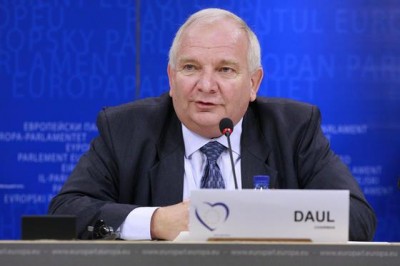
- "Turkey does not fullfil EU Criteria, and will never fullfil EU Criteria" on Human Rights, Democracy and Rule of Law. "Some have been lying to Ankara, but we must tell the Truth, and have honest and close relations with her", said meanwhile to "EuroFora" on the same issue also the President of EU Parliament's largest Group of MEPs (ChristianDemocrats/EPP), Joseph Daul.
------------------------------
"Hot" Debate at EU Parliament reveals CHANGE of mood towards "Suspension" of EU - Tukey talks.
------------------------------
Earlier this week, many MEPs, and even some of those who were previously in favor of Turkey's controversial EU bid, strongly criticized the persistance and even aggravation of serious Human Rights violations in the country, that ECHR continues to "unanimously" condemn ":
- "After winning a big victory in the latest Local Elections, the pro-Kurdish party DTP almost doubled its Elected Mayors from 52 to 98", but afterwards "more than 400 politicians were thrown to Prison and prosecuted" by the Turkish Authorities, denounced on behalf of the ChristianDemocrat/EPP Group, Belgian MEP Frieda Brepoels.
At the same time, "more than 1.500 Children are closed in Turkish Prisons", she added. "What will the EU Commission do" against these facts ?
- "Turkey appears to be at greater Distance away from Copenhagen Criteria after 4 Years of accession Negotiations, than when they started !", denounced on behalf of the Liberal Group, German MEP Alexander Lambsdorf.
"On the central issue of Press Freedom, Critical Journalists face obstacles for their accreditation, others are prosecuted, condemned, fined and/or jailed, Media blocked or closed", he denounced.
- "EU Made 2 grave Mistakes with Turkey : To start accession negotiations, and to continue them", despite everything, criticized Dutch MEP Bastian Belder, on behalf of the Ind/Dem group.