Greenpeace news
Latest news from Greenpeace
- Your right to stand for forests is under attack — again
If it seems like we’ve been talking about lawsuits a lot lately, it’s because we have.
Corporate bullies, helped by Donald Trump’s go-to law firm, have filed two massive lawsuits against Greenpeace in the last two years. They aim to silence us, but we are not alone. Many of our allies and other individual activists are fighting meritless lawsuits of their own. These Strategic Lawsuits Against Public Participation (SLAPPs) are not about justice or corporations righting some kind of wrong, but about tying up our resources in hopes that we won’t be able to keep fighting for a green and peaceful future.
Today, we filed a motion to dismiss one of these SLAPPs that should have already gone away for good.
 Participants and activists appear outside a United States District Court - October, 2017
Nearly two years ago, Resolute Forest Products — the largest logging company in Canada — filed a CAD$300 million Racketeer Influenced and Corrupt Organisations Act (RICO) lawsuit against a number of Greenpeace defendants. In case you haven’t heard of RICO, it’s a law designed to prosecute the mafia and stop organised crime (read: nothing to do with preventing peaceful activists from protecting forests).
In response to this baseless lawsuit, thousands of you raised your voices to make it clear that forest defenders everywhere will not be intimidated by corporate bullies that aim to silence us to protect their profits. And we’ve seen important progress.
Three months ago, a US judge threw out Resolute’s lawsuit in its entirety. Furthermore, the judge ordered Resolute to reimburse Greenpeace for our attorney fees under California’s anti-SLAPP law.
But for Resolute, this case has never been about winning; it’s about stopping us from fighting for forests by sucking up precious time and money. The company showed this in November when it filed a repackaged version of its meritless lawsuit. Because of this, we are all back in this fight.
Today, we filed a 40-page brief outlining why this “new” version of Resolute’s lawsuit is the same old story as the case that’s already been dismissed — and why it deserves the same fate.
There is no reason to think this new version of this lawsuit will not die the same death it did originally, but it does mean that forest lovers can’t stop fighting now. Attacks on our right to speak up threaten so much more than just Greenpeace, they threaten countless groups fighting to make the world a better place — including your right to fight for the planet you love. That’s why there are more than 30 organisations gathering in Washington, DC today to fight back against SLAPPs together.
Because each and every SLAPP threatens us all, we must fight each and every one together. Already, your voices have shown Resolute and companies everywhere that the movement for a green and peaceful future is stronger than corporate intimidation. Now it’s time to speak up again and bury this case once and for all — join the fight and stand up to SLAPPs today.
 Greenpeace activists in a forest near Werbellinsee in Brandenburg - April, 2017
Amy Moas, PhD is a senior forest campaigner for Greenpeace USA
- Sponsoring climate change
It is that time again. Four years roll by and once more the greatest winter athletes in the world will come together to wow us on death-defying luge runs, courageous ski jumps or surprisingly mesmerising curling slides matches.
Unfortunately, all is not well in this winter wonderland.
In preparations for these games, many Olympians have been faced by changing slopes - forced to search the world for places with the right conditions for them to train.
Meanwhile, a recent study by Dr. Daniel Scott from the University of Waterloo, Ontario, found that nine previous and future Winter Olympic cities may soon be too hot to host the games due to rising temperatures.
The impacts of climate change, that once seemed so far away, are here. And they are only going to get worse if we continue down the path we are on.
It does make you wonder then, why one of the biggest sponsors of the 2018 Pyeongchang Winter Olympics, Samsung, is still stuck on dirty energy.
 Greenpeace UK activists give Samsung's flagship store in London a rebranding makeover
 Since the 2010 Games, Samsung’s emissions, released from their vast, global supply chain, have risen by a whopping 55%.
Even more shockingly, right now Samsung uses a measly 1% renewable energy. Hardly a gold medal score, this is a laughably underwhelming achievement for a company that spouts out taglines such as “Do What You Can’t” and “Do Bigger Things” without a hint of hypocrisy.
This is in stark contrast to the rest of the world.
Even the Pyeongchang Olympic committee have been proactively communicating their own commitment to be powered by renewables. Six of the venues will run on renewable energy and they have set a target for zero emissions from the games.
While the snow melts and people around the world realise we have no time to lose, Samsung’s CEOs continue to turn a deaf ear. This is not about Greenpeace, it is not about saving face or greenwashing. On the eve of the 2018 Winter Olympics, the world is facing an existential crisis. Never before have we needed action on a truly global scale from all corners to reduce emissions and transition to renewable energy as fast as possible.
However, this is also an opportunity that will set aside the dinosaurs from the innovators. A moment that history will judge us for our actions (or lack of).
Samsung’s CEOs are faced with an opportunity to change course and courageously go beyond business as usual to drastically reduce our emissions and half catastrophic climate change. Do what you can’t?
Robin Perkins is Global Rethink IT Campaigner at Greenpeace East Asia
- A tribute to Jon Castle
James (Jon) Castle - 7 December 1950 to 12 January 2018
Over four decades Captain Jon Castle navigated Greenpeace ships by the twin stars of ‘right and wrong’, defending the environment and promoting peace. Greenpeace chronicler, Rex Weyler, recounts a few of the stories that made up an extraordinary life.
 Captain Jon Castle onboard the MV Sirius, 1 May 1996
James (Jon) Castle first opened his eyes virtually at sea. He was born 7 December 1950 in Cobo Bay on the Channel Island of Guernsey, UK. He grew up in a house known locally as Casa del Mare, the closest house on the island to the sea, the second son of Robert Breedlove Castle and Mary Constance Castle.
Young Jon Castle loved the sea and boats. He worked on De Ile de Serk, a cargo boat that supplied nearby Sark island, and he studied at the University of Southampton to become an officer in the Merchant Navy.
Jon became a beloved skipper of Greenpeace ships. He sailed on many campaigns and famously skippered two ships during Greenpeace’s action against Shell’s North Sea oil platform, Brent Spar. During his activist career, Jon spelt his name as "Castel" to avoid unwanted attention on his family.
Right and wrong
Jon had two personal obsessions: he loved books and world knowledge and was extremely well-read. He also loved sacred sites and spent personal holidays walking to stone circles, standing stones, and holy wells.
As a young man, Jon became acquainted with the Quaker tradition, drawn by their dedication to peace, civil rights, and direct social action. In 1977, when Greenpeace purchased their first ship - the Aberdeen trawler renamed, the Rainbow Warrior - Jon signed on as first mate, working with skipper Peter Bouquet and activists Susi Newborn, Denise Bell and Pete Wilkinson.
In 1978, Wilkinson and Castle learned of the British government dumping radioactive waste at sea in the deep ocean trench off the coast of Spain in the Sea of Biscay. In July, the Rainbow Warrior followed the British ship, Gem, south from the English coast, carrying a load of toxic, radioactive waste barrels. The now-famous confrontation during which the Gem crew dropped barrels onto a Greenpeace inflatable boat, ultimately changed maritime law and initiated a ban on toxic dumping at sea.
After being arrested by Spanish authorities, Castle and Bouquet staged a dramatic escape from La Coruńa harbour at night, without running lights, and returned the Greenpeace ship to action. Crew member Simone Hollander recalls, as the ship entered Dublin harbour in 1978, Jon cheerfully insisting that the entire crew help clean the ship's bilges before going ashore, an action that not only built camaraderie among the crew, but showed a mariner's respect for the ship itself. In 1979, they brought the ship to Amsterdam and participated in the first Greenpeace International meeting.
In 1980 Castle and the Rainbow Warrior crew confronted Norwegian and Spanish whaling ships, were again arrested by Spanish authorities, and brought into custody in the El Ferrol naval base.
The Rainbow Warrior remained in custody for five months, as the Spanish government demanded 10 million pesetas to compensate the whaling company. On the night of November 8, 1980, the Rainbow Warrior, with Castle at the helm, quietly escaped the naval base, through the North Atlantic, and into port in Jersey.
In 1995, Castle skippered the MV Greenpeace during the campaign against French nuclear testing in the Pacific and led a flotilla into New Zealand to replace the original Rainbow Warrior that French agents bombed in Auckland in 1985.
Over the years, Castle became legendary for his maritime skills, courage, compassion, commitment, and for his incorruptible integrity. "Environmentalism: That does not mean a lot to me," he once said, "I am here because of what is right and wrong. Those words are good enough for me."
Brent Spar
 Action at Brent Spar Oil Rig in the North Sea, 16 June 1995
One of the most successful Greenpeace campaigns of all time began in the summer of 1995 when Shell Oil announced a plan to dump a floating oil storage tank, containing toxic petroleum residue, into the North Atlantic. Castle signed on as skipper of the Greenpeace vessel Moby Dick, out of Lerwick, Scotland. A month later, on 30 April 1995, Castle and other activists occupied the Brent Spar and called for a boycott of Shell service stations.
When Shell security and British police sprayed the protesters with water cannons, images flooded across world media, demonstrations broke out across Europe, and on May 15, at the G7 summit, German chancellor Helmut Kohl publicly protested to British Prime Minister John Major. In June, 11 nations, at the Oslo and Paris Commission meetings, called for a moratorium on sea disposal of offshore installations.
After three weeks, British police managed to evict Castle and the other occupiers and held them briefly in an Aberdeen jail. When Shell and the British government defied public sentiment and began towing the Spar to the disposal site, consumers boycotted Shell stations across Europe. Once released, Castle took charge of the chartered Greenpeace vessel Altair and continued to pursue the Brent Spar towards the dumping ground. Castle called on the master of another Greenpeace ship, fitted with a helideck, to alter course and rendezvous with him. Using a helicopter, protesters re-occupied the Spar and cut the wires to the detonators of scuppering charges.
One of the occupiers, young recruit Eric Heijselaar, recalls: "One of the first people I met as I climbed on board was a red-haired giant of a man grinning broadly at us. My first thought was that he was a deckhand, or maybe the bosun. So I asked if he knew whether a cabin had been assigned to me yet. He gave me a lovely warm smile, and reassured me that, yes, a cabin had been arranged. At dinner I found out that he was Jon Castle, not a deckhand, not the bosun, but the captain. And what a captain!"
With activists occupying the Spar once again, Castle and the crew kept up their pursuit when suddenly the Spar altered course, heading towards Norway. Shell had given up. The company announced that Brent Spar would be cleaned out and used as a foundation for a new ferry terminal. Three years later, in 1998, the Convention for the Protection of the Marine Environment of the North-East Atlantic (OSPAR) passed a ban on dumping oil installations into the North Sea.
"There was no question among the crew who had made this possible, who had caused this to happen," Heijselaar recalls. "It was Jon Castle. His quiet enthusiasm and the trust he put into people made this crew one of the best I ever saw. He always knew exactly what he wanted out of a campaign, how to gain momentum, and he always found the right words to explain his philosophies. He was that rare combination, both a mechanic and a mystic. And above all he was a very loving, kind human being."
Moruroa
After the Brent Spar campaign, Castle returned to the South Pacific on the Rainbow Warrior II, to obstruct a proposed French nuclear test in the Moruroa atoll. Expecting the French to occupy their ship, Castle and engineer, Luis Manuel Pinto da Costa, rigged the steering mechanism to be controlled from the crow's-nest. When French commandos boarded the ship, Castle stationed himself in the crow's-nest, cut away the access ladder and greased the mast so that the raiders would have difficulty arresting him.
Eventually, the commandos cut a hole into the engine-room and severed cables controlling the engine, radio, and steering mechanism, making Castle's remote control system worthless. They towed the Rainbow Warrior II to the island of Hao, as three other protest vessels arrived.
Three thousand demonstrators gathered in the French port of Papeete, demanding that France abandon the tests. Oscar Temaru - leader of Tavini Huiraatira, an anti-nuclear, pro-independence party - who had been aboard the Rainbow Warrior II when it was raided, welcomed anti-testing supporters from Britain, Ireland, New Zealand, Australia, Japan, Sweden, Canada, Germany, Brazil, the Netherlands, Luxembourg, the Philippines, and American Samoa. Eventually, France ended their tests, and atmospheric nuclear testing in the world's oceans stopped once and for all.
“Moral courage”
Through these extraordinary missions, Jon Castle advocated "self-reflection" not only for individual activists, but for the organisation that he loved. Activists, Castle maintained, required "moral courage." He cautioned, "Don't seek approval. Someone has to be way out in front... illuminating territory in advance of the main body of thought."
He opposed "corporatism" in activist organisations and urged Greenpeace to avoid becoming "over-centralised or compartmentalised." He felt that activist decisions should emerge from the actions themselves, not in an office. We can't fight industrialism with "money, numbers, and high-tech alone," he once wrote in a personal manifesto. Organisations have to avoid traps of "self-perpetuation" and focus on the job "upsetting powerful forces, taking on multinationals and the military-industrial complex."
He recalled that Greenpeace had become popular "because a gut message came through to the thirsty hearts of poor suffering people ... feeling the destruction around them." Activists, Castle felt, required "freedom of expression, spontaneity [and] an integrated lifestyle." An activist organisation should foster a "feeling of community" and exhibit "moral courage." Castle felt that social change activists had to "question the materialistic, consumerist lifestyle that drives energy overuse, the increasingly inequitable world economic tyranny that creates poverty and drives environmental degradation," and must maintain "honour, courage and the creative edge."
Well loved hero
Susi Newborn, who was there to welcome Jon aboard the Rainbow Warrior way back in 1977, and who gave the ship its name, wrote about her friend with whom she felt "welded at the heart: He was a Buddhist and a vegetarian and had an earring in his ear. He liked poetry and classical music and could be very dark, but also very funny. Once, I cut his hair as he downed a bottle or two of rum reciting The Second Coming by Yeats."
Newborn recalls Castle insisting that women steer the ships in and out of port because, "they got it right, were naturals." She recalls a night at sea, Castle "lashed to the wheel facing one of the biggest storms of last century head on. I was flung about my cabin like a rag doll until I passed out. We never talked about the storm, as if too scared to summon up the behemoth we had encountered. A small handwritten note pinned somewhere in the mess, the sole acknowledgment of a skipper to his six-person crew: ‘Thank You.’” Others remember Castle as the Greenpeace captain that could regularly be found in the galley doing kitchen duty.
In 2008, with the small yacht Musichana, Castle and Pete Bouquet staged a two-man invasion of Diego Garcia island to protest the American bomber base there and the UK's refusal to allow evicted Chagos Islanders to return to their homes. They anchored in the lagoon and radioed the British Indian Ocean Territories officials on the island to tell them they and the US Air Force were acting in breach of international law and United Nations resolutions. When arrested, Castle politely lectured his captors on their immoral and illegal conduct.
In one of his final actions, as he battled with his failing health, Castle helped friends in Scotland operate a soup kitchen, quietly prepping food and washing up behind the scenes.
Upon hearing of his passing, Greenpeace ships around the world - the Arctic Sunrise, the Esperanza, and the Rainbow Warrior - flew their flags at half mast.
Jon is fondly remembered by his brother David, ex-wife Caroline, their son, Morgan Castle, born in 1982, and their daughter, Eowyn Castle, born in 1984. Morgan has a daughter of eight months Flora, and and Eowyn has a daughter, Rose, who is 2.
- We don't just need electric cars, we need fewer cars
Ever since the first production car rolled off the assembly line more than 100 years ago, our love affair with automobiles has grown and grown. In countries like the UK, France, Italy and Germany there are now around 5 vehicles for every 10 people. In the USA, Australia and New Zealand, the number is higher still.
But, after a century of the automobile playing a central part in our lives, we’re starting to see a shift toward alternative forms of transport. If this trend continues, the car’s domination of global transport could soon come to a spluttering end.
 Traffic jam in Beijing
Hidden cost of cars
With the cost of electric vehicles set to plummet over the next decade, many car firms now admit that the future is an electric one. But will this be enough? Shouldn’t we also be asking ourselves if we need so many cars in the first place?
If we could flick a switch and turn every fossil fuelled car into an electric one, lungs across the planet would breathe a sigh of relief as toxic emissions dropped (as long as the electricity used was from clean energy sources).
But this wouldn’t address the problem of just how wasteful a car dominated transport system is.
In 2016, more than 72 million new cars hit the road. Manufacturing such a giant quantity of vehicles year on year uses vast quantities of steel, aluminium, copper, glass, rubber, and other raw materials.
It’s a great environmental cost, considering the majority of these vehicles sit idle 95% of the time.
Parked cars take up a vast amount of space, too. In urban areas in Los Angeles county, an estimated 14% of land – 200 square miles – is dedicated to parking.
Changing attitudes
Though progress is often slow, city planners and politicians are gradually waking up to the fact that when cities offer safe and affordable alternatives to cars, we start to travel differently.
 Cyclists in Copenhagen
 More and more young people are choosing bicycles, buses and trains over owning a car out of the sheer cost. In Berlin, it’s public transport, not cars, which is the coolest way of getting around.
In Copenhagen, a city that has a long held reputation for being bike-friendly, a whopping 62% of people choose to cycle their commute.
In the French city of Lyon, the number of cars entering the city has fallen by 20% compared to just a decade ago. As the city’s network of bike hire stations continues to grow, town planners are hoping for a further 20% decline.
In London, where cycle super-highways are becoming popular, the share of journeys made by car has fallen by a quarter since 1990.
Car free days are rising in popularity in many of the world’s largest cities, giving people a taste of what it’s like to live with less noise, traffic and pollution. Bogota was one of the first cities to introduce a car free day, and it’s now become so popular that it’s been extended to a full week.
Our vision
Though the rise of electric cars should be celebrated, a truly sustainable transport system isn’t just about ditching fossil fuel vehicles.
It’s about building more cycle lanes, and supporting schemes to get people on bikes in the first place. It’s about constructing roads which encourage a more diverse range of travel - cycling, electric scooters and cargo bikes - instead of so heavily favouring cars. It’s about mass transport that runs on clean energy and is affordable and easy for everyone to use. And it’s about all of us - citizens, politicians, and businesses - playing a part in making it happen.
To coincide with the World Economic Forum taking place in Davos this week, Greenpeace has published Freedom to Breathe: Rethinking Urban Transport, a report that lays out our vision for the future of transport.
Richard Casson is a campaigner for Greenpeace UK
- Diving to the Antarctic sea floor is a scientist’s dream come true
Most people would be surprised about how many species of cold-water corals and amazing sponges you’d find on the bottom of the Antarctic Ocean. Even as the scientist who has identified three quarters of the registered seafloor communities designated for special protection in the Antarctic, I’ve never seen them myself either!
That is, I’ve never seen them in their natural environment before. Until now.
 Getting ready to dive in the submarine, 19 Jan 2018
The seabed of this truly special place is home to corals and other animals that create 3D structures, providing shelter for fish and habitat for countless other organisms. They are an indispensable element in a complex ecosystem which feeds the Antarctic Ocean and all the other larger and more well-known species in it like penguins, seals and whales.
 Submarine image of the seabed in the Antarctic, 23 January 2018
The reason why right now I’m more excited than I’ve ever been in my 25 years as an Antarctic biologist is that, this time, I get to go to the bottom of the sea myself! Having done lots of expedition-based research into the depths of this unique ocean, now I can see first-hand what I have been studying for so many years.
Usually, this type of scientific research is hard labour; digging through the large amount of bycatch caught in trawl nets and the time-consuming job of sorting it into taxonomic groups for analysis. But the destruction that this method causes has always disturbed me. But here we are, gently gliding by in a two-person submarine, taking photographic evidence and collecting a few specimens that might even be new species.
 Down we go!
 I became pretty obsessed with the marine invertebrate life of the Antarctic region at quite a young age. Since then, I’ve encountered and studied some truly impressive seabed communities in the Antarctic and now I’m venturing out to locate additional areas that are in need of special protection.
In a really meaningful way, our exploration of the bottom of the sea will help determine specific areas that should be a priority for protection from an expanding commercial fishing fleet, which jeopardises the wellbeing of one of the world's last pristine marine ecosystems; an ocean that connects all oceans.
The evidence of any ‘Vulnerable Marine Ecosystems’ that we encounter on this expedition will be submitted to the Commission for the Antarctic Ocean. It is our hope that registering these ecosystems will support and strengthen the submitted proposal for what will be the largest protected marine area in the world.
 Antarctic feather star found at approximately 300 meters depth at Kinnes Cove in the Antarctic Sound, 23 January 2018
I am eager to see these marine protected area proposals develop and mature and be passed by the Commission for the Antarctic Ocean. In this endeavor, the objectives of Greenpeace and I align, and I feel privileged to collaborate with them on this project.
Hopefully my dream as a scientist coming true just now - going to the bottom of the Antarctic Ocean - will help achieve an even bigger dream: to see it protected!
Dr. Susanne Lockhart is an Antarctic biologist with the California Academy of Sciences, currently aboard the Greenpeace ship Arctic Sunrise in the Antarctic Ocean.
Main Menu
Home Press Deontology/Ethics 2009 Innovation Year EU endorses EuroFora's idea Multi-Lingual FORUM Subscribers/Donors FAQs Advanced search EuroFora supports Seabird newsitems In Brief European Headquarters' MAPs CoE Journalists Protection Platform
BRIEF NEWS
- 00:00 - 02.06.2021
- 00:00 - 18.10.2020
- 00:00 - 19.06.2020
- 00:00 - 18.05.2020
- 00:00 - 20.04.2020
- 00:00 - 02.02.2020
- 00:00 - 09.12.2019
- 00:00 - 27.11.2019
- 00:00 - 16.11.2019
Popular
- Yes, we could have prevented Ferguson riots says World Democracy Forum's Young American NGO to ERFRA
- Spanish People Elect CenterRIGHT Majority with 1st Party and Total of 178 MPs (6 More than the Left)
- Pflimlin's vision
- The European Athletic "Dream Team", after Barcelona 2010 Sport Championship Results
- Source Conseil d'Europe à ERFRA: Debatre Liberté d'Opposants à Loi livrant Mariage+Enfants à Homos ?
- Head of BioEthics InterGroup, MEP Peter Liese : "Embryonic stem cell research reaching its END" !?
- Spain: Jailed Turkish Terror suspect with Explosive,Drones,Chechen accomplices stirs Merah+ Burgas ?
- UN Head Ban Ki Moon at CoE World Democracy Forum : - "Listen to the People !"
Latest News
- Test Photos (f.ex.+ Invit to EU + Korea Peace meeting)
- EUOmbudsmen Conference 2022: Digital Gaps affect People's Trust threaten EF Project on EU Future ?
- French Election : Black Out on Virus, but Obligation for Fake 'Vaccines" Challenged
- Both French Presidential Candidates point at "Humanism" in crucial times...
- France : Zemmour = Outsider may become Game Changer in Presidential + Parliamentary Elections 2022
Statistics
Посетителей: 67637469Archive
Login Form
Syndicate


Other Menu
Fillon invites EU to invent "New Horizons" behind Oil crisis
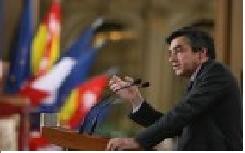
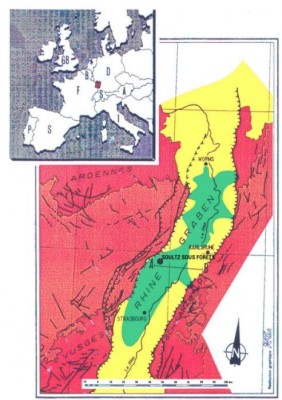
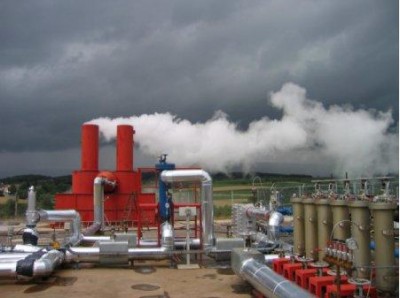 Soultz-under-Forests, June 13, 2008
A pioneer Franco-German research project on GeoThermy, near Strasbourg, served as "Symbol" of EU's will to become Independent on Energy by developing innovative Technologies, while imported Oil prices threaten to provoke a World-wide crisis.
It's essential to demonstrate Europe's will to "invent New Horizons", by creating Environment-friendly, Independent and Renewable Energy sources, while price rises continue for Oil, a polluting old ressource with insufficient stocks, stressed French Prime Minister Francois Fillon, anouncing that this will be a focus during the forthcoming French EU Presidency (July - December 2008).
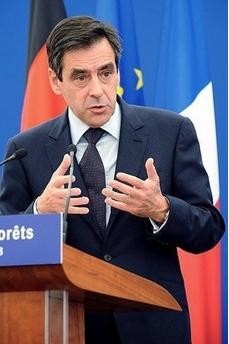
Fillon symbolically injected a 1st KWh produced by GeoThermy into Strasbourg's Electricity grid, during a special gathering of German and French officials at Soultz-under-Forests ("Soultz-sous-Forêts"), using a geothermal innovation which is "the most advanced in the World" :
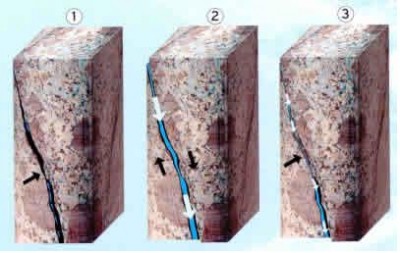
The innovation uses Strasbourg's underground water richness to capture Heat, by injecting liquid among Rocks 5 km deep, where temperature is 200 c. Thus, it can be activated at any moment and location, even without natural warm water springs : A big advantage compared to old biothermal tools.
Engineers, Scientists and the Industry will have 2 Years to invent practical ways for this innovation to become productive and cost-efficient in real Economy, said Fillon.
115 Millions of Euros invested, 15 Research Labos, 430 Scientific Publications including 34 Doctoral PhD, and a systematic cooperation between French and German Governments and Public Agencies on Research, succeeded to prove that the new method works.
Already able to serve Electricity to a village with 1.500 inhabitants, the pioneer project intends to reach a capacity to serve 20.000 inhabitants before 2015, as part of a larger Plan to make all Renewable Energy Resources (together with Wind, Solar, etc) able to cover more than 23% of all Electricity needs before 2020.

- In fact, "behind the challenge" faced with the current Oil crisis, there "is a New Horizon that we can shape all together", by "creating New Tools for the Future", Fillon launched towards EU Member States.
Meanwhile, we should intensify Energy Savings, simplify Transports, and help the Poorest cope with growing Oil prices, until EU joins a World-wide lead into inventing reliable and sufficient Renewable Energy Sources, he added.
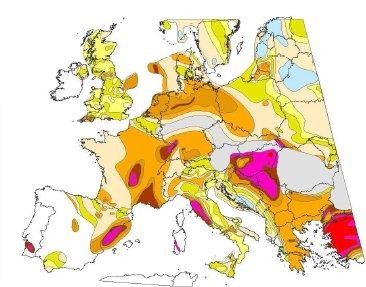
Many, technologic and other Challenges exist, but they can be overcome : F. ex. the new GeoThermic method tested at Shoultz since 1987, had provoked an Earthquake at a nearby site, close to Bale, by injecting big volumes of pressurized Water in underground broken Rocks near a Seismic Faultline in 2003. But the move was rectified later-on, by diminishing the amount and pressure of the water injected in underground rocks, so that no Earthquake is provoked.

More than 1 Billion Euros are invested by France on Scientific and Technologic Research about Sustainable Development until 2012, aiming to take a 10 years advance, there where innovation can become source of Growth, Competitivity and Jobs, which, according to some evaluations could reach more than 220.000 before 2020, Fillon observed.
During the forthcoming French EU Presidency, together with our German friends, we shall do all necessary efforts for Europe's World-wide lead against Global Warming, thanks to Energy tools able to ensure its Independence, Growth, and Citizens' well-being, he concluded.
-------------
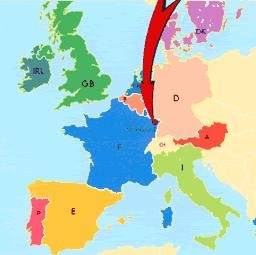
The "Enhanced Geothermal System" (EGS) stems from pioneer research initiated by teams from France, Germany and Italy, joined also by Swiss, the U.K., and Sweden, even U.S. and Japan, since the 90ies.
In 1996, a European Economic Interest Group (GEIE) was founded, in order to exploit Electricity-produsing Heat from deep underground Rocks, including France's EDF and Germany's PfalzWerke.
In 2002, a Pilot scientific project started to be tested in Soultz-under-Forests, 50 kms north of Strasbourg.