


 newsitems G20 Host Finance Minister Lagarde to EuroFora: 1st Act v. Oil+Food Crisis eyes special Global deal
G20 Host Finance Minister Lagarde to EuroFora: 1st Act v. Oil+Food Crisis eyes special Global deal


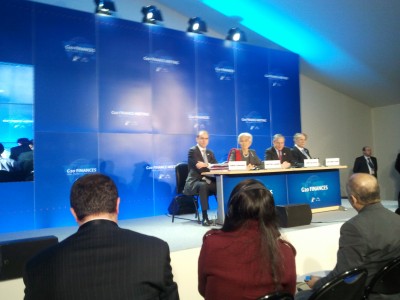
*Paris/G-20 Finance/Bercy/Angelo Marcopolo/- The 1st G-20 Financial Summit to include Raw Materials' and mainly Oil and Food's prices' volatility, the "1st Risk" against "Recovery" of World's Economy, according to the 3 sets of Prorities outlined by President Sarkozy, which marked the beginning of the 2011 French G-8 and G-20 Presidency (See "EuroFora"s earlier NewsReports), did succeed to start building Worldwide concensus on the urgent need to face that issue, particularly when Popular Riots against Hunger and Oppression are currently spreading around many, mainly Mediterranean and Middle East Countries, but it also realized that the Heart of the matter lies elsewhere, i.e. in the Production itself of Agricultural and other Raw Materials, needing, therefore, a special treatment going further beyond, repl ied in substance G-20 Financial 2011 Host, French Finance Minister, Christine Lagarde, to "EuroFora"s questions.
-----------------------
According to the Official Communiqué published at the Conclusion of the G-20 Meeting of Finance Ministers and Central Bank Governors in Paris, at the spectacular architecture of "quai Bercy"'s building accross the Seine River, after practically 3 Days of on the spot preparation already since the 17 - 18 - 19 February 2011, the participants from 25 Countries around the World, and Heads of relevant International Organizations (such as IMF, World Bank, UNO, OECD, EU, etc), "discussed Concerns about consequences of potentially Excessive Commodity Price Volatiity". In this field, G-20 decided to "work with International Organizations and to report back .. on the underlying Drivers, and the the Challenges posed by these trends, for both Consumers and Producers, and consider possible Actions".
Speaking 1st "on Food Security" in particular, and considering "the Impact" that this might have, (particularly at a moment while multiply mixing revendications for Democracy and against Hunger), G-20 stressed "the Need for Long-term Investment in the Agricultural sector", mainly "in developing countries". Moreover, G 20 Finance decided to "discuss at (its) Next Meeting the Report of IEF, IEA, OPEC and IOSCO on Price Reporting Agencies, as wel as the Interim Report on Food Security, currently being undertaken by the relevant International Organizations, and IOSCO Recomendations, and the FSB's consideraion of Next Steps on Regulation and Supervision of Commodity Derivatives' Markets, notably to strengthen Transparency and address Market Abuses".
Receiving also an "Interim Report by IEF, IEA and OPEC on how to "improve the Quality, Timeliness and Reliability" of the of "International Data" on "Oil", calling" for furtherwork on Strategies to implement these Recommendations", and "to improve the Producer - Consumer Dialogue", the G-20 urged IMF, IEF, IEA, GGECF and OPEC "to develop, by October 2011, concrete Recommendations on how to extend the G-20's work on Oil Price Volatility, also to Gas and Coal".
Lagarde confirmed that Concusions were naturally result of a "Compromise", after a "frank" discussion, but with "respect" of each other, and finaly conergence was found to advance forward, while in the G20 never anyone points the finger at any other country, it's not correct,as she diplomatically said
------------------------
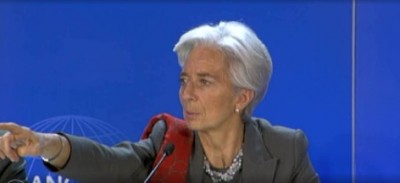
=> Thus, "EuroFora" asked the Host of G-20 Finance Summit, French Minister of Economy, Christine Lagarde, during her concluding Press Conference, to be more precise, and make it clear whether : - "On Raw Materials, do you consider that the result that you succceeded to bring, as a 1st Positif Step, or as a Conclusion ?",
+ "And, concretely, concerning f.ex. the Agricultural Products, - which, according to FAO, (cited by EU Parliament's Resolution adopted Thursday in Strasbourg : See earlier "EuroFora"s NewsReport) recently reached an Historic Record, going Higher than ever since they started to be registered-, could be tackled efficiently with such kind of Measures, so that they might prevent the sudden eruption of Extreme Cases (f.ex. Food Crisis, Food Riots, etc) in the Future ?", "EuroFora" asked Lagarde.
-----------
Christine Lagarde made it clear that - "It's not a Conclusion, but I think that's a Success, because it wasn't at all obvious that the issue of the excessive volatility of Raw Materials' Prices, mainy of Agricultural products, is of the competence of Ministers of Finance".
- "But we (G 20) concluded that, at the 1st hand, it has extremely Important Macro-Financial impact, and that, second, a Financial Expertise was needed, in order to appreciate the role played, namely, of the Derivative products on the Raw Materials, and on the Prices of the Physical Products", she explained in reply to "EuroFora"s question.
- "And I remind you that we have validated the establishment of a Working Group, under the auspices of Japan's Bank's vice-Governor, who is really an eminent personality, in order to have an accurate Analysis concerning the role of Speculation vis a vis the simple Law of Offer and Demand", Lagarde pointed out.
- "But, we all observed, nevertheless, that the phenomenon of Rarity, mainly on the Food area, needed Developments on the Production field", she observed, highlighting a New Horizon.
- "However, there, we sort out of our domains, (because) it's not for the Ministers of Finance to deal with such questions, which belong to the competence of Ministers of Agriculture, which is absolutely Legitimated, (particularly) in the current context", she concluded, obviously referring to the Democracy and Hunger Riots spreading accross several Mediterranean and Middle East Countries...
-----------------
+ Meanwhile, USA Secretary of the Treasury, Timothy Geithner, speaking at another Press Conference at Bercy to Journalists, including "EuroFora", acknowledged, namely, that "Rising Commodity Prices - including for Food and Oil - are causing Hardship in many parts of the World".
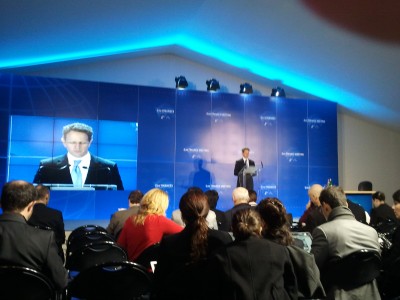
- "The IMF estimates that Commodity Prices increased 20 to 30 % in 2010", and "this has a Serious Impact on Inflation and on the Living Standards of the Lowest income Groups ...., where Food and Fuel tend to comprise a larger part of consumption", Geithner observed.
But, the US Official, adopting a stance somewhat closer to Brazil, eportedly opposed to any Regulation of Agricultural Products' markets, focused, at the 1st place, into stressing that "an effective response requires increasing Long-term Investments in Agriculture", particularly "in low-income Countries". This could be attained "through Mechanisms such as the Gobal Agriculture and Food Security Program", whichg is "designed to raise Agricultural Productivity and improve Rural Infrastructure to help Famers connect to Markets", according to Geithner.
However, he didn't explain how it might be possible for such "Low income Countries", as he said, to compete in the Markets with the huge, modern Agricultural Machine f.ex. of the USA themselves, attracting so big investments that it can easily produce at lower costs. Nor how Investors, in general, could Planify their projects accros Time periods, if persists the current extreme Volatility of Prices, which mark big, unpredictable Changes, (f.ex. after some "Extreme Weather Phenomena", as EU Parliament's relevant Resolution denounced this same week in Strasbourg : See "EuroFora"s earier NewsReport).
At any case, Geithner agreed, at least, that "We (USA) also support Measures to limit the potential for Market Abuse and Price Manipulation, through increased Transparency and OverSight of Commodity Markets, and the associated Derivatives' Markets. And these Pressures on Global Commodity Prices will be reduced, as the rapidy growing Emerging Economies act to tighten policy", he hoped.
But, despite differencies, in these and/or other issues, however, a striking point of convergence is that all those involved (from Brazil up to France and the US, etc) reportedly acknowledged, in one way or another, that the real problems about Agricultural and other raw materias concern their "Production" itself, in one way or another, (Comp. supra). Therefore, a special G-20 dimension, focusing on Ministers of Agricuture and so on, has, indeed, become necessary, as Lagarde concluded in her reply to "EuroFora"s questions (See supra).
However, EU Parliament's latest Resolution on Food Prices' Rise, adopted earlier this week in Strasbourg, pinpointed also the fact that morst of recent Food Crisis; had been provoked or seriousy aggravated by "Extreme Weather Events", (See earlier "EuroFora's NewsReports), as, f.ex. in the case of Wheat prices' inflation after the Record Heatwave which targetted Cental Russia in 2010.
+ Moreover, Oil Prices were often seriously aggravated, mostly after Wars a.o. Foreign Relations' incidents and sudden rises of tension.
Therefore, it's obvious that, when it comes to Raw Materials' Prices' Volatility, the real Causes may also belong to the Security/Defense (1st example) and/or to the Foreign Relations' (2nd exampe) areas, so that their resolution would concern much more the common Foreign and Security/Defence Policy (CFSP)...
It's, f.ex., an unforgettable fact that, at the very moment that a controversial, too expensive Pipeline was ready, waitining to be inaugurated and broker uncertain concluding deals at Ceyhun (Turkey, close to Syria's borders), suddenly, various provocations pushed at a Syro-Lebanese v. Israeli deadly clash at their own Borders, which gave an immediate pretext for Prices of Oil barill to jump up at unexpected Heights, so that the previously excessively Costly pipeline, all out of a sudden, .. mutated into an acceptable business deal, by a coincidence, exactly when this was needed ! Moreover, it's well known that the most famous War in Ancient History, that of Troie, described by Omer's poems, was, in fact, due, less into the Mass-Mediatic "romantic", cover-up Story of Queen Helen, etc., but much more to the Real-Politics' fact that a growing Ancient Greek World needed Free Access to nowadays' Ukraine-Russia-Kazakhstan's Wheat producing areas, while Troians wanted to keep the exclusive Control of the Dardanelles' straights.
Thereby, Lagarde's Opening towards a larger Horizon (See supra), in probable confluence, in substance, with most G-20 Gobal Players, at least on this point, clearly pointed at a Direction which seems, indeed, to be, in this crucial and topical issue, the Heart of the Matter ..
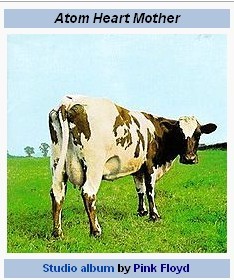
... inevitably reminding the Famous "Atom Heart Mother" Music Album, whose original cover topically pictures, simply, ..a Cow in a Green Field, even if it was composed by a former Scientist in Physics : "Pink Floyd"s Synthetic , sophisticated Music might, indeed, be an interesting symbol, perhaps inspiring Politicians to search and find the right "Synthesis" able to saveguard Global Economy's Recovery from Risks of Raw Materials' Price volatility, including Metals and Oil, but mainly Food, at the Crossroads of various but converging Policies (Comp. supra), which obviously need (after being adequately prepared by specialized Ministers) a Heads of State and Government Political impulse, which can only be given thanks to an Overall view that allow Summits as, f.ex. G-20's November 2011 concluding Summit at Cannes.
***
Main Menu
Home Press Deontology/Ethics 2009 Innovation Year EU endorses EuroFora's idea Multi-Lingual FORUM Subscribers/Donors FAQs Advanced search EuroFora supports Seabird newsitems In Brief European Headquarters' MAPs CoE Journalists Protection Platform
BRIEF NEWS
- 00:00 - 02.06.2021
- 00:00 - 18.10.2020
- 00:00 - 19.06.2020
- 00:00 - 18.05.2020
- 00:00 - 20.04.2020
- 00:00 - 02.02.2020
- 00:00 - 09.12.2019
- 00:00 - 27.11.2019
- 00:00 - 16.11.2019
Popular
- Yes, we could have prevented Ferguson riots says World Democracy Forum's Young American NGO to ERFRA
- Spanish People Elect CenterRIGHT Majority with 1st Party and Total of 178 MPs (6 More than the Left)
- Pflimlin's vision
- The European Athletic "Dream Team", after Barcelona 2010 Sport Championship Results
- Source Conseil d'Europe à ERFRA: Debatre Liberté d'Opposants à Loi livrant Mariage+Enfants à Homos ?
- Head of BioEthics InterGroup, MEP Peter Liese : "Embryonic stem cell research reaching its END" !?
- Spain: Jailed Turkish Terror suspect with Explosive,Drones,Chechen accomplices stirs Merah+ Burgas ?
- UN Head Ban Ki Moon at CoE World Democracy Forum : - "Listen to the People !"
Latest News
- Test Photos (f.ex.+ Invit to EU + Korea Peace meeting)
- EUOmbudsmen Conference 2022: Digital Gaps affect People's Trust threaten EF Project on EU Future ?
- French Election : Black Out on Virus, but Obligation for Fake 'Vaccines" Challenged
- Both French Presidential Candidates point at "Humanism" in crucial times...
- France : Zemmour = Outsider may become Game Changer in Presidential + Parliamentary Elections 2022
Statistics
Visitors: 63499854Archive
Login Form
Syndicate


Other Menu
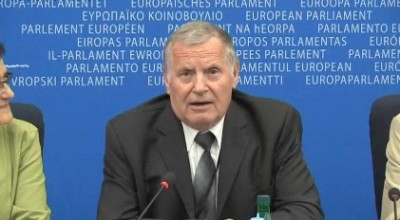
Former "Green-Red" German government's Foreign Minister Joschka Fischer's job at the controversial Turkish pipeline "Nabucco" was denounced as "not proper", "very bad", and "incompatible with Democracy", by the new President of EU Parliament's EuroLeft Group, German Lothar Bisky, replying to an "EuroFora" question.
For once, criticism of Joschka Fischer's doings with Turkey affecting Europe, didn't come only from the Center-Right of the political spectrum, but even from his Left side : The experienced Bisky, who has been chairing all over 1993-2009 the PDS - Die Linke party :
- "Former Foreign Minister Joschka Fischer got involved in dealings with oil-gaz business in a foreign country, Turkey, and its controversial Nabucco pipeline. This raises questions about Democracy, also because of the well known problems of Human Rights violations in that country. Do you thing that this might be abused in order to cover up and close EU's eyes on Human Rights violations ?", "EuroFora" asked Bisky.
- "Nabucco pipeline is (only) at the planning stage". And "there are some difficulties", he observed from the start. But "'I don't want to get into the details of Nabucco pipeline, because I don't think that there is any point for it at the moment".
At any case, "we (EU Parliament's EuroLeft Group) strongly believe that Politicians should not get involved in the Energy Business, and all these commercial transactions", President Bisky declared on the Joschka Fiischer's affair.
- "We feel that it's something that shouldn't be done. It's not proper !"
- "We don't think that it's compatible with Democracy either, and it gets politics into a very Bad track", Bisky went on to denounce.
- "EuroLeft and "Die Linke" always spoke against that, saying that politicians should not get directly into the arms of private enterprises"
- "It is pretty bad if a former Minister takes a job f.ex. in a major Energy producer. So, it's an issue if a Minister who may have seen excellent opportunities, subsequently gets personally grasp of them, in very serious parts of the economy, once he has given up his (Government) job."
- "It doesn't really make politics in general look any better'", Bisky concluded.
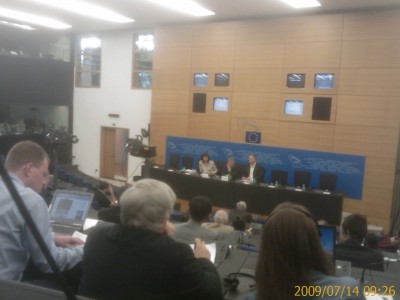
Earlier, this week in Strasbourg, other Journalists had also raised critical questions on former Foreign Minister Joschka Fischer's involvement in the conroversial Turkish Nabucco pipeline to the President of his own EuroParty : Kohn-Bendit of the "Greens", who, contrary to Bisky, tried to find excuses for Fischer, while criticizing his long-time partner, Schroeder for having done a similar move :
- "Shroeder was chancellor", and he "negociated" with "Russians", who gave him a job only "3 Months" after he resigned from the Government. While "Joschka Fischer", on the contrary, got a job with the controversial Turkish Nabucco pipeline only "4 Years after" he left the Government. "He didn't negociate Nabucco", so I have "no objection", Kohn Bendit claimed.
But, many Facts indicate the contrary :
Joschka Fischer was Foreign Minister in Germany from 1999 up to 2005 : I.e. from the year that EU took the controversial decision to give Turkey a "Candidate" status, until he year it started controversial "accession negotiations, (later declared "open-ended" after Sarkozy-Merkel's arrival from 2005-2007).
During that period was prepared the controversial so-called "Annan" Plan (in fact, drafted by others and attributed afterwards to the former UN SG) on Cyprus, which failed after a Popular Referendum said "No" on 2004 with a large Majoriy of 3/4 : 75%. Mainly because it was criticized for making too much concessions to the Turkish side : Particularly by restricting Greek Cypriot Refugees' Human Right to return to their ancestral Land and/or get restitution of their Familiy Homes and private properties, usurpated by Ankara's Army since the 1974 militay invasion and continuing occupation of the northern part of Cyprus. And by weakening the Central Government, leaving to 2 "constituent States" so much powers and separate interests that more conflicts appeared inevitable, provoking the danger of a break-down in the foreseable future, with more crisis, troubles, perhaps bloodshed, etc., instead of creating an harmoniously integrated, really one federal State.
The controversial Plan was finalized on March-April 2004 at Burgenstock (Switzerland), curiously in the presence of an Envoy by the Ministry of Foreign Affairs of Germany, then governed by Joschka Fischer, but in the absence of a French and not even an European Union's Envoy, contrary to what was usually practiced on similar occasions in Switzerland (fex. in 1997 at Montreux, in 2000 at Geneva, etc).
Turkey notoriously exploited the failure of the "Annan" Plan in order to convince the EU to decide to start accession Negotiations on December 2004. This provoked an unprecedented series of Institutional Crisis inside the EU, shortly afterwards, when French and Dutch People rejected, 2 popular EuroReferenda by a majority "'No" vote to the EU Constitutional Treaty on 2005, aggraveted in 2004 a Majority Abstention to EU Elections, etc., followed by the recent Irish "No", etc.
"Nabucco" Gas pipeline was notoriously planned since ..2002. It follows an even earlier idea, for an Oil pipeline Baku-Ceyhun, which started to be prepared on 1999-2001 and was meanwhile recently completed.
So, facts indicate that what is now at stake is based on decisions made during Joschka Fischer's term as former Foreign Minister, closely interested in Turkey's controversial EU-bid.
To the point that he now practically ...switched jobs with a poliician from Turkey, (the State which pays today openly Joschka Fischer), Mr. Ozdemir, who came earlier in Germany, got fast the nationality, and became EiuroMP in a few years, continuing now as head of the "Greens" in Germany, i.e. in Joschka's former job !...
Such astonishing facts risk, unfotunately, to give to German politician Lothar Bisky's criticism of representative Democracy a topical meaning :
- "We (EuroLeft Group) think that what is really at stake is Democracy. It's not only about Gas Pipelines or Energy sources", President Lothar Bisky went on to add in his reply to "EuroFora"'s question on Joscka Fischer's personal interests in the controversial Turkish "Nabuco" pipeline.
Such facts, "make People get more distance from Politics. ...People had had enough, and they are fed up !".
- "That's why we (EuroParliament's "EuroLeft" Group) want to strengthen Direct Democracy in Europe. Citizens should be involved in the (EU) Decision-making. In the end of the day, it's not going to help anyone if Politicians are always taking decisions, without involving Citizens. We want to give a voice to the People of Europe. They've got to have their say in the decisions that are taken. That's one of our absolutely fixed and steadfast views. We want more Direct Democracy in Europe. That's how it can become more effective and stronger", he concluded.
-