


CoE rejects "Multi-Culti" in Europe (and stands by Merkel, Sarkozy + Cameron)


CoE practically rejected controversial Multi-Culturalism, by a Double Vote with a Large Majority today, clearly refusing to endorse attempts by some MEPs to slam Leaders of the 3 biggest EU Countries (Merkel, Sarkozy and Cameron, of Germany, France and the UK) for having recently denounced the obvious fact that "Multi-Culti failed !", prefering, on the contrary, to focus on Social Cohesion and EU's Cultural, Historic Identity, feeling of common belonging, living and working together, while respecting all people's Culture, as well Human and Democratic Rights.
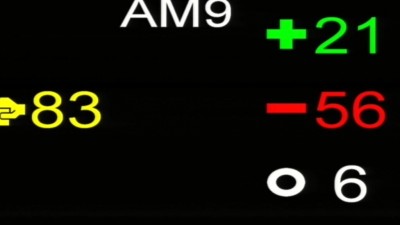
The same day that CoE's Secretary General, Jagland, openly supported and clarified Merkel, Sarkozy's and Cameron's main stance, (See infra), the Parliamentary Assembly of the PanEuropean Organization for Human Rights, Democracy and Rule of Law, strongly rejected 2 critical Amendments which had claimed, on the contrary, to "refrain from statements .. directed against the ... MultiCultural Model", and, therefore, to slam as "undesirable and counterproductive the recent Statements made .. by Leaders of several CoE Member States that the MultiCultural Model of society has Failed" : This was clearly Rejected by a large Majority of CoE's MEPs with only 21 votes for, but 56 votes against and 6 abstentions (i.e. almost X 300 % more !!!).
---------------------------
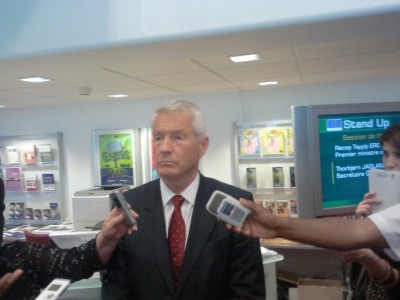
CoE's Secretary General, Thornbjorn Jagland, was crystal-clear on the main reasons for which Strasbourg's PanEuropean Organization clearly decided to stand by the main ideas expressed by Merkel, Sarkozy, Cameron a.o. EU Leaders, obviously joined also by Russia, as its stance on the famous ECHR case about European Culture Countries' freedom to traditionaly use the Crucifix in Public Buildings (as Schools, etc), as part of National/EU Historic Cultural Heritage showed :
- "In recent months Political Leaders, including Chancellor Merkel, Prime Minister Cameron and President Sarkozy, have said that Multiculturalism has Failed", he observed in his Speech to CoE's Parliamentary Assembly on Tuesday.
- "Does this mean that these leaders are against cultural Diversity? Surely not. ...European societies are culturally diverse. They have always been, and it is to this that Europe owes many of its greatest achievements.
- "But there is a Growing Feeling - reflected in the statements of Merkel, Cameron and Sarkozy – that something has gone Wrong; a realisation that Traditional Policies have Not worked. Because, "Instead" of Social Cohesion, on the contrary, "we are seeing the emergence of so-called "Parallel Societies" (alias "Communautarism"). "People are living "Next" to each other in ..., but Not living Together", he denounced.
- Thus, inter alia, also "Minorities are still being Marginalised and stigmatised, such as the Roma. Even before the current refugee crisis, Xenophobic parties have been on the rise", and "xenophobic forces are the ones that are living ..the most Isolated .. They constitute parallel societies. But we have also seen the emergence of Home-grown Islamist Terrorism rooted in Religious Extremism that are also forming Parallel Societies. These Extremes are feeding each other. All this goes against our Fundamental Rights and Values. It is Not helping our societies to Prosper, and potentially poses a Threat to our Stability and Security", CoE's chief warned.
- "This is why last year I asked ....to assess the situation from a pan-European perspective" in order "to make constructive proposals to help our Societies grow Together, on the basis of human rights, democracy and the rule of law. We need to appreciate diversity, but also to Focus more on what holds us Together", "how we can find a Common ground", Jagland concluded.
--------------------
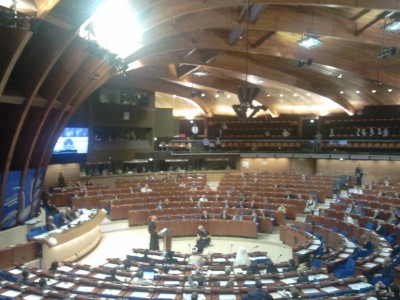
The above mentioned Vote against the "Multi-Culti" cultural and social AppartHeid-like Social Risks against European Cohesion, took place in CoE's Parliamentary Assembly (PACE) on the occasion of the Public Discussion of a Report, drafted by Luxembourg's MEP Anne Vasseur, President of the Liberal Group, on the "Religious dimension of Inter-Cultural Dialogue", which had invited various Religious Experts to participate in Strasbourg's Debates :
-----------------------------
(NDLR : Fast Translation from the Original in French).
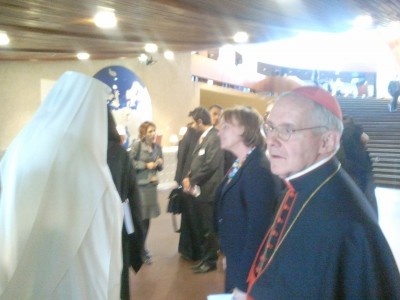
- "There is a European Humanism, of Christian origin. Without underestimating the Jewish presence, the contribution of Arab philosophy, the questionng of Enlightenment, (etc.), it's, nevertheless, Christianism who is at the origin of many European Institutions : School, University, Hospitals, etc.", stressed from the outset Cardinal Jean-Louis Tauran, President of Vatican's Pontifical Council for InterReligious Dialogue. "With the Exception of a large part of Last Century, this European Humanism made possible the Debate between Faith and Reason, ... allowing ... to remind Ethics' Priority over the Ideologies of the moment, that the Person comes before the Things, (and) the Superiority of Spirit over Matter". As "Paul Valery observed, in a Conference at Zurich University at the end of 1922 : - "There is Europe whenever Rome's influence on Administration, Greece's on Thought, (and) Christianism's on Internal Life, make themselves felt, all three together".. "In Europe, no Religion imposes herself by ruse or force". Because, "in Europe there is Dialogue. In Europe, Religion, not only can be inherited, but, moreover, it is chosen"... "Europe remains, even today, a melting pot of Living Tohether, whose Labo and Symbol is Strasbourg !".
Tauran smiled affirmatively when "EuroFora" noted aftertwards that his main observation came Timely and in line with the ideas on EU's Historic Identity, strongly expressed by Pope Benedict XVI himself, just one Day earlier, on the occasion of his audience to a new Ambassador to the Vatican from EU candidate Croatia :
- "Dour voices dispute Europe's Religious roots with bewildering regularity. Amnesia and the denial of Historical evidence have become customary. To declare that Europe does not have Christian Roots, is like claiming that a man may live without Oxygen or nourishment", energetically denounced Benedict XVI. He also "highlighted the importance of "[fortifying] the current generations by showing them clearly their rich ...Historical Heritage and the Christian Culture with which it is deeply permeated, and which has always supported the ...People in times of Adversity". Europe "should not be afraid to make a Determined claim for Respect for its History and its Religious and Cultural Identity", but, on the contrary, "know how to Defend its Identity with conviction and pride".
- Recalling that "Croatia will soon fully enter the European Union", Benedict XVI remarked that "this integration must be achieved fully respecting Croatia's Specific Characteristics, regarding its Religious life and Culture. It would be illusory to repudiate this Identity, in favour of another, born in circumstances different to those of the birth and construction of Croatia". - "In entering the EU", he continued "your country shall not only be the recipient of an economic and legal system with both advantages and limits, but should also bring its own, typically Croatian contribution. "In the name of Christ, who accompanied the Croatian People throughout Centuries with goodness and mercy,..", Benedict invited Croats to "avoid the new pitfalls as they appear which, under the pretext of a misunderstood religious freedom, are contrary to natural law, the family, and morality".
--------------------------
- "Believers have a way to work ... which brings to the entire Human Community a Reply to Great Questions of concern to Man since always", continued on a 2nd point, Cardinal Tauran. "Men must be reminded that they are simply managing material and moral resources of this World, for the benefit of all, and, therefore, they have the Duty to take care of them and to cultivate them for the Generations of the Future". "It's up to them to act so that their Contemporary are never deprived of Sources of Light or sensible proposals, able to Enlighten them and to suppot them in front of Experimentations on Humans, of Abortion, euthanasia, etc., as "accomplices of everything which goes .. in the direction of the Human and of Humanization".
- "A Huge working site is offered to us, as believers, in order to work together, in the framework of Ecumenic Dialogue, InterReligious Dialogue, as with all those who head towards the asbolute. Let us act so that the Name of God is never invoked to Justify Discrimination and Violence !" "Those areas of Listening and Sharing, ..(which) allow us to learn the real face of Religions, should never lack". And "CoE should always have the Courage to take Concrete Decisions in order to promote, and -if needed- to defend, the Freedom of Religion, in order to denounce any form of Persecution, Violence and Discrimination for Religious motives, both in Europe and anywhere in the World".
"Cardinal J. Ratzinger (the current Pope Benedict XVI), in his installation speech at the Academy of Moral and Political Sciences of "Institut de France", on November 6, 1992, stressed that "it's not for the Church to be a State, or a part of a State, but to be a Community based on Convictions. With the Freedom which characterizes it, it must address itself to the Freedom of all, so that History's Moral Forces remain also the Forces of the Present, and always revive anew this Proof of Values, without which, common Liberty is no more possible".
---------------------------------
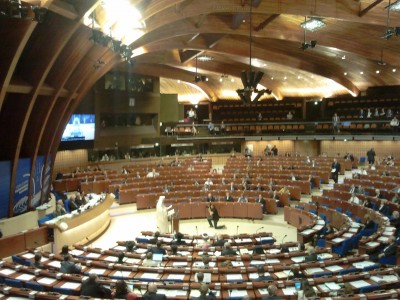
In order not to "breach the Social Cohesion" (a concept highlighted 3 times), we "must develop a New Culture of Living Together, starting by acknowledging the Equal Dignity of all Persons, and our adherence to the Democratic Principles and to Human Rights", stressed from the outset Christian Orthodox Patriarch Daniel from Romania, citting a choice of CoE's recent texts.
Christians Orthodox and Catholic representatives both supported a strong view on Europe's Historic, Cultural Identity : - "While building its Structure, by Dialogue and Cooperation, Europe becomes Conscious of what was the Matrix of its Origine, ... i.e. the Religious Dimension of its Culture". "Because Religion was the major Matrix of its (EU's) Identity. That's why any profound Crisis of Europe always was rather a Spiritual Identity Crisis, than a Cultural Crisis", Patriarch Daniel found.
- "The Values proposed by CoE as an InterReligious Dialogue's platfom, i.e. Human Dignity, Human Rights, Democracy and Rule of Law, Freedom of Expression, etc., originate from European Values, stemming from the Judeo-Christian radition, (and afterwards separated from her in order to be taken as Universal Values)..... Thus, Human Dignity is an endless and eternal Value, because Man was created at the image of God", he pointed out.
- "But, recently, Religious Tensions emerge at Europe's Door", which "provoque Concern" . "Dramatic Events, such as Violence against Christians in Iraq, Iran, Egypt and elsewhere, Corans set on fire (f.ex. in the USA) and terrorist attacks wd in which follow this act, impose to Politicians and to International Organisations to think and react in order to avoid such Tragedies being reproduced in future and affect European Countries", he warned.
- "These events make it even more Urgent to find Solutions to the Problems provoked by Mass Immigration of Populations of Differend Ethnos and Religions inside Europe : A Fact which weakens the Social Cohesion in many Countries", Patriarch Daniel added.
- "How could a Migrant or a Stranger Integrate in a Differend Religious and Cultural context, while preserving his initial Religious and Cultural identity ? How could we avoid both a grim Isolation and the Dissolution of his identity ? In this sens, it's necessary to develop a Culture of Living Together", he observed.
- "In this regard, the current Experience of the Diaspora from Orthodox Romania in Italy and in Spain, where live almost a Million of Romanians for each, is very Encouraging", he noted. "In many Churches, the transmission of Faith to the (Orthodox) Romanian Minority is done in an ecumenic spirit of Openess to the Culture of the Italian or Spanish Catholic Majority : This approach ... allows a Social Intergration without Disolving the Cultural and Religious Identity" of immigrants' origins, he explained.
- "However, ... a Peaceful CoExistence .. needs to become Mature .. by using Freedom, ... Responsibility and Solidarity, as well as the affirmation of its own Values, ... not against Different Communities and Persons, but Together with Others", he critically observed. And this, "at the same time that, by InterReligious Dialogue, we have to learn how to face New Social Problems, such as Irresponsible Liberty, Secularisation, Family Crisis, etc.". ....I.e. with "an Ecumenic Cooperation in favor of Human Dignity and the General Good", where "it's not enough to simply speak theologically about Human Person's Dignity, created at the image of God,.. but we have also to really Defend it in the context of Violence, Oppression Pauvrety, Injustice, Humiliation, Marginalisation, etc". But, "in order to Defend, always and everywhere, the Human Dignity, Human Rights, Freedom of Expression, Democracy, Rule of Law, and other Values which are at the base of Dialogue Today, it's necessary to have Strong Beliefs and to cultivate a Profound Spirituality, similar to that of Bible's Prophets, of the Fathers of a United Church, or to the Great Fighters for Justice in the Human Society".
- Because, "despite Differencies of Religion and Culture, ... in front of Sufferings and of Humiliation of Human Dignity, Religions, States, International Organizations and Individuals, we have, more and more, a Common Responsibility for the Human Life, the protection of Nature and Environment", Patriarch Daniel topically concluded, (apparently pointing also at Crucial nowadays issues such as Genetic Manipulations of Human Embryons, New Epidemies, Climat Change and Extreme Weather Events, etc.
------------------
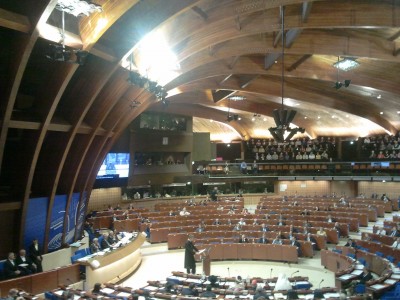
- "Religions are an integral part of individual and of collective Identity", stressed from the outset Evangelical Church Council's Representative in Germany and the EU, Prelate Bernhard Felmberg, , even if "European societies – under the influences of European integration, globalisation and a resulting increase in migration – become more and more pluralist in their outlook", nevertheless, " there is not ...also a cultural dimension to interreligious dialogue" (See infra).
- Because, "In Germany and other European Countries we still make the Experience that some religious communities have Difficulties in adjusting to the societal environment they find themselves in. Dialogue, even in the very basic sense, depends on the Possibility of Meaningful exchange. If clergy and representatives do not (even) speak the Language of the land or speak it only with difficulty, this is a Problem. Likewise, if Cultural and traditional and Legal concepts from other regions, for example concerning the role of women in society, are declared sacrosanct principles of religion, this is a problem. Dialogue is the way, yes, but the pre-Conditions of dialogue have to be established on both sides", Felmberg explained.
+ Moreover, "recently, the Grand Chamber of ECHR revised a first instance decision concerning the display of Religious Symbols – here a Cross – in Public Schools in Italy, stressing ...the fact that the Religious Heritage belongs to our Cultures", he observed. - "Speaking as a German Protestant about a case that concerned the Catholic Church more than us, I nevertheless emphasise: We Fully Endorse this Judgement. It may seemingly protect a majority culture, ... But we would rather live in a society that has a relaxed attitude to its Religious Heritage, that is Open to religion, than in a culture of mistrust, in which the “religious” is banned from the public sphere for fear it might divide more than it unites. F.ex. ,"in Italy, pupils are allowed to wear the Muslim headscarf and the Jewish kippa. Protestants are allowed to built churches and openly and publicly confess their faith, even to offer religious education at schools. The mere fact that the majority religion is more visible than other, smaller groups is, in itself, not a discrimination", he noted. Because, "while majorities will have more visibility, minorities need to have the chance to being seen and heard as well", he concluded.
- However, "Religion is but one aspect of our Identity. I am not only Protestant, but I am also German, I am also European, I am also a fan of my football club... Personalities are multilayered and multifaceted. F.ex. "'in Berlin, where I come from, we used to talk about “the Turks” referring to our largest ethnic minority. After 9/11 we started to speak about “the Muslims” instead, referring to the same people. I urge that we all be more careful in picking out single aspects of identity and ask whether they really have any relevance to the issue in question. ... So my plea is to talk about religion when religion is at stake, but Not Reduce all matters of Migration and Integration to Religious questions, but rather look at the Person itself", he pleaded.
--------------------
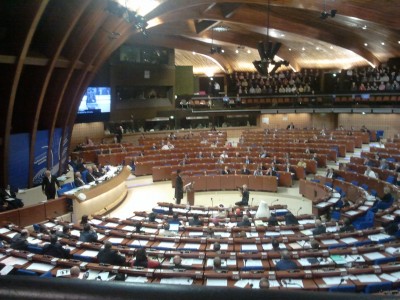
Chief Rabbi of Russia, Berel Lazar stressed from the outset that "a United Europe requires not just a political arena and an economic relationship, but a cultural and religious understanding".
However, he personaly remained attached to "Multi-Culturalism", given his own, particular backround : Born in Italy, near Strasbourg (Milan), he reportedly emigrated to the USA (New York) when aged 15, before going to Russia at the age of 36 on 1990, where he got a double citizenship, American and Russian, on 2000... It's in these, obviously specific conditions, that Berel Lazar was led to think that "It has been said many times that multiculturalism has failed in Europe. ....and I say that if multiculturalism has failed, Europe has failed", because, according to his personal view, "the beauty of Europe, and the foundations of Europe, have always been mutual understanding and open dialogue, notwithstanding all the differences between the languages, cultures and traditions of all the countries and all the people", as he said.
But Berel Lazar acknowledged, nevertheless, that "everyone is now pointing fingers. Who is to blame for these Problems? Some say that Religious Extremism is the source and the root of Violence; others say that the blame lies with the Xenophobic forces that are not giving Freedom of religion to others", he wondered.
However, "as much as we see our differences and as much as we see the things on which we do not get along sometimes, we are all part of the same family. We all come from the same people. There must be things on which we can find an understanding and a common language", he added.
- "But if we were all the same and agreed about everything, we would not need to bring peace to the world and we would not need the CoE. Everybody would live in harmony, and it would be a very Monotonous life", he found. Thus, "our whole being, the raison d’être of all of us, is to bring peace notwithstanding those differences and opposite opinions. We are different, and sometimes we are divided, but we live in one continent, one Europe, and we have to find ways to understand each other", he said.
- For Lazar, there are "2 schools of thought. Some people say, “...I believe that the way I live is the truth and if people want to come to my country, if immigrants come in, they must accept my truth and my rules. They cannot come and live in my country and do whatever they want.” ......Then there is a second school of though that says, “...Live and let live. I am going to live my life and he is going to live his life. Why do I care what he does? Maybe he is my neighbour but I do not need to know what he does and what he believes. Let him do whatever he wants and I will do whatever I want.”
- "Both views are Dangerous, and we all understand why. There must be a golden thread, a solution for all of us, where we understand each other, help each other", he advised.
- " We cannot sit and say, “I am going to take care only of my congregation, only of my people.” If I really care for this world that God created, I have a responsibility to tell others about Values and Morals, and to make sure that everybody stands Together and understands that that is the only way that we can co-exist and survive", Lazar underlined.
- But, "How can we come together? It is beautiful that today, all the religious leaders are here in harmony, but I would say that that is not enough. We respect each other, we love each other, and we have to work together and do something together. What can we do?", he questioned.
- We must "understand that (we have) a Responsibility to (our) fellow beings and a responsibility not only to learn and to become greatern but to make the world a better place. I believe that that is feasible – I have seen it in Russia" :
- "When we started 20 years ago, and ....things came out of the closet and we were able to celebrate our religion in Russia, ..at the beginning there was a lot of mistrust. Today there is a full understanding between religious leaders in Russia. Surprisingly, anti-Semitism in Russia is at its lowest ever. How did that happen? I have 3 points : .....
- "The 1st is Co-operation between Religious leaders. We need constantly to discuss ideas and think how we can help each other and how we can send a message together to young people about the mutual values that we all share", he noted.
- Secondly, very often Governments feel that they should not mix into religious affairs. ... that is a mistake. I think they have to interfere to make sure that no religious denomination will bring ideas of Violence or Extremism to the people. That is their Responsibility. I must say that in Russia, those ideas are slowly leading to a better understanding and mutual co-operation", he observed.
- Thirdly, and I think most importantly, religious communities in Russia are Opening up to the People. Our temples, churches, synagogues and mosques are Open to everyone – “Come in and find out what we believe.” As long as we preach one idea in the synagogue and another one on television, it is not going to work. We have to show that what we believe is open to everyone and that our speeches, our ideology and our ideas are for everyone to share. Only then can we hope for a better future, a more United Europe and a place where everybody will live in ... Harmony ...", Lazar concluded.
-------------------------------
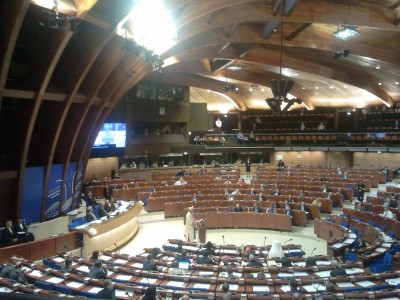
Alone, the Turkish State's agent, "Chair of the Religious Affairs High Admlinistration of the Republic of Turkey", Mehmet Goermez, according to his Official title, was the only Continental to stick 100% on "Multi-Culturalism", and even to seek a "contribution of Religions ... to the Enhancement of Multi-Culturalisme" (sic !).
- "I find it meaningful that this (PACE event) has come forward exactly when a number of European Politicians (as he called the Heads of State/Government in France, Germany and the UK), compete eachother in declaring that "Multi-Culturalism has Failed" (See cupra)", he said.
Believing that his particular idea of "Islam places ... Diversity in the centre of its.. Worldview", so that it "has produced Societies that have been so Multi-Ethnic, Multi-Cultural and Multi-Religious for Centuries, that noone else has shown any sign of such .. Diversity", Mehmet Goermez called to "freely allow... to express themselves, within their Traditional dynamics" the "Groups that experience "Otherisation" (sic), as he said.
Accusing the "Muslims Today" to have forgotten that vision of "Diversity", the Turkish representative was curiously given an absolute Monopoly on Islam, since any religious Arab Muslim was curiously excluded..
The Turkish State Official launched a call to the CoE "to free ourselves from the EuroCentric view of History", curiously accusing it to "Jump.. from Ancient Greece to the Middle Ages, and then to the new age of Enlightenment", (obviously ignoring the Roman and the Christian Byzantine Empires/Civilisations, as well as the Renaissance, etc), accusing those who think otherwise on these key points, to "abuse" with an "Hegemonic discourse" and even ... "Cultural Terror" (sic !)...
---------------------------
Nonobstanding the obviously particular character of that Turkish State's Agent's views, nevertheless, Vatican's Special Representative, Cardinal Tauran, speaking to "EuroFora", found that, at least on certain key issues of Crucial importance Today for Humankind, Christians can usefully cooperate and even consider joint action, togeher with Muslims :
This includes, f.e. the Topical issue of Genetic Manipulations of Human Embryons, Mgr. Tauran observed to "EuroFora", where Christians and Muslims, etc., could, normaly, find easier a Common Ground in favor of Stronger BioEthical Rules and Principles. On this point had also agreed, recently with "EuroFora" an important Religious Muslim of Arab origin, during a recent meeting in Strasbourg together with Jewish, Christian and even Boudhist representatives. A Fresh look on such matters (which, despite their obvious Importance, are more Global than specifically European, since they concern all Humankind) would certainly be interesting today, considering also the various rapid developments, worldwide, which occured since a landmark, previous CoE Conference on the protection of Human Embryon, organized in Strasbourg back on the 1990ies...
-------------------------------------------
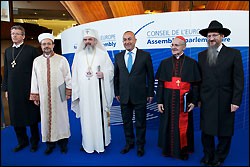
The Resolution adopted today by CoE's Assembly "notes the growing interest raised by the questions relating to intercultural dialogue in a European and global context, where efforts to establish closer ties and collaboration between communities within our societies and between peoples, to build together for the common good, are constantly imperilled by lack of understanding, high tension and even barbarous acts of hatred and violence".
- "Nevertheless, freedom of religion and freedom to have a philosophical or secular world view are inseparable from unreserved acceptance by all of the fundamental values enshrined in the Convention" on Human Rights", PACE reminded. "These Values should Bring us Together", MEPs stressed. Differences, as long as they are compatible with respect for human rights and the principles that underpin democracy, ... have every right to be there"... "However, Common values such as mutual respect, the protection of human rights, democracy, tolerance, the acceptance that differences are normal, and vision of a Common future need to be strengthened further".
+ "in order to build Cohesive societies receptive to diversity and respecting the dignity of each individual", CoEs' Assembly is convinced of the importance of the religious dimension of intercultural dialogue, and of collaboration between religious communities to foster the values that make up the Common core of our European societies and of any democratic society.
PACE "considers it necessary to build up a dynamic, productive partnership between the public institutions, the religious communities and the groups that espouse a non-religious perception. The common starting point for this is acknowledgement; by the various religious denominations and by non-religious belief systems; that Human Dignity is an Essential and universal asset".
Therefore, it "recommends that (CoE's) Committee of Ministers promotes a genuine Partnership for democracy and human rights between the CoE, the Religious institutions and humanist and non-religious organisations, seeking to encourage the active involvement of all stakeholders in action to promote the fundamental values of the Organisation". "To this end"; CoE should ,"establish ... a Place for Dialogue, a Workspace between the Council of Europe and high-level representatives of religions and of non-denominational organisations, in order to place existing relations on a Stable and formally Recognised Platform" : A classical aspiration in Strasbourg, initially suggested also by "EuroFora"s co-Founder, many Years earlier, at a Press Conference in EU Parliament.
CoE's Assembly "further recommends that (its) Committee of Ministers, promotea the accession of the Mediterranean Basin States" to certain CoE's bodies (Constitutional Law Top Experts in Venice's Commission, Civil Society-oriented "North–South Centre", etc).
Main Menu
Home Press Deontology/Ethics 2009 Innovation Year EU endorses EuroFora's idea Multi-Lingual FORUM Subscribers/Donors FAQs Advanced search EuroFora supports Seabird newsitems In Brief European Headquarters' MAPs CoE Journalists Protection Platform
BRIEF NEWS
- 00:00 - 02.06.2021
- 00:00 - 18.10.2020
- 00:00 - 19.06.2020
- 00:00 - 18.05.2020
- 00:00 - 20.04.2020
- 00:00 - 02.02.2020
- 00:00 - 09.12.2019
- 00:00 - 27.11.2019
- 00:00 - 16.11.2019
Popular
- Yes, we could have prevented Ferguson riots says World Democracy Forum's Young American NGO to ERFRA
- Spanish People Elect CenterRIGHT Majority with 1st Party and Total of 178 MPs (6 More than the Left)
- Pflimlin's vision
- The European Athletic "Dream Team", after Barcelona 2010 Sport Championship Results
- Source Conseil d'Europe à ERFRA: Debatre Liberté d'Opposants à Loi livrant Mariage+Enfants à Homos ?
- Head of BioEthics InterGroup, MEP Peter Liese : "Embryonic stem cell research reaching its END" !?
- Spain: Jailed Turkish Terror suspect with Explosive,Drones,Chechen accomplices stirs Merah+ Burgas ?
- UN Head Ban Ki Moon at CoE World Democracy Forum : - "Listen to the People !"
Latest News
- Test Photos (f.ex.+ Invit to EU + Korea Peace meeting)
- EUOmbudsmen Conference 2022: Digital Gaps affect People's Trust threaten EF Project on EU Future ?
- French Election : Black Out on Virus, but Obligation for Fake 'Vaccines" Challenged
- Both French Presidential Candidates point at "Humanism" in crucial times...
- France : Zemmour = Outsider may become Game Changer in Presidential + Parliamentary Elections 2022
Statistics
Visitors: 62688678Archive
Login Form
Syndicate


Other Menu
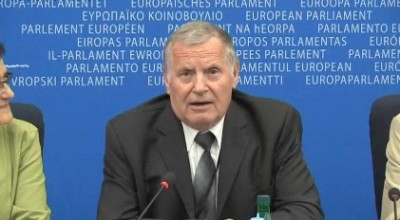
Former "Green-Red" German government's Foreign Minister Joschka Fischer's job at the controversial Turkish pipeline "Nabucco" was denounced as "not proper", "very bad", and "incompatible with Democracy", by the new President of EU Parliament's EuroLeft Group, German Lothar Bisky, replying to an "EuroFora" question.
For once, criticism of Joschka Fischer's doings with Turkey affecting Europe, didn't come only from the Center-Right of the political spectrum, but even from his Left side : The experienced Bisky, who has been chairing all over 1993-2009 the PDS - Die Linke party :
- "Former Foreign Minister Joschka Fischer got involved in dealings with oil-gaz business in a foreign country, Turkey, and its controversial Nabucco pipeline. This raises questions about Democracy, also because of the well known problems of Human Rights violations in that country. Do you thing that this might be abused in order to cover up and close EU's eyes on Human Rights violations ?", "EuroFora" asked Bisky.
- "Nabucco pipeline is (only) at the planning stage". And "there are some difficulties", he observed from the start. But "'I don't want to get into the details of Nabucco pipeline, because I don't think that there is any point for it at the moment".
At any case, "we (EU Parliament's EuroLeft Group) strongly believe that Politicians should not get involved in the Energy Business, and all these commercial transactions", President Bisky declared on the Joschka Fiischer's affair.
- "We feel that it's something that shouldn't be done. It's not proper !"
- "We don't think that it's compatible with Democracy either, and it gets politics into a very Bad track", Bisky went on to denounce.
- "EuroLeft and "Die Linke" always spoke against that, saying that politicians should not get directly into the arms of private enterprises"
- "It is pretty bad if a former Minister takes a job f.ex. in a major Energy producer. So, it's an issue if a Minister who may have seen excellent opportunities, subsequently gets personally grasp of them, in very serious parts of the economy, once he has given up his (Government) job."
- "It doesn't really make politics in general look any better'", Bisky concluded.
Earlier, this week in Strasbourg, other Journalists had also raised critical questions on former Foreign Minister Joschka Fischer's involvement in the conroversial Turkish Nabucco pipeline to the President of his own EuroParty : Kohn-Bendit of the "Greens", who, contrary to Bisky, tried to find excuses for Fischer, while criticizing his long-time partner, Schroeder for having done a similar move :
- "Shroeder was chancellor", and he "negociated" with "Russians", who gave him a job only "3 Months" after he resigned from the Government. While "Joschka Fischer", on the contrary, got a job with the controversial Turkish Nabucco pipeline only "4 Years after" he left the Government. "He didn't negociate Nabucco", so I have "no objection", Kohn Bendit claimed.
But, many Facts indicate the contrary :
Joschka Fischer was Foreign Minister in Germany from 1999 up to 2005 : I.e. from the year that EU took the controversial decision to give Turkey a "Candidate" status, until he year it started controversial "accession negotiations, (later declared "open-ended" after Sarkozy-Merkel's arrival from 2005-2007).
During that period was prepared the controversial so-called "Annan" Plan (in fact, drafted by others and attributed afterwards to the former UN SG) on Cyprus, which failed after a Popular Referendum said "No" on 2004 with a large Majoriy of 3/4 : 75%. Mainly because it was criticized for making too much concessions to the Turkish side : Particularly by restricting Greek Cypriot Refugees' Human Right to return to their ancestral Land and/or get restitution of their Familiy Homes and private properties, usurpated by Ankara's Army since the 1974 militay invasion and continuing occupation of the northern part of Cyprus. And by weakening the Central Government, leaving to 2 "constituent States" so much powers and separate interests that more conflicts appeared inevitable, provoking the danger of a break-down in the foreseable future, with more crisis, troubles, perhaps bloodshed, etc., instead of creating an harmoniously integrated, really one federal State.
The controversial Plan was finalized on March-April 2004 at Burgenstock (Switzerland), curiously in the presence of an Envoy by the Ministry of Foreign Affairs of Germany, then governed by Joschka Fischer, but in the absence of a French and not even an European Union's Envoy, contrary to what was usually practiced on similar occasions in Switzerland (fex. in 1997 at Montreux, in 2000 at Geneva, etc).
Turkey notoriously exploited the failure of the "Annan" Plan in order to convince the EU to decide to start accession Negotiations on December 2004. This provoked an unprecedented series of Institutional Crisis inside the EU, shortly afterwards, when French and Dutch People rejected, 2 popular EuroReferenda by a majority "'No" vote to the EU Constitutional Treaty on 2005, aggraveted in 2004 a Majority Abstention to EU Elections, etc., followed by the recent Irish "No", etc.
"Nabucco" Gas pipeline was notoriously planned since ..2002. It follows an even earlier idea, for an Oil pipeline Baku-Ceyhun, which started to be prepared on 1999-2001 and was meanwhile recently completed.
So, facts indicate that what is now at stake is based on decisions made during Joschka Fischer's term as former Foreign Minister, closely interested in Turkey's controversial EU-bid.
To the point that he now practically ...switched jobs with a poliician from Turkey, (the State which pays today openly Joschka Fischer), Mr. Ozdemir, who came earlier in Germany, got fast the nationality, and became EiuroMP in a few years, continuing now as head of the "Greens" in Germany, i.e. in Joschka's former job !...
Such astonishing facts risk, unfotunately, to give to German politician Lothar Bisky's criticism of representative Democracy a topical meaning :
- "We (EuroLeft Group) think that what is really at stake is Democracy. It's not only about Gas Pipelines or Energy sources", President Lothar Bisky went on to add in his reply to "EuroFora"'s question on Joscka Fischer's personal interests in the controversial Turkish "Nabuco" pipeline.
Such facts, "make People get more distance from Politics. ...People had had enough, and they are fed up !".
- "That's why we (EuroParliament's "EuroLeft" Group) want to strengthen Direct Democracy in Europe. Citizens should be involved in the (EU) Decision-making. In the end of the day, it's not going to help anyone if Politicians are always taking decisions, without involving Citizens. We want to give a voice to the People of Europe. They've got to have their say in the decisions that are taken. That's one of our absolutely fixed and steadfast views. We want more Direct Democracy in Europe. That's how it can become more effective and stronger", he concluded.
-