


 newsitems UK Minister, CoE chair Brokenshire+ to EuroFora on CyberCrime +CoE Internet Governance Strategy 2015
UK Minister, CoE chair Brokenshire+ to EuroFora on CyberCrime +CoE Internet Governance Strategy 2015


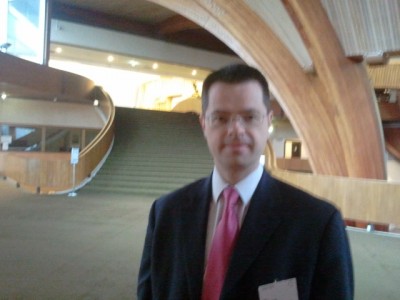
*Strasbourg/CoE/Angelo Marcopolo/- UK's Home Office Minister for Crime and Security, current CoE's Chairman in office (11/2011-5/2012), James Brokenshire, speaking to "EuroFora" at the conclusion of a 3 Days-long International Conference on the 10th Anniversary of CoE's "CyberCrime" convention (2001-2011), which had started to apply at the Internet the post-9/11 urgent need to Fight Crime Worldwide, strongly supported this already existing tool's potential also for the foreseeable Future, while also leaving open a currently unfolding possibility to soon develop a comprehensive, overall CoE Internet Strategy, which might cover all main, topical issues, from Freedom of Expression and the Fight against Digital Divide up to Cyber Security and Protection against Cyber Attacks, etc., due to be debated at the end of this week in another CoE Conference in Vienna (Austria) and expected to be eventually adopted by the CoE's Committee of Ministers, under Brittish Chairmanship, probably on January 2012, as a 1st response to the call launched recently by the "G-8" Summit at Deauville (France) to establish at least the General Principles of a Global "Internet Governance", (See relevant "EuroFora"s NewsReports on that "G-20" move from Paris, Deauville and earlier CoE events).
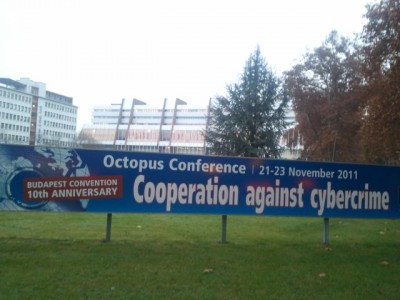
Such moves might succeed to bypass an old opposition between a mainly UK-USA preference, backed by several other Countries in Europe and throughout the World, to continue building on the 2001 "CyberCrime" CoE's International Treaty opened to signature on 2001 in Budapest, and a rather Russian and Chinese, etc. critical stance, more or less backed also by various European and other Countries, which, while acknowledging the importance of having efficient Legal tools to Fight Criminals abusing of the Internet, nevertheless, has already made known its reluctance to accept mainly some reportedly "Extra-Territorial" Jurisdiction aspects of the Budapest 2001 Treaty, preferring rather to build another, New Legal Instrument, (as, f.ex. a Russian Senior Officer had earlier told "EuroFora" in a previous CoE's "CyberCrrime" conference).
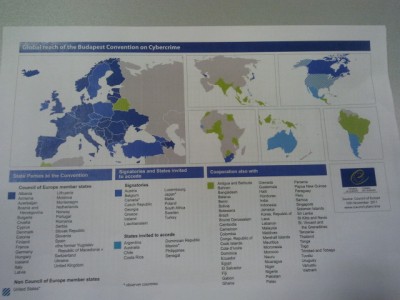
In this regard, the position of some other key European Countries appeared rather reserved, as f.ex. Germany, who sent to the 2011 "CyberCrime" Conference only one Expert, contrary to other Countries who had sent more than 4 or 5 Experts, and/or a Political, f.ex. Ministerial representative or Attorney, (f.ex. even .. Nigeria or Benin, etc), as well as Italy, (among the entirely "Absents", even if it has ratified the 2001 Budapest Treaty, as also France, present with 4 Experts but without Political level representative, contrary, f.ex. to Hungary, etc) and several other EU Countries which abstained from participating this time, (while also Poland and others have signed but not ratified, similarly to South Africa, Turkey, etc), unlike to an exceptionaly High proportion of International guests from many other Countries throughout the World, (including f.ex. Australia, Japan, but also several African Countries, etc), which underlined the obviously Global dimension of what is at stake.
As for Citizens and NGOs, European Civil Society will certainly look with interest, to CoE chair i.o., British Conservative Home Minister James Brokenshire's concluding reply to "EuroFora"s questions that, as a matter of general Principle, "Liberty and Fighting against Criminality go hand by hand" (See infra) : An obviously very interesting, Strategic remark, for which ..."the proof of the pudding is in the eating", according to the well known moto of traditional British People...
--------------------------
- "We (the UK Chairmanship of the CoE) strongly believe that the CyberCrime (CoE) Convention provides an Effective Mechanism to promote Cooperation, Practical Assistance to help Countries, and also to set a Legal Framework, which is really important, with all its Benchmarks, in order to ensure that we are always working within a Common Approach dealing with the Threats of CyberCrime that strech the on-line environment when we want to Harnest the Benefits which should come from it, while also ensuring that we have processes and procedures in place to Guard against the Criminals who are starting, increasingly, to prey upon People who are trying to use if for their Business and for their Daily lives", stressed to "EuroFora" from the outset Brittish Minister James Brokenshire, who, as CoE's Chairman-in-office, was the Key-note Speaker at the concluding ceremony of the 1Oth Anniversary of the Budapest treaty.
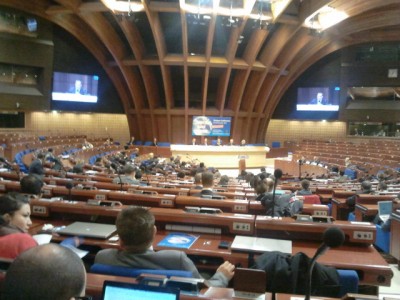
- "And this is a Positive, Practical Message that we (CoE) are giving around the Convention (Members) and around the World, that Countries are doing, and want to continue to do, in Combatting CyberCrime and the Threats that are opposed" to a productive and safe use of Internet's potential, Minister Brokenshire went on to say while participants to CoE's CyberCrime mechanism were reportedly preparing to add 2 more Days of work in Strasbourg in order to develop further its technical possibilities to enhance TransBorder, International Investigations, find how to tackle the new issues raised by Cloud Computing, etc.
+ Moreover, "it certainly is part of our (UK's) Chairmanship (of the CoE), to seek" to promote "Internet Governance (as, f.ex. the latest "G-8" Summit asked on May 2011 at Deauville, i.e. symbolically chosen by French President and G-8/G-20 Chairman Sarkozy between France and the UK, as "EuroFora" reminded to Brokenshire), and we are looking how to promote the greater Adoption of the Budapest Convention. Indeed, we'll continue to develop the Agenda of Internet Governance, as well as to look at the Legal Frameworks that prevent from operating and detect Crime : That's what Today's event is very much about", the British Minister added more largely, but without losing sight of his main, topical target. '"And, certainly, from the (earlier) London Conference (on "Cyber-Space"), that sense of (Internatinal) Cooperation, that sense of (Global Internet) Governance, (includes also) Citizens working together, because it's their Shared Responsibility. That's why, from a UK perspective, we are very much working with Business and Industry, recognizing that, so much of the Infrastructures, so much of the Work resides Outside of Governments", he observed. "And, so, looking forward, we are very much keen to promote that Agenda, looking at ways in which should Government Internet Governance can be Improved and adopted, looking how Collectively we can work Together to Advance the Issues around Combating Crime. Probably, I would say, working in Parallel, (on the overall Internet Governance and specifically on CyberCrime, because) they are Both Important", he concluded.
- "In the (recent) London Conference (on Cyber-Space), British Foreign Secretary William Haig, had said, earlier in Strasbourg (See previous "EuroFora"s NewsReport), that the UK Government had tried to promote the idea that by combatting Cyber-Crime, States also Protect Citizens' Safety and Freedoms, which, in addition to Corporations and States, are also one among the first Victims of several Cyber-Attacks", "EuroFora" reminded to the British Home Office Minister, recalling also the fact that "the present (Conservative-Liberal) UK Government was Elected also under a banner calling to "Restore People's Liberties"", back on 2010...
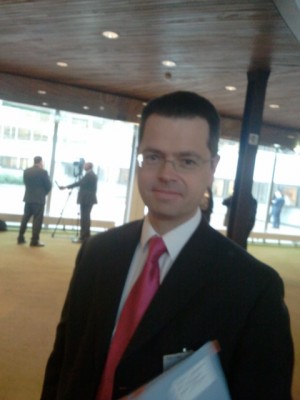
- "Absolutely", replied positively, smiling, to that "EuroFora"s question, the young, British Conservative Government Official, who sits also at the National Security Council, dealing even with Strategic issues of larger Political importance : - "We are very much on the Protection of Liberty and Security of People's Data. And, as we live our Lives increasingly On-Line, Protection of People's Private Information is, I think, a Key-element around all the work, and how Criminals very much are looking tackling to this, to be able to obtain People's Private Information, to Sell that on the Internet in a Criminal, Black Market way. So, when we look at this Agenda, it's important to also look at Both Threats : (I.e.) - Look at what the Criminals are seeking to do, but also into Advancing an Open and Free Internet, where we are able to Harnest practical Opportunities of Trading, of virtualy live all our Lives in a Digital way. How that is a Positive thing, that we certainly want to Promote, but, recognizing that there are (also) those out there, who want to use the Internet for Malign purposes. Respecting that sense of Freedom, Personal Liberties, but also being very Clear and very Firm in our Response to those who seek to prey on the Vulnerable, seek to Exploit the Internet to commit Crime, and to commit Serious Harm (even) to Individual Citizens. That is why, I think, the whole concept of Liberty and Fighting against Criminality go hand by hand", he smartly concluded.
___________________
USA State Secretary Clinton's Cyber coordinator, Christopher Painter, to "EuroFora" : - Multi-stakeholders approach, and stick to the already existing tools : a must !
---------------------------------------------
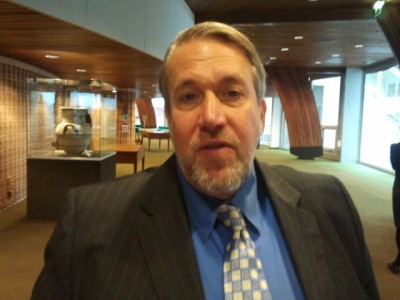
Meanwhile, CoE's CyberCrime convention is a useful Tool manly for issues of "Law, Training, and Cooperation", stressed USA State Secretary Hillary Clinton's Cybe coordinator, the CoE-experienced Christopher Painter, speaking to "EuroFora" :
- Questioned by "EuroFora" if the U.S. position would be favorable for the call launched by the recent May 2011 "G-8" Summit at Deauville to start building a Democratic Internet Governance, to result in a kind of New, Comprehensive, overall Legal Instrument for all main Internet issues, or, rather build upon already existing tools, such as CoE's CyberCrime convention, etc., the American Official appeared adamant :
- "I think that what we have now should be strenghened. What we need to do, as (USA) vice-President Biden said (in an earlier, London Conference on "CyberSpace"), we should Strengthen those Institutions, make Sure that they have more Transparency, make sure that they are more Inclusive, etc."
+ On the contrary, " I think that what is the Wrong way to go is to have some Srructures that is (inter)Governemental, rather than Multi-StakeHolders', etc. I think that this is reflected even at the Statement from the "G-8" at the Deauville Summit, where there was an explicit reference to the need for Multi-StackeHoldfers. And in the Drafts that we have at present, (also on CoE's "Strategy for Internet Governance" ; See infra), there is a clear mention that they have to include a Multi-Stakeholder approach.
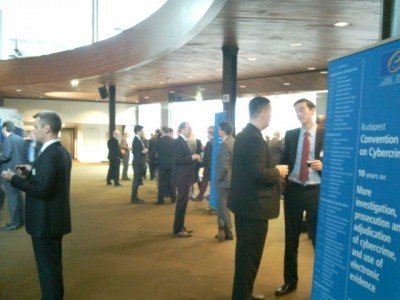
- "Any model, even the models that we have now, need to include the Private Sector. They need to include the Governments. And they need to include Civil Society. And they all (3) have to be Driving Forces" - "I'd tell you, even the Internet itself would not have developed to the point that it is now, without that really robust process. And that's what we need to strenghen", artfully concluded Painter.
- I.e. "our (USA's) view is that the Best way to go, is to Strengthen the Institutions that we have now, and make sure, (f.ex.) that they include that Multi-Stakeholder approach.
- F. ex., "OECD Internet Principles, adopted last June" 2011, (i.e. practically when the International Organization celebrated the Anniversary of 50 Years since its it was established, Comp. "EuroFora"s NewsReports from that OECD event in Paris, May 2011, at the eve of the "G-8" Summit at Deauville), on Internet's need for Transparency, etc., are a Good Example of that Multi-Stakeholders approach", while "talking about Internet, Security, all the issues, in a very Interesting way, which shows what we are trying to do", the American Official pointed out.
-------------------------
CoE Information Society Director, Jan Kleisjen : Wider, Comprehensive CoE Strategy on Internet Governance, after G8 Deauville Summit :
__________________
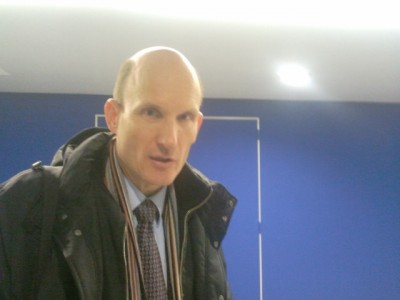
+ Experienced CoE's Director of Information Society and action against Crime, Jan Kleijssen from Austria, speaking to "EuroFora", explained CoE's current moves for a "Comprehensive Strategy on Internet Governance", shortly after the relevant call launched by the latest "G-8" Summit at Deauville, (France : See "EuroFora"s relevant NewsReports from Paris and Deauville, as well as earlier from the CoE).
He spoke earlier, during CoE's "CyberCrime" treaty's 10th Anniversary events (2001-2011), about the PanEuropean Organization's intention to develop in a coherent manner a kind of Synhesis of all its various Legal tools concerning the Internet, from the Personal Data protection treaty, to CyberCrime, as well as Children protection from Sexual abuse, Freedom of Expression, easy Access and Free transborder flow, etc., all these Pieces of the Puzle accumulated by the CoE through many years, should now be brought together inside an overall, Comprehensive new instrument, before 2015.
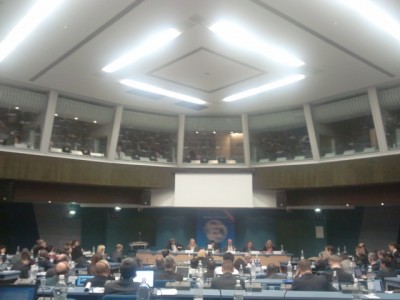
- F.ex. on Monday, in Monaco (where Princess Caroline is very active on that), we (CoE) discussed about Children protection at the Internet, and (Personal) Data protection, which is part of it, was debated in Strasbourg, where now we hold the CuberCrime convention's 10th Anniversary, he reminded to "EuroFora".
- "In Vienna, on Thursday and Friday, we have several Ministers (from various CoE Member Countries) coming, and it will be opened by the Federal vice-Chancellor of Austria, Foreign Minister Michael Spindelegger), together with our (CoE"s) Secretary General (Norwegian Thorbjorn Jagland), with representatives from Industry, as here (i.e. in Strasbourg's CyberCrime conference), as well as NGOs, etc.
- The Concluding Draft Text on CoE's 4 Years-long "Internet Governace" Strategy, 2012-2015, will be submitted to its Committee of Ministers, here in Strasboourg, for them to decide, probably from January 2012, (i.e. during the British CoE Chaimanship (November 2011-May 2012), including 2 CoE's Budgetary Cycles of two years each, he anounced.
- "It is a Comprehensive text : Personal Data, Protectiion of Children, Persecution of Crimes, Free Speech and Liberty of Expression, etc., are included, Kleijsen observed. And "this is , indeed, very Interesting : It's a Privilege to work on it". Particularlu when "you know that the 1st Page was published at the Internet, (as we see it now, i.e. with today's layout and "www", etc.), only on August 6, 1991 ! So, You see what's happening in just 20 Years !", CoE's expeienced Top Official enthousiastically added..
+ But, obviously, there are also Threats, from Criminals, even Organized Crime, i.e. not only Individuals, because, as we heard in this (CyberCrime) Conference, there is a lot of Money to be made, and that's why, (CoE's) Internet Strategy package will deal with Freedom of Expression, but also of its counterpart. One of your Collegues (among Strasbourg Journalists) asked me : - "What has the CoE to do with Internet ?". It's simply because this Organization stands for Human Rights, Democacy and Rule of Law, while, Today, you can't even have those 3, without Intenet these days. That's clear !", I replied", Kleinsjen pedagogicaly stressed.
- "Since today, even in order to simply deal with the Administration, you need access to Internet : In some countries, f.ex. In Kenya, the Government doesn't send out any Forms : there are Cheap Mobiles, and all the Tax process goes through a Mobile (Tax declaration, Census, etc.; whatever ", as also in Greece, f.ex. today some new Taxes are collected through SMS between Citizens and the Administration, as "EuroFora" observed...
+ Access to Internet, f.ex. in Rural areas, can bring poor People into the mainstream, while in some Mountainous areas, where even the Postman doesn't come yet, thanks to the Internet and/or Mobile netwok you can communicate, etc.
- "So, we (CoE) try to bring all that together", and "we (CoE) hope that we'll have from this Vienna Conference a lot of Ideas : We hope (that) People will be critical, positively critical, i.e. by sending some Suggestions, etc. Because there will absolutely be a full participation from Civil Society, NGO's, involved individuals, etc., as all other participants, able to speak, etc. ; that's the idea", Kleinsjen agreed with an "EuroFora"s question on that obviously crucial point.
In this regard, "EuroFora" reminded Kleisjen the Fact that, contrary to the Past, when f.ex., as early as back on 1988 we had been given the responsibility by Strasbourg's University to prepare a Pioneer Legal Research on what was called then "Cabled Video-Communication Networks", and became later the "Internet", when the main concern was obviously to protect People, Businesses and even States from Risks to Violate the Privacy of their Personal, Private, Secret Data, and usurrpate them even on Sensitive issues, later-on, after the September 11, 2001 Terrorist Mass Attack against the Twin Towers of the World Trade Center in New York, the trend had notoriously changed, giving an absolute Priority into searching and finding any eventually useful infiormation which might help the fight against any suspicion of any kind of planned Terrorism, provoking, sometimes, certain well-known abuses, which might, perhaps, be overcome now, with a more "Balanced" approach.
- Thus, questioned by "EuroFora" whether CoE's pioneer work on "Personal Data protection and Privacy" was going to "Survive" in Future, CoE's experienced Director acknowledged that this a Serious issue, and observed that, "of course", "someone at Nairobi"'s recent World Internet Forum of the UNO, observed that "Internet taxes Privacy", and "we (CoE) have that Convention", i.e. the Pioneer Internatonal Treaty on Personal Data Protection, "which we must Modernize it, bring it up to date" :
- "F.ex. we (CoE) are looking at ("New") Questions such as Social Networks, Responsibilities, etc". And, "of course we want to do it together with the Industry, since there is no point for a SIngle Country to try to impose alone anything on the Internet, because, then, People move along" various other providers of service in many other countries in the World Wide Web, etc.
- The point is "to come to a Responsible Data Protection" review today. "it's obvious, also, that Companies realize that People may go to Facebook or anoher Social Media, if there is, at least, a Minimum of Trust", (that their Personal, Private Data will have, at least, an elementary protection. On the contrary, "If there is No Trust at all", on that crucial point, then,¨People will go elsewhere and/or do otherwise. For the moment, "It's all New now". But, "if Companies want to survive", in front of growing Global Competition on the WWWeb, "then, they'd realize that they have to Earn the Trust of the People. They must have Trust : It's almost like a Bank : You go to a Bank if you trust it" enough to leave there your money... So that, "if one or another Internet Company commits Serious Abuses, then, sooner or later, this will become known" to the large Public, People wlll find out quickly, and it will loose its Customers, since People will go away !" In consequence, "they (Internet Companies) have also a Business interest to build Trust" with the People, the experienced CoE Top Official warned...
He was replying to an "EuroFora" reminder of the concrete case, f.ex. of Icelandic MP Birgitta Jonsdottir, who had earlier said to "EuroFora" that she was satisfied by the fact that "Twitter" had, at least, warned he that she was reportedly targetted by a "Gag order" from an US Administration in order to reveal all her Personal Account's Data, so that she had a chance to lodge a complant at an US Court against that, on grounds both of Personal/Private Data pcotection, and of Political and other beliefs, f.ex.of the Persons who had used that Web account to communicate with her as an MP on "Sensitive issues", while, on the contrary, "Facebook" had told her nothing, until now... (See relevant "EuroFora" NewsReport dated from 4/2011)
+ Speaking also of another Topical issue, that of Hackers' "Attacks" via the Internet, Kleinsjen pointed mainly at the "obligation to cooperate in doing Investigations, research, etc., when it's a trans-border" crime, which already results from the CyberCrime CoE Treaty, but is also included in the new CoE's Internet Strategy draft.
- Concerning Citizens, (and not just States or big Corporations) who might also be Victims of Cyber Attacks, he considered that by warning People, they will become aware of the Risks and go get equiped themselves by some Software and/or Harware technical protection, while, at the same time, "they should Report" to the Police and/or any other competent Public Authority, any eventually serious attack that they might face through the Internet : - "Already there are several Specialized Police teams for that (Cyber Attacks, etc), but what happens too little, at least for the time being, is for People to go and see them : Only an estimated 21% of the Victims of Internet Attacks report it to the Police !", denouncing the facts. "But, the Police can't do anything if People don't speak about it, if they have no complaints : They Need complaints, in order to Start Investigations", he observed, speaking to "EuroFora" shortly after a Team of CoE's Experts had just concluded by making a strong appeal to all involved Countries to etablish "Specialized Police Units" on CyberCrime in general.
---------------------
+ However, from the Pre- 9/11 period of the CoE, "EuroFora" remembers also well that the Committee of Ministers of the PanEuropean Organization had also adopted, as early as back since 1998, at Thessaloniki (Greece), a landmark Resolution focusing on facilitating People's Access to the Internet and other modern Communications, where it had launched also a call for a network of "Public points of Access" to be established, in order both to develop Internet litteracy and capacities, but also to avoid the Risk of a Digital Divide.
Or, except from an indirect, and apparently incomplete mention in Article 8, point "C", of the current CoE's Draft "Strategy", this seems curiously forgotten or ommitted today..
=> Therefore, "EuroFora", for the moment, can't but make at least one "Critical Suggestion" to CoE's Draft "Strategy on Internet Governance" : - Restore the Spirit of the 1998 CoE's Ministerial Summit's Recommendation on Access to modern Communication technologies ! (Comp. supra).
(NDLR : This obviously is an incomplete, hasty "DraftNews", as already sent earlier to "EuroFora"s Subscribers/Donors. A complete, more accurate Final Version is due asap., unless the issue is eventually included in another, new relevant development).
***
Main Menu
Home Press Deontology/Ethics 2009 Innovation Year EU endorses EuroFora's idea Multi-Lingual FORUM Subscribers/Donors FAQs Advanced search EuroFora supports Seabird newsitems In Brief European Headquarters' MAPs CoE Journalists Protection Platform
BRIEF NEWS
- 00:00 - 02.06.2021
- 00:00 - 18.10.2020
- 00:00 - 19.06.2020
- 00:00 - 18.05.2020
- 00:00 - 20.04.2020
- 00:00 - 02.02.2020
- 00:00 - 09.12.2019
- 00:00 - 27.11.2019
- 00:00 - 16.11.2019
Popular
- Yes, we could have prevented Ferguson riots says World Democracy Forum's Young American NGO to ERFRA
- Spanish People Elect CenterRIGHT Majority with 1st Party and Total of 178 MPs (6 More than the Left)
- Pflimlin's vision
- The European Athletic "Dream Team", after Barcelona 2010 Sport Championship Results
- Source Conseil d'Europe à ERFRA: Debatre Liberté d'Opposants à Loi livrant Mariage+Enfants à Homos ?
- Head of BioEthics InterGroup, MEP Peter Liese : "Embryonic stem cell research reaching its END" !?
- Spain: Jailed Turkish Terror suspect with Explosive,Drones,Chechen accomplices stirs Merah+ Burgas ?
- UN Head Ban Ki Moon at CoE World Democracy Forum : - "Listen to the People !"
Latest News
- Test Photos (f.ex.+ Invit to EU + Korea Peace meeting)
- EUOmbudsmen Conference 2022: Digital Gaps affect People's Trust threaten EF Project on EU Future ?
- French Election : Black Out on Virus, but Obligation for Fake 'Vaccines" Challenged
- Both French Presidential Candidates point at "Humanism" in crucial times...
- France : Zemmour = Outsider may become Game Changer in Presidential + Parliamentary Elections 2022
Statistics
Visitors: 64350105Archive
Login Form
Syndicate


Other Menu
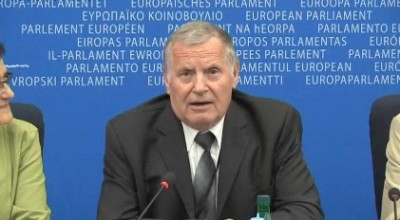
Former "Green-Red" German government's Foreign Minister Joschka Fischer's job at the controversial Turkish pipeline "Nabucco" was denounced as "not proper", "very bad", and "incompatible with Democracy", by the new President of EU Parliament's EuroLeft Group, German Lothar Bisky, replying to an "EuroFora" question.
For once, criticism of Joschka Fischer's doings with Turkey affecting Europe, didn't come only from the Center-Right of the political spectrum, but even from his Left side : The experienced Bisky, who has been chairing all over 1993-2009 the PDS - Die Linke party :
- "Former Foreign Minister Joschka Fischer got involved in dealings with oil-gaz business in a foreign country, Turkey, and its controversial Nabucco pipeline. This raises questions about Democracy, also because of the well known problems of Human Rights violations in that country. Do you thing that this might be abused in order to cover up and close EU's eyes on Human Rights violations ?", "EuroFora" asked Bisky.
- "Nabucco pipeline is (only) at the planning stage". And "there are some difficulties", he observed from the start. But "'I don't want to get into the details of Nabucco pipeline, because I don't think that there is any point for it at the moment".
At any case, "we (EU Parliament's EuroLeft Group) strongly believe that Politicians should not get involved in the Energy Business, and all these commercial transactions", President Bisky declared on the Joschka Fiischer's affair.
- "We feel that it's something that shouldn't be done. It's not proper !"
- "We don't think that it's compatible with Democracy either, and it gets politics into a very Bad track", Bisky went on to denounce.
- "EuroLeft and "Die Linke" always spoke against that, saying that politicians should not get directly into the arms of private enterprises"
- "It is pretty bad if a former Minister takes a job f.ex. in a major Energy producer. So, it's an issue if a Minister who may have seen excellent opportunities, subsequently gets personally grasp of them, in very serious parts of the economy, once he has given up his (Government) job."
- "It doesn't really make politics in general look any better'", Bisky concluded.
Earlier, this week in Strasbourg, other Journalists had also raised critical questions on former Foreign Minister Joschka Fischer's involvement in the conroversial Turkish Nabucco pipeline to the President of his own EuroParty : Kohn-Bendit of the "Greens", who, contrary to Bisky, tried to find excuses for Fischer, while criticizing his long-time partner, Schroeder for having done a similar move :
- "Shroeder was chancellor", and he "negociated" with "Russians", who gave him a job only "3 Months" after he resigned from the Government. While "Joschka Fischer", on the contrary, got a job with the controversial Turkish Nabucco pipeline only "4 Years after" he left the Government. "He didn't negociate Nabucco", so I have "no objection", Kohn Bendit claimed.
But, many Facts indicate the contrary :
Joschka Fischer was Foreign Minister in Germany from 1999 up to 2005 : I.e. from the year that EU took the controversial decision to give Turkey a "Candidate" status, until he year it started controversial "accession negotiations, (later declared "open-ended" after Sarkozy-Merkel's arrival from 2005-2007).
During that period was prepared the controversial so-called "Annan" Plan (in fact, drafted by others and attributed afterwards to the former UN SG) on Cyprus, which failed after a Popular Referendum said "No" on 2004 with a large Majoriy of 3/4 : 75%. Mainly because it was criticized for making too much concessions to the Turkish side : Particularly by restricting Greek Cypriot Refugees' Human Right to return to their ancestral Land and/or get restitution of their Familiy Homes and private properties, usurpated by Ankara's Army since the 1974 militay invasion and continuing occupation of the northern part of Cyprus. And by weakening the Central Government, leaving to 2 "constituent States" so much powers and separate interests that more conflicts appeared inevitable, provoking the danger of a break-down in the foreseable future, with more crisis, troubles, perhaps bloodshed, etc., instead of creating an harmoniously integrated, really one federal State.
The controversial Plan was finalized on March-April 2004 at Burgenstock (Switzerland), curiously in the presence of an Envoy by the Ministry of Foreign Affairs of Germany, then governed by Joschka Fischer, but in the absence of a French and not even an European Union's Envoy, contrary to what was usually practiced on similar occasions in Switzerland (fex. in 1997 at Montreux, in 2000 at Geneva, etc).
Turkey notoriously exploited the failure of the "Annan" Plan in order to convince the EU to decide to start accession Negotiations on December 2004. This provoked an unprecedented series of Institutional Crisis inside the EU, shortly afterwards, when French and Dutch People rejected, 2 popular EuroReferenda by a majority "'No" vote to the EU Constitutional Treaty on 2005, aggraveted in 2004 a Majority Abstention to EU Elections, etc., followed by the recent Irish "No", etc.
"Nabucco" Gas pipeline was notoriously planned since ..2002. It follows an even earlier idea, for an Oil pipeline Baku-Ceyhun, which started to be prepared on 1999-2001 and was meanwhile recently completed.
So, facts indicate that what is now at stake is based on decisions made during Joschka Fischer's term as former Foreign Minister, closely interested in Turkey's controversial EU-bid.
To the point that he now practically ...switched jobs with a poliician from Turkey, (the State which pays today openly Joschka Fischer), Mr. Ozdemir, who came earlier in Germany, got fast the nationality, and became EiuroMP in a few years, continuing now as head of the "Greens" in Germany, i.e. in Joschka's former job !...
Such astonishing facts risk, unfotunately, to give to German politician Lothar Bisky's criticism of representative Democracy a topical meaning :
- "We (EuroLeft Group) think that what is really at stake is Democracy. It's not only about Gas Pipelines or Energy sources", President Lothar Bisky went on to add in his reply to "EuroFora"'s question on Joscka Fischer's personal interests in the controversial Turkish "Nabuco" pipeline.
Such facts, "make People get more distance from Politics. ...People had had enough, and they are fed up !".
- "That's why we (EuroParliament's "EuroLeft" Group) want to strengthen Direct Democracy in Europe. Citizens should be involved in the (EU) Decision-making. In the end of the day, it's not going to help anyone if Politicians are always taking decisions, without involving Citizens. We want to give a voice to the People of Europe. They've got to have their say in the decisions that are taken. That's one of our absolutely fixed and steadfast views. We want more Direct Democracy in Europe. That's how it can become more effective and stronger", he concluded.
-