


A pleasant open day at the Council of Europe


A pleasant open day at the Council of Europe
May 5th 2019 Anniversary of the Council of Europe 1949-2019
Article Patrick Bracker
-----------------------------------------------------
(NDLR: Viewpoints published here do not necessarily reflect "Eurofora"s ideas.
+ 4 Translations, in English, German, Italian and French, are provided herewith).
-----------------------------------------------------------
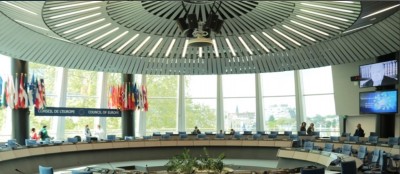
Visitors were invited to a fun treasure hunt to discover the places and the different aspects of the house. Find elements of the construction, in the time frieze or on the large pan-European map or even in the heart of wall tapestries, decode a name, or find the number of pillars that support the hemicycle, locate values and answer some rebus or research in the area.
At each stage of the treasure hunt, there was a growing public interest in the Palace's treasures, including the discovery of gifts made over the years by Member States to the Institution. The visitors' efforts were rewarded with gifts: by passing by to present the result of their research at the dedicated stand, where the charming hostesses of the Council distributed bags or magnets, pens or posters in addition to their good advice and lovely smiles.
The courageous visitors could then go to the European Court of Human Rights to continue their journey of discovering the jewel of the Council of Europe.
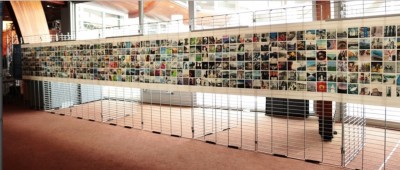
Through this playful game, geography, art, values or reflection constitute a set of realities experienced on a daily basis by the actors of Greater Europe and the staff of the Council of Europe. Exhibitions’ showing the Institution’s many activities over the past 70 years, such as the Landscape Convention or the exhibition summarizing the important stages of European integration.
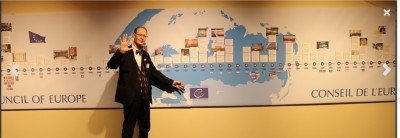
For this 70th anniversary 1949-2019, many interested visitors and enthusiasts came in large numbers, a great pan-European success in a friendly atmosphere!
---------------------------------------------------------------------
Ein angenehmer Tag der offenen Tür beim Europarat.
Die Besucher wurden zu einer lustigen Schatzsuche eingeladen, um die Orte und die verschiedenen Aspekte des Hauses zu entdecken. Finden Sie Elemente des Baus, im Zeitrahmen oder auf der großen paneuropäischen Karte oder sogar im Herzen von Wandteppichen, entschlüsseln Sie einen Namen oder finden Sie die Anzahl der Säulen, die den Plenarsaal stützen, Werte lokalisieren und auf einen Rebus oder eine Forschung in der Region antworten.
In jeder Phase der Schatzsuche wuchs das öffentliche Interesse an den Schätzen des Palastes, einschließlich der Entdeckung von Geschenken, die die Mitgliedstaaten im Laufe der Jahre an das Organ gemacht haben. Die Bemühungen der Besucher wurden mit Geschenken belohnt: Sie kamen vorbei, um das Ergebnis ihrer Forschung auf dem eigenen Stand zu präsentieren, wo die charmanten Hostessen des Rates neben ihrem guten Rat und ihrem schönen Lächeln auch Taschen oder Magnete, Stifte oder Poster verteilten.
Mutige Besucher konnten dann zum Europäischen Gerichtshof für Menschenrechte gehen, um ihre Reise zur Entdeckung des Juwels des Europarates fortzusetzen.
In diesem spielerischen Spiel bilden Geographie, Kunst, Werte oder Reflexion eine Reihe von Realitäten, die von den Akteuren des Großraums Europa und den Mitarbeitern des Europarates täglich erlebt werden. Ausstellungen, die die vielfältigen Aktivitäten des Instituts in den letzten 70 Jahren zeigen, wie die Landschaftskonvention oder die Ausstellung, die die wichtigen Phasen der europäischen Integration zusammenfasst.
Zu diesem 70-jährigen Jubiläum 1949-2019 kamen begeisterte und interessierte Besucher in großer Zahl, ein großer paneuropäischer Erfolg in einer freundlichen Atmosphäre!
-------------------------------------------------------
Una piacevole giornata di apertura al Consiglio d'Europa.
I visitatori sono stati invitati ad una divertente caccia al tesoro per scoprire i luoghi e i diversi aspetti della casa. Trovare elementi della costruzione, nell'arco temporale o sulla grande mappa paneuropea o anche nel cuore degli arazzi delle pareti, decodificare un nome, o trovare il numero di pilastri che sostengono l'emiciclo, localizzare i valori e rispondere a qualche rebus o ricerca nell'area.
In ogni fase della caccia al tesoro si è registrato un crescente interesse del pubblico per i tesori del palazzo, compresa la scoperta dei doni che gli Stati membri hanno fatto nel corso degli anni all'istituzione. Gli sforzi dei visitatori sono stati premiati con regali: passando a presentare il risultato della loro ricerca presso lo stand dedicato, dove le affascinanti hostess del Consiglio hanno distribuito borse o magneti, penne o poster, oltre ai loro buoni consigli e sorrisi.
I visitatori coraggiosi potrebbero poi recarsi alla Corte europea dei diritti dell'uomo per continuare il loro viaggio alla scoperta del gioiello del Consiglio d'Europa.
Attraverso questo gioco ludico, la geografia, l'arte, i valori o la riflessione costituiscono un insieme di realtà vissute quotidianamente dagli attori della Grande Europa e dallo staff del Consiglio d'Europa. Mostre che illustrano le numerose attività dell'istituzione negli ultimi 70 anni, come la Convenzione sul paesaggio o la mostra che riassume le tappe importanti dell'integrazione europea. .
Per questo 70° anniversario 1949-2019, i visitatori entusiasti e interessati sono arrivati in gran numero, un grande successo paneuropeo in un'atmosfera amichevole!
----------------------------------------
Une agréable journée porte ouverte au Conseil de l’Europe.
Les visiteurs étaient invités à un jeu de piste ludique pour découvrir les lieux et les différents aspects de la maison. Trouver des éléments de la construction, dans la frise temporelle ou sur la grande carte paneuropéenne voire au cœur de tapisseries murales, décoder un nom, ou trouver le nombre de piliers qui soutiennent l’hémicycle, localiser des valeurs et répondre à quelque rébus ou de recherche dans le périmètre.
À chaque étape du jeu de piste, se développait l’intérêt accru du public aux trésors du Palais, avec notamment la découverte des cadeaux faits au fil des années par les Etats membres à l’Institution. Les efforts des visiteurs étaient couronnés par l’octroi de cadeaux : en passant présenter le résultat de leur recherche au stand dédié, où les charmantes hôtesses du Conseil distribuaient outre leurs bons conseils et ravissants sourires, des sacs ou des magnets, des stylos ou des posters.
Les visiteurs courageux pouvaient ensuite se rendre à la Cour Européenne des Droits de l’Homme pour continuer leur chemin de découverte du joyau du conseil de l’Europe.
À travers ce jeu ludique, la géographie, l’art, les valeurs ou la réflexion constituent un ensemble de réalités vécues au quotidien par les acteurs de la Grande Europe et les personnels du Conseil de l’Europe. Les expositions montrant les activités multiples de l’Institution depuis 70 ans, comme la convention sur le paysage ou l’exposition récapitulant les étapes importantes de la construction européenne.
Pour ce 70ème anniversaire 1949-2019, les visiteurs enthousiastes et intéressés sont venus en nombre, une belle réussite paneuropéenne dans une ambiance conviviale !
BP
Main Menu
Home Press Deontology/Ethics 2009 Innovation Year EU endorses EuroFora's idea Multi-Lingual FORUM Subscribers/Donors FAQs Advanced search EuroFora supports Seabird newsitems In Brief European Headquarters' MAPs CoE Journalists Protection Platform
BRIEF NEWS
- 00:00 - 02.06.2021
- 00:00 - 18.10.2020
- 00:00 - 19.06.2020
- 00:00 - 18.05.2020
- 00:00 - 20.04.2020
- 00:00 - 02.02.2020
- 00:00 - 09.12.2019
- 00:00 - 27.11.2019
- 00:00 - 16.11.2019
Popular
- Yes, we could have prevented Ferguson riots says World Democracy Forum's Young American NGO to ERFRA
- Spanish People Elect CenterRIGHT Majority with 1st Party and Total of 178 MPs (6 More than the Left)
- Pflimlin's vision
- The European Athletic "Dream Team", after Barcelona 2010 Sport Championship Results
- Source Conseil d'Europe à ERFRA: Debatre Liberté d'Opposants à Loi livrant Mariage+Enfants à Homos ?
- Head of BioEthics InterGroup, MEP Peter Liese : "Embryonic stem cell research reaching its END" !?
- Spain: Jailed Turkish Terror suspect with Explosive,Drones,Chechen accomplices stirs Merah+ Burgas ?
- UN Head Ban Ki Moon at CoE World Democracy Forum : - "Listen to the People !"
Latest News
- Test Photos (f.ex.+ Invit to EU + Korea Peace meeting)
- EUOmbudsmen Conference 2022: Digital Gaps affect People's Trust threaten EF Project on EU Future ?
- French Election : Black Out on Virus, but Obligation for Fake 'Vaccines" Challenged
- Both French Presidential Candidates point at "Humanism" in crucial times...
- France : Zemmour = Outsider may become Game Changer in Presidential + Parliamentary Elections 2022
Statistics
Visitors: 67323311Archive
Login Form
Syndicate


Other Menu
Facing a 70% Abstention threat in 2009 Election, EU endorses EuroFora's idea for Citizens' debates on crucial EU decisions !
- Different views on "Europe's Future", should be debated among Citizens at June 2009 EU Elections, thanks to political Parties' "Manifestos", says EU Parliament's Report
A main idea, initiated and promoted by EuroFora's founders since 1997: the vital need to develop European Citizens' democratic right to actively participate in multilingual debates on EU decisions, is formally endorsed by the EU from 2009 !
The move is a key attempt to overcome "catastrophic" Polls which warn that only ...30% of Citizens are ready to vote in the forthcoming June 2009 EU Election ! This was revealed by EU Commission's vice-president, in charge of Communication policy, Margot Wallstrom, during a "hot" meeting of EU Parliament's Committee on Culture and Education, during the December 2008 Strasbourg session.
Wallstrom faced criticism, but also suggestions from various MEPs, naturally worried by Abstention threats which herself found even "worse" than in 1999 or 2004...
A Report on "Active Dialogue with Citizens",examined at the same time, presented some useful practical tips, on "facilitating Interviews"; etc., but also a potentialy important call to "incorporate the conclusions of ...debates...into (EU) policies, and take into consideration the expectations that Citizens have of the EU when deciding". An amendment even implies that Citizens' participation in debates on EU decisions is a democratic "Right".
More importantly, it finds that a Debate "on the Future of Europe", (as French President Nicolas Sarkozy has asked since 2007), would be a good idea " for the 2009 European parliamentary Elections", because "clarifying the political differences between the EU political parties would help citizens to identify themselves with, and choose between various concepts", for which "all parties (should) present their Manifesto".
A "Joint political declaration on Communicating Europe in Partnership", co-signed by "the European Parliament, Council and ... Commission", confirms that they "attach the utmost importance to improving communication on EU issues", by "enabling European citizens to exercise their right to participate in the democratic life of the Union, in which decisions are taken as openly as possible and as closely as possible to the citizens, observing the principles of pluralism, participation, openness and transparency".
This should "enable Citizens to exercise their right to express their views and to participate actively in the public Debate on European Union issues", while also "promoting the respect of multilingualism". In this regard, EU confirms its "wish to develop synergies with national, regional and local authorities as well as with representatives of Civil Society".
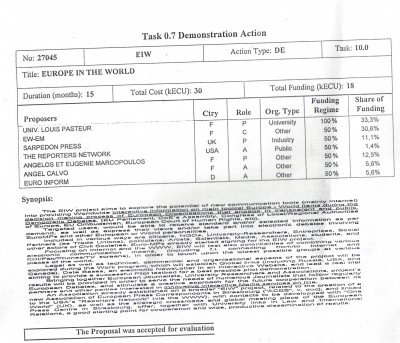
It's since 1997 that a group of EuroFora's founders have officially presented a pioneer Project (then called "EIW", for "Europe in the World"), which aimed to develop Strasbourg's "Polyphonic music", by providing "Interactive information", on "main issues ... during the Decision-making process of European Organizations which engage in Transparent and Public Democratic Debates"
This should be done, inter alia, by "exploring the potential of New Communication Tools (mainly Internet)", as well as classic-form debates, the 1997 EIW pioneer project's anounced in its "Synopsis". It was formally "accepted for evaluation" by EU Commission in Brussels in order to be examined for a grant in the framework of the "Research/Technology/Development (RTD) Programme in the field of Information Technologies", then called "ESPRIT", as a "Best Practice Pilot Project".
But the vital, urgent Political need for EU to search new, efficient ways to reach the People and interact with European Citizens, was really felt in Brussels and elsewhere only after the unprecedented in History 1999 and 2004 Majority Abstention in EU Elections, followed by 3 "NO" in Referenda in France, the Netherlands and Ireland, on 2005 and 2008...
In this New Political Landscape, we prepared a new, actualised and more developed version of our initial idea, in a simplified and more efficient form, thanks also to a large Experience accumulated during many years of EU/CoE/UNO Press work and Multi-lingual debates, with the New project "EuroFora" :
On 2006 we presented in Public its main lines during Questions/Replies that we raised at two Press Conferences by EU Commission President, Jose Baroso, and mainly EU Commission's vice-President, in charge of Communication policy, Margot Wallstrom, together with EU Parliament's vice-president, Alejo Vidal-Quadras, in Strasbourg, (Videos available), and we reminded it at various brief contacts with Commissioner Wallstrom in 2007 and 2008.
Meanwhile, a new Text was also presented for "EuroFora" Project mainly to certain Political and other personalities, at European, National or Regional/Local level, mainly in 2007, but also in 2008..
Now, after the unexpected 2008 Irish "NO", and before the 2009 EU Elections, which are due to be of exceptionally crucial importance for Europe's Future, the moment has obviously come to launch that project, progressively, but in real practice.
Whoever really cares for Europe and its Citizens is welcome to join, in one way or another. Only anti-European, anti-democratic, obscure or ignorant groups might oppose or attempt to "steal" and deviate the main idea.
But European Citizens, incited by enlightened political leaders, are those who will finally write the real History.